Home Sauna Benefits for Women Over 40: The Korean Thermal Ritual That Supports Heart Health, Longevity and Glowing Skin
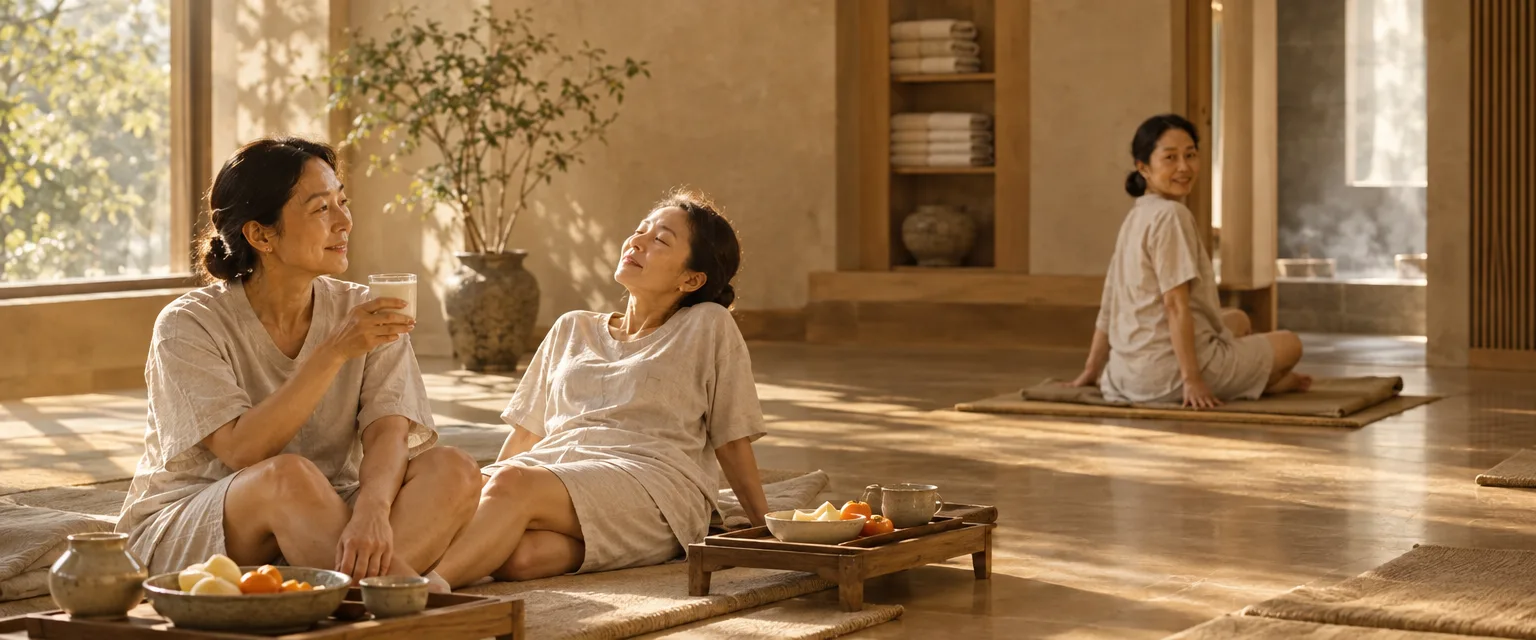
Korean women have used thermal therapy for centuries as a cornerstone of longevity, radiant skin, and deep calm. Now the science has caught up, and the jjimjilbang ritual is coming home in forms more accessible and more beautiful than most Western women have ever imagined.
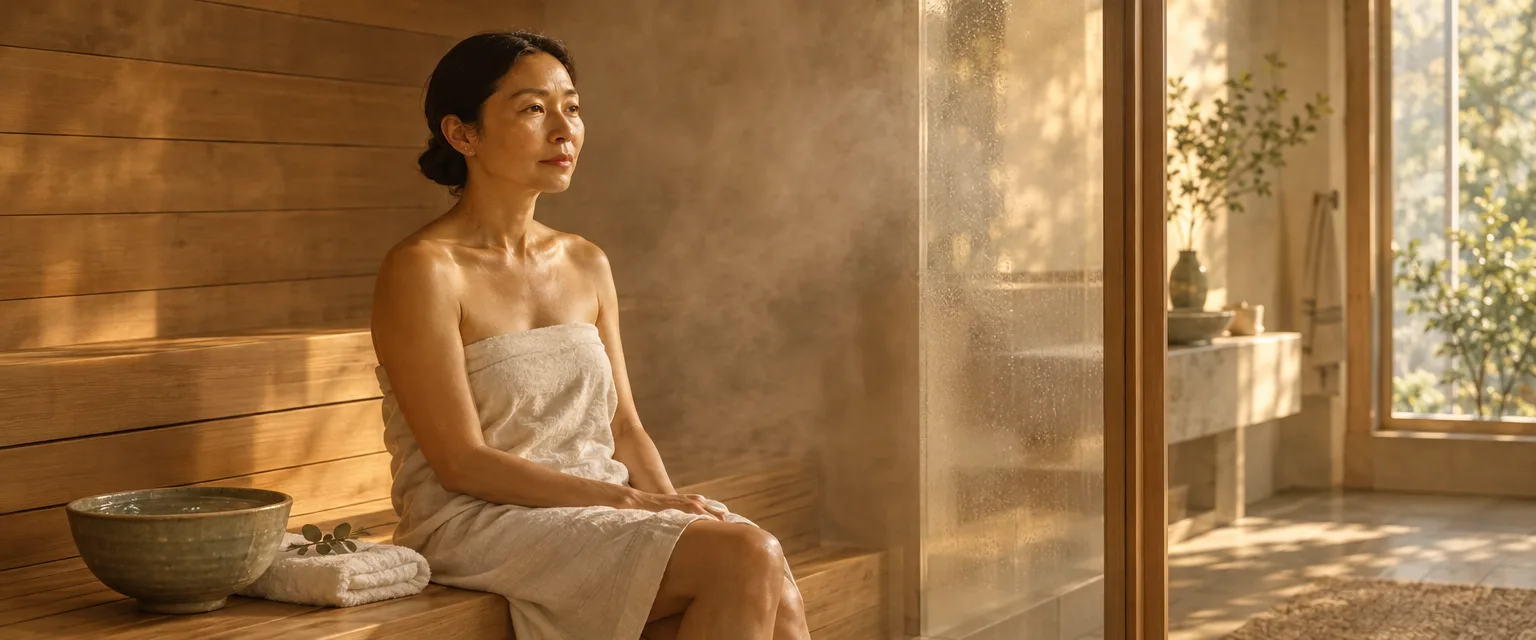
In the vocabulary of Korean wellness, there is no meaningful distinction between the ritual and the result. The jjimjilbang, Korea's beloved communal bathhouse and sauna culture, is not visited for relaxation as a treat. It is visited the way you might go for a walk or prepare a nourishing meal: consistently, instinctively, as part of the rhythm of a life lived in full awareness of the body.
For women over 40, the research behind why this matters is some of the most compelling in the entire field of longevity science. And the good news is that the full benefit of the Korean sauna ritual is now available at home, at every budget, in every space.
What a Home Sauna Actually Does to the Body After 40
Heart and Cardiovascular Health
The most striking finding in sauna research is its effect on the cardiovascular system. A landmark Finnish study tracking over 2,000 middle-aged men across two decades found that those who used a sauna four to seven times per week had a 50% lower risk of fatal cardiovascular disease compared to those who used it once a week.
Heat exposure raises the heart rate in a way that closely mimics moderate aerobic exercise. Blood vessels dilate, cardiac output increases, and the cardiovascular system is trained, gently and passively, while you simply sit still, to become more efficient and more resilient. Regular sessions reduce blood pressure and enhance arterial elasticity, two of the most significant markers for long-term heart health.
For women in midlife this is particularly meaningful. As estrogen levels decline, cardiovascular risk increases. The sauna offers a consistent, deeply pleasurable way to support the heart during precisely the life stage when it needs the most attention.
Pain Relief and Muscle Recovery
Sauna use reduces muscle soreness, eases joint stiffness, and significantly improves symptoms associated with rheumatic conditions including fibromyalgia and arthritis. Heat causes vasodilation, flooding tissues with oxygen and nutrients while accelerating the removal of metabolic waste. For women over 40 managing joint discomfort or morning stiffness, regular sauna use is among the most evidence-backed natural interventions available.
Stress Reduction and Hormonal Balance
Heat triggers a measurable neurological shift. Cortisol drops, endorphins rise, and the nervous system moves from alert to deeply calm. The effect is qualitatively different from simply resting.
Regular sauna users report reduced anxiety, improved mood, and greater resilience to stress over time. For women navigating the hormonal fluctuations of perimenopause, where anxiety and emotional reactivity can intensify unpredictably, this consistent pathway to calm is genuinely therapeutic. And unlike many interventions, it asks very little of you. You simply show up and let the heat do its work.
Skin Health and Circulation After 40
Increased circulation delivers more oxygen and nutrients to skin cells, while deep sweating draws impurities from pores in a way that topical skincare cannot replicate. Korean women have long understood the skin as a reflection of internal health, and regular sauna use supports this from within, improving texture, tone, and resilience over consistent practice.
"The sauna is not where Korean women go to relax. It is where they go to maintain their health, their calm, their skin, their longevity. It is as ordinary and as essential as a good meal."
Respiratory Function
Winter is when this matters most, but the benefits run year-round. Regular dry sauna use eases symptoms of congestion, reduces the frequency of respiratory infections, and improves quality of life for women managing asthma and chronic conditions. The warm, dry air opens airways and supports mucus clearance.
Longevity, Brain Health and Disease Prevention
Perhaps the most compelling finding of all: regular sauna use is associated with a significantly lower incidence of dementia and Alzheimer's disease. The same Finnish cohort study found that frequent sauna users had a 65% lower risk of Alzheimer's compared to infrequent users, a finding that has prompted serious investigation into heat therapy as a neuroprotective intervention.
The mechanisms being studied include improved cardiovascular function, reduced systemic inflammation, enhanced growth hormone production, and the deep restorative sleep that regular sauna use consistently produces. For women over 40 thinking seriously about how they age, this is not a minor footnote. It is one of the most actionable longevity findings in recent research.
Dry Sauna vs Infrared Sauna: Which Is Better for Women Over 40?
Both deliver significant health benefits, but they work differently and feel different. Understanding the distinction helps you choose the right home sauna for your space, your body, and your goals.
Dry Sauna heats the air around you to high temperatures, typically 70 to 100 degrees Celsius, which in turn heats your body from the outside in. This is the traditional jjimjilbang experience: intense, enveloping, producing rapid sweating and the dramatic cardiovascular response documented in the longevity research. Sessions are typically 10 to 20 minutes.
Infrared Sauna uses infrared light wavelengths to heat the body directly, at much lower ambient temperatures, typically 45 to 60 degrees Celsius. The heat penetrates more deeply into tissue, reaching muscles and joints more effectively, while feeling gentler and more tolerable. Sessions can comfortably extend to 30 to 45 minutes. Infrared is particularly well-studied for pain relief, detoxification, skin health, and cellular repair.
Many Korean wellness homes now incorporate both, using dry sauna for its cardiovascular intensity and infrared for its deeper tissue benefits and longer, more meditative sessions. If you are choosing just one for home use, infrared is the more practical starting point: lower temperatures, longer sessions, easier installation, and no ventilation requirements.
What Affluent South Koreans Actually Install at Home
There is something genuinely illuminating about what South Korea's most design-forward households choose when cost is no object. Among Korea's wealthiest homeowners and the interior designers renovating Seoul's luxury apartments and Gangnam penthouses, three names appear consistently.
It is also worth understanding why dry far-infrared cabins dominate this market so completely. Most affluent Koreans live in high-rise luxury apartment buildings, residences like Acro River Park or Hannam THE HILL, where moisture management is a serious architectural concern. A traditional steam sauna in a sealed high-rise unit creates ventilation and mold risks that no amount of luxury finishes can offset. The dry far-infrared cabin solves this entirely, delivering all the thermal therapy intensity of a jjimjilbang session with zero moisture, zero ventilation complications, and no compromise to the integrity of the home.
Harvia (Finland) is widely recognised as the world's gold standard in authentic Finnish dry sauna engineering. In Korea, where the distinction between a genuine thermal experience and an imitation matters enormously, Harvia's wood-burning and electric heaters are the benchmark that serious sauna culture measures itself against. The heat is dense, even, and completely enveloping, the kind that produces the precise cardiovascular response the Finnish longevity research was actually studying. For Korean clients who want the jjimjilbang sensation translated into a private, architecturally considered home installation, Harvia is the established starting point.
Klafs (Germany) occupies a different register entirely. This is where German engineering precision meets the architectural minimalism that Seoul's most forward-thinking interior designers find completely irresistible. Klafs saunas are custom-designed, precision-built, and conceived as permanent features of a luxury residence rather than additions to one. In high-end Seoul apartment renovations, the kind where every material and every proportion is considered at length, a Klafs installation signals a serious and considered relationship with both wellness and design. They produce some of the most visually refined home saunas in the world.
Newgen Sauna (South Korea) is the preferred choice for ultra-wealthy buyers who want domestic expertise, medical-grade specialisation, and the reassurance of rapid local service. Unlike mass-produced alternatives, Newgen builds heavy-duty far-infrared saunas one at a time, using thick, premium-grade wood with an intensive thermal therapy focus that deliberately replicates the health benefits of a professional jjimjilbang within a private home footprint. Among Korea's older affluent demographic, those who grew up with the jjimjilbang as a genuine health institution rather than a wellness trend, Newgen is the trusted name. It represents the full therapeutic seriousness of Korean thermal culture, brought home without a single compromise.
The Best Home Sauna Options for Every Budget and Space
Home sauna access is no longer the preserve of those with dedicated spa rooms or significant renovation budgets. The range of options now available makes this one of the most considered and rewarding wellness investments a woman can make for her home.
The Infrared Sauna Blanket: Full Benefits, Zero Footprint
The most accessible entry point into Korean-inspired thermal therapy requires nothing more than thirty minutes and a space to lie down. The HigherDOSE Far Infrared Sauna Blanket wraps around the body and delivers full infrared exposure at clinical wavelengths, producing the deep tissue warmth, detoxification response, and post-session calm of a full infrared sauna session without a single structural change to your home. It folds away and stores in a cupboard.
For women who travel frequently, manage smaller living spaces, or simply want to begin the thermal ritual before committing to a larger investment, this is the most elegant starting point available. Used three to four times a week, it begins to deliver measurable benefits within weeks.
The Personal Infrared Sauna Cabin: A Corner of Your Home Becomes a Sanctuary
For those ready to make the dedicated investment, a personal infrared sauna cabin transforms a corner of a spare room, a basement, or a large bathroom into a genuine wellness sanctuary. These units arrive flat-packed, assemble without specialist installation in a few hours, and require only a standard power outlet.
The Far Infrared Sauna for One Person in Canadian Hemlock Wood represents the quality and aesthetic standard that Korean wellness homes expect: sustainably sourced wood, clean lines, and performance specifications that match clinical-grade equipment.
For those prioritising the most rigorous safety specifications, the SALUSHEAT Ultra Low EMF Far Infrared Sauna delivers readings of 0 to 5 milligauss, among the lowest available in any home unit, with dual control panels and full door heating for an enveloping, even experience.
Red Light Therapy: The Natural Complement to Any Sauna Practice
The HigherDOSE Full Body Red Light Therapy Mat complements sauna practice beautifully. Used after a session, it extends the skin and cellular benefits of heat therapy with targeted red and near-infrared light. It is the kind of layered, intelligent wellness protocol that Korean longevity culture has always practised instinctively, and it takes only minutes to add to your existing routine.
How Korean Women Use Their Home Sauna: A Realistic Protocol
Frequency, not duration, is what the research consistently identifies as the key variable. Four to seven sessions per week, even short ones, produce dramatically better outcomes than one long weekly session. Korean women understand this intuitively: the jjimjilbang was never a weekend event. It was simply part of the week.
A realistic home sauna protocol for women over 40:
Three to four times per week: 20 to 30 minutes in the infrared sauna blanket or cabin, ideally in the early evening when core body temperature naturally begins to rise. The session amplifies this rhythm and typically produces deeper, more restorative sleep.
Post-sauna ritual: Hydrate generously with room-temperature water. Allow the body to cool naturally for 10 to 15 minutes before showering. This cooling period is when much of the cardiovascular benefit consolidates. It is not optional.
Seasonal intention: Increase frequency during winter months for respiratory support and immune resilience. Korean women treat the sauna as a seasonal anchor, more frequent when the body needs additional support, consistent as a baseline year-round.
The Real Cost of Not Having a Home Sauna
A single infrared sauna session at a wellness studio costs between $40 and $100. At three sessions per week, that comes to $6,000 to $15,000 per year, for a practice the research suggests should ideally be done four to seven times weekly to produce its most significant benefits.
A home unit pays for itself within months. And unlike a gym membership or supplement subscription, it compounds in value rather than depleting it. It is simply there, every evening, requiring no appointment, no travel, no negotiation with yourself. It becomes part of the home in the truest sense: something that quietly and consistently shapes the quality of every day.
This Week's Seoul Ritual: If a home sauna feels like a future investment, begin tonight with heat in its simplest form. Draw a bath as warm as you comfortably tolerate, stay for 20 minutes, then allow yourself 10 minutes to cool naturally before sleep. Notice the quality of your rest. This is the most accessible version of the thermal ritual Korean women have practised for centuries, and it is more than enough to begin feeling the difference.
Next on Seoul Style Edit: The Korean smart scale that body composition clinics use is now available for your bathroom, and why women over 40 who track their muscle mass age fundamentally differently from those who do not.
Filed under 집Home as Medicine