Easy Homemade Kimchi for Beginners: The Simple 2026 Longevity Habit Western Women Are Adopting
Making kimchi at home is more approachable than it looks, and more meaningful than buying it. A simple, honest guide to starting the fermentation practice that Korean women have followed for generations.
If you've been reading about Korean fermented foods for longevity and gut health, you already know the science: daily kimchi consumption is associated with a healthier gut microbiome, reduced inflammation, stronger immunity, and more graceful aging. The evidence is genuinely compelling.
But there's a gap between knowing that fermented food is good for you and actually having it in your refrigerator.
This is the guide that closes that gap.
Why Make It Yourself
You can buy kimchi. Good kimchi, even, refrigerated, live-culture, genuinely probiotic. And that's a perfectly valid way to begin this practice. I've written about building a daily kimchi habit starting with store-bought if that's where you are.
But making your own changes something.
When you understand that kimchi is simply salted cabbage, chili, garlic, and time, that the transformation is biological, not culinary, you stop thinking of it as a specialty food and start thinking of it as a process. A living one. And that understanding is exactly what Korean grandmothers have always wanted their grandchildren to have.
What You Actually Need
The intimidating part of most kimchi recipes is the ingredient list. Here is what genuinely matters:
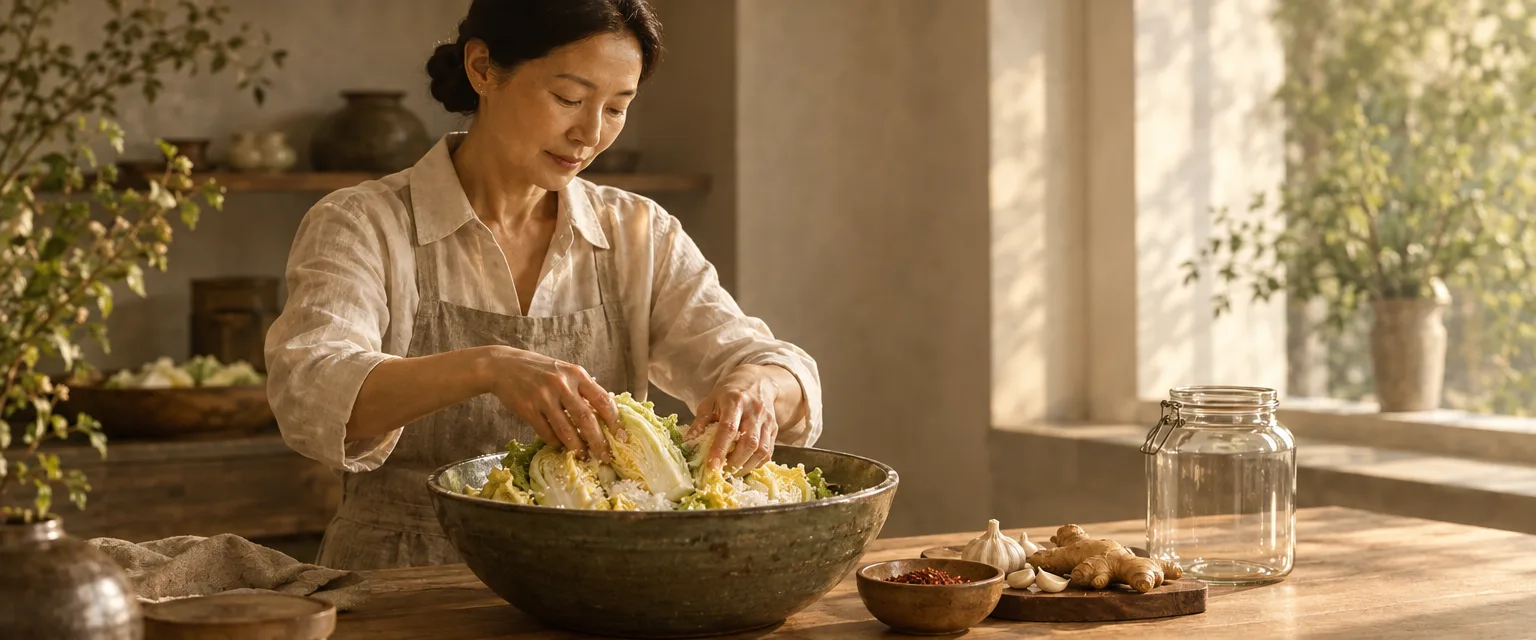
Essential: Napa cabbage (about 2 pounds), coarse sea salt or kosher salt, gochugaru (Korean red chili flakes, not chili powder, not paprika, not cayenne), garlic (fresh), fresh ginger, fish sauce or soy sauce or miso for a vegan version.
Optional but traditional: green onions, daikon radish julienned.
On gochugaru: This is where I would not compromise. The color, the particular sweetness, and the clean heat of authentic Korean chili flakes cannot be replicated with any substitution. If your kimchi tastes flat or harsh, the gochugaru is usually why.
The Method
Kimchi fermentation happens in two phases: drawing out moisture, then fermentation itself.
Step One: Salt the Cabbage
Cut the cabbage into rough 2-inch pieces. In a large bowl, toss generously with salt. Every leaf should be coated. Let it sit for 60 to 90 minutes, turning once or twice, until the cabbage has released significant water and become pliable. Rinse thoroughly under cold water and squeeze as much moisture as possible from the leaves.
This isn't just about texture. The salt draw creates the osmotic conditions that enable lacto-fermentation to begin cleanly.
Step Two: The Paste
Combine 5 to 6 garlic cloves (minced or pressed), 1 tablespoon fresh ginger (grated), 3 to 4 tablespoons gochugaru (start with 3 if you're heat-sensitive), and 2 tablespoons fish sauce. Mix into a paste. Taste it. It should be bold, slightly sweet, pleasantly fiery.
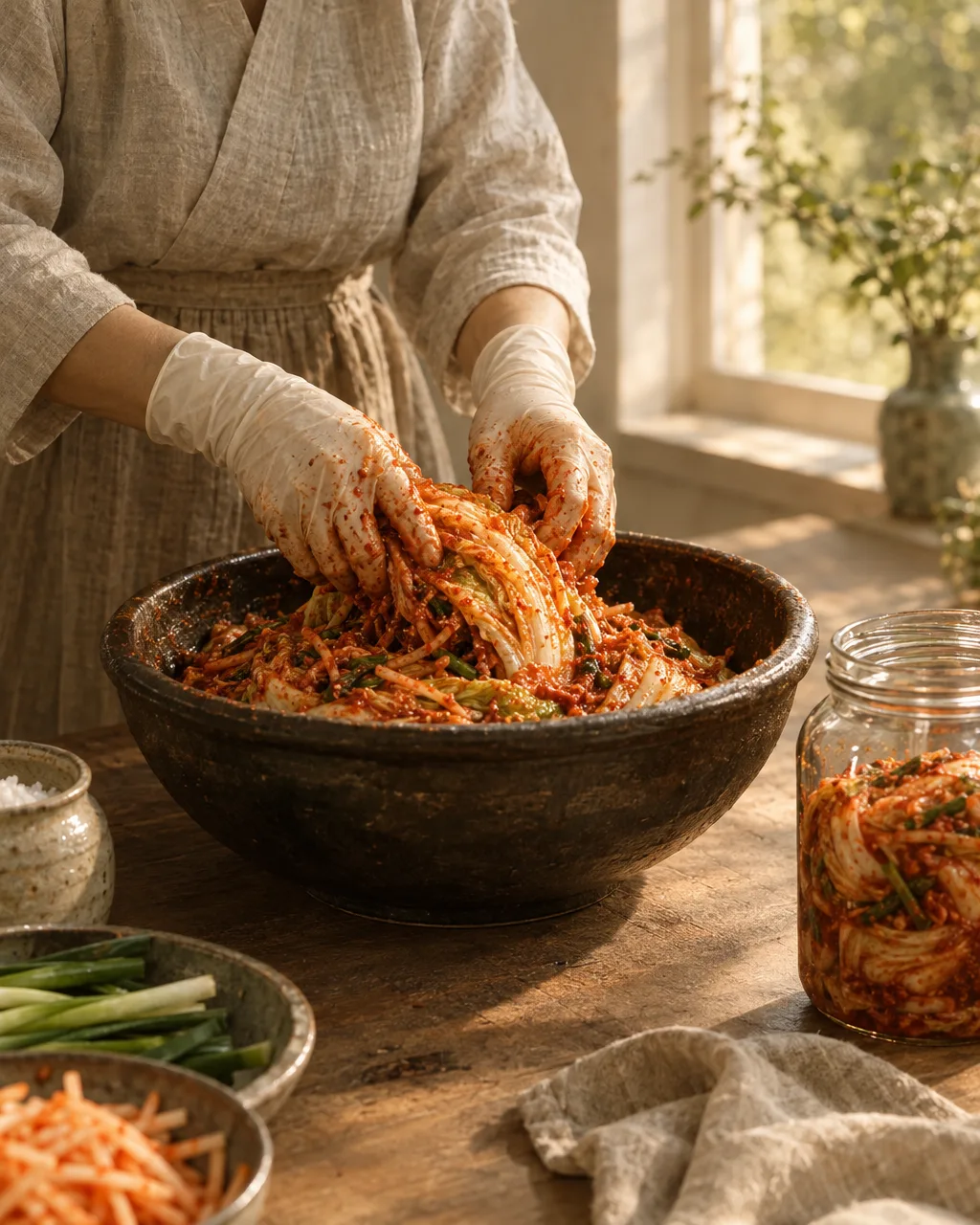
Add the drained cabbage and green onions if using. Mix thoroughly. Gloved hands are the best tool for this.
Step Three: Pack and Ferment
Pack tightly into a jar or container, pressing firmly downward as you fill it to eliminate air pockets. Leave about an inch of headspace, as the kimchi will expand as fermentation begins.
Leave at room temperature for 24 to 48 hours, then transfer to the refrigerator. It's ready immediately but will deepen in flavor over the following week. By day seven, you will understand why Korean women eat this every day.
Elle's Edit: Two Ways to Start
Kimchi Making Kit by OurHands. If a blank bowl and a shopping list feel like too much, a kit made for kimchi is the gentlest way in. Everything is designed for fermenting, so you can focus on the cabbage and the paste and let time do the rest.
Shop the OurHands Kimchi Kit on Amazon
The Korean Vegan Homemade by Joanne Lee Molinaro. For inspiration beyond your first jar. Joanne's recipes and family stories make Korean cooking feel warm and personal, and her plant based approach is perfect.
Shop The Korean Vegan Homemade on Amazon
Filed under 발효Food & Fermentation