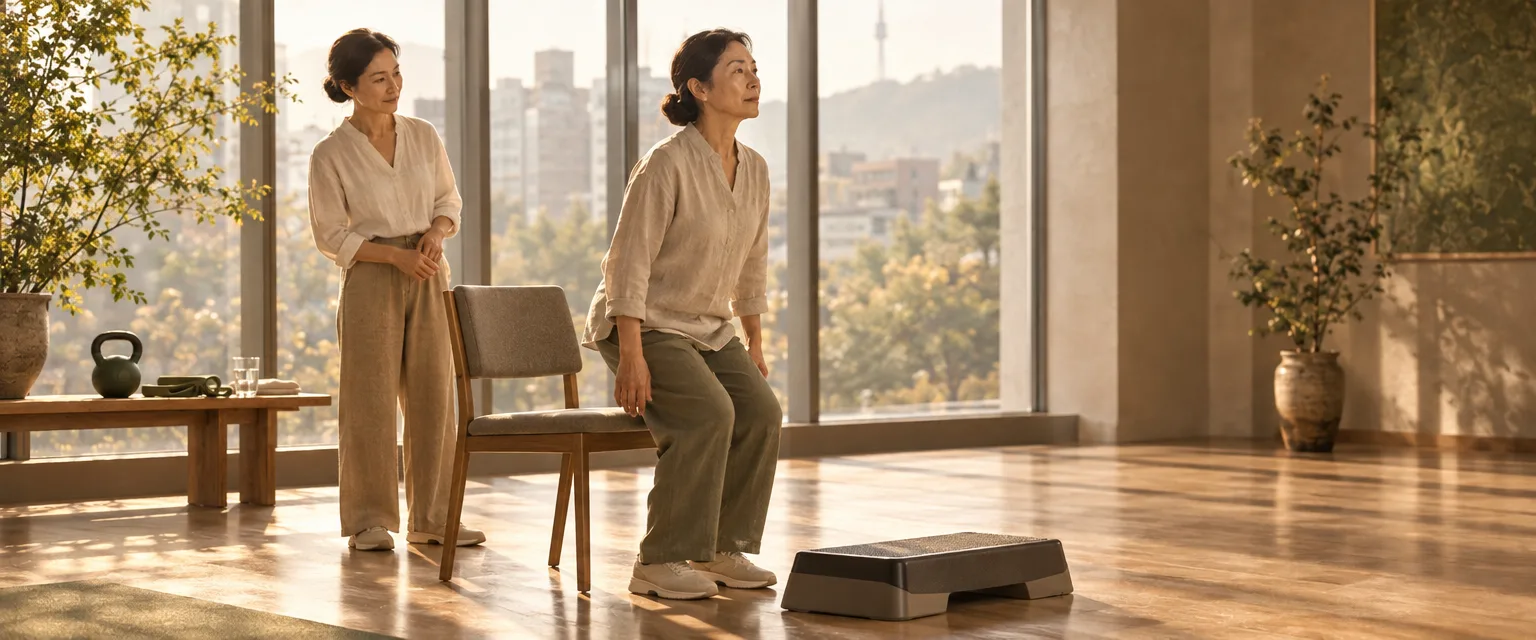
Why Korean Women Are Slimmer and Healthier Without Ever Setting Foot in a Gym
In Korea, movement isn't something you schedule. It's simply how life works. Here's why incidental, everyday activity may be one of the most powerful longevity habits we've been overlooking.
Can I tell you something that might make you feel considerably better about your relationship with exercise?
I used to think that if I hadn't done a proper workout, shoes on, gym bag packed, forty-five minutes accounted for, it didn't really count. So many of us have been taught that movement only matters if it's structured, scheduled, and slightly inconvenient.
Korean wellness culture disagrees. Quietly, practically, and very compellingly.
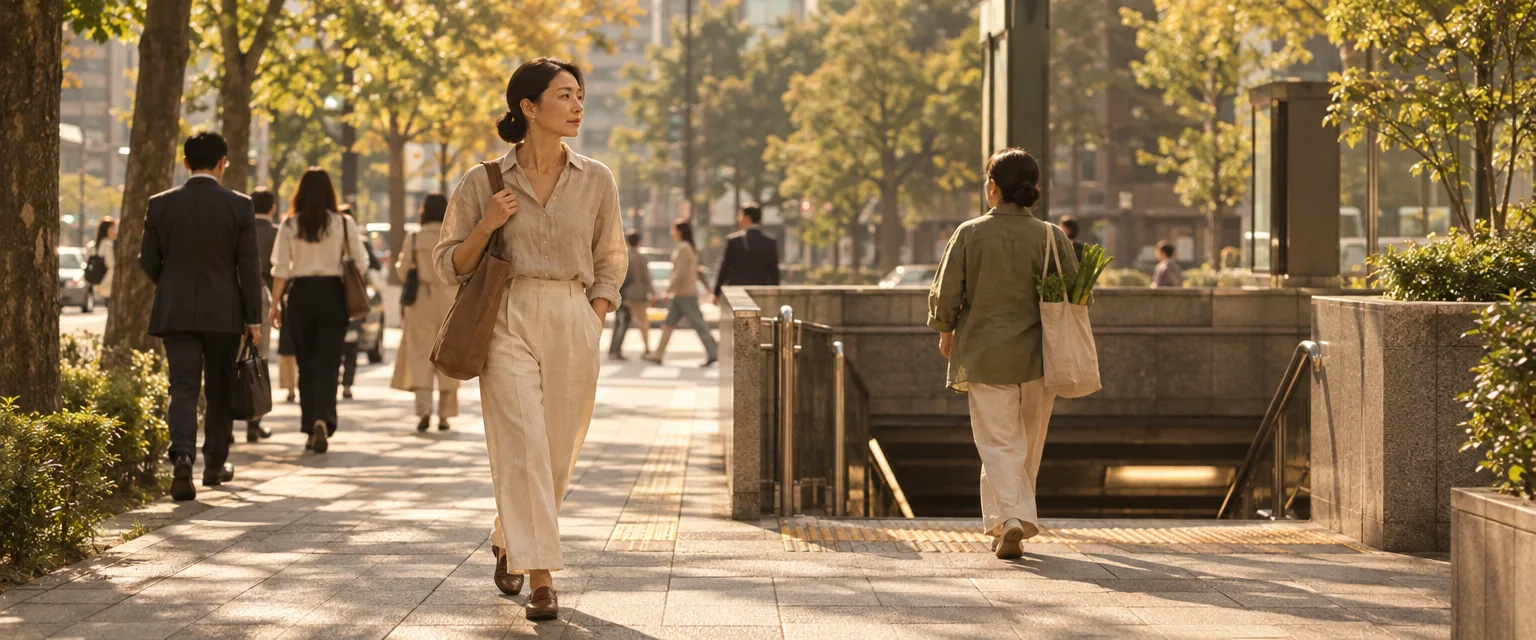
In cities like Seoul, movement isn't something people make time for. It's just part of how life works. People commute by subway and walk the rest. They run errands on foot. They take the stairs as a matter of course. And this constant, low-key physical activity, what researchers call incidental movement, adds up to something remarkable over a lifetime. Which raises an interesting question: what exactly is it adding up to?
"You're not skipping the workout. You are the workout."
This isn't about high-intensity training or fitness goals. It's about circulation. Cardiovascular health. Joint mobility. The kind of physical resilience that means you're still moving easily and freely in your 60s, 70s, and beyond, without ever having forced yourself onto a treadmill you resent.
There is actually a name for this. Researchers call it NEAT, non-exercise activity thermogenesis, which is the rather unglamorous term for all the movement that never looks like exercise: walking to the train, taking the stairs, standing while you cook dinner. A foundational study by Dr. James Levine at the Mayo Clinic found that the difference in NEAT between two people can account for as much as two thousand calories a day. Not from workouts. From the quiet shape of an ordinary life. And that is the part Korean culture seems to understand instinctively: the difference isn't willpower, it's design. In Seoul, the city itself does much of the work, dense and walkable, built so that moving through your day on foot is simply the path of least resistance.
For those of us who find the gym intimidating, time-consuming, or just not particularly enjoyable, this is genuinely good news. The research increasingly supports what Korean daily life already demonstrates: that consistent, moderate movement woven into your day is extraordinarily good for you.
So the next time you choose the stairs, park a little further away, or take the long route home, know that you're doing something that really matters. You're not skipping the workout. You are the workout.
Elle's Edit: Track What Your Movement Is Actually Doing
Korean women don't just count steps. They understand what that movement is doing to their bodies over time. These two tools bring that intelligence home, and they work differently, so it's worth knowing which one does what.
If you're ready to invest:
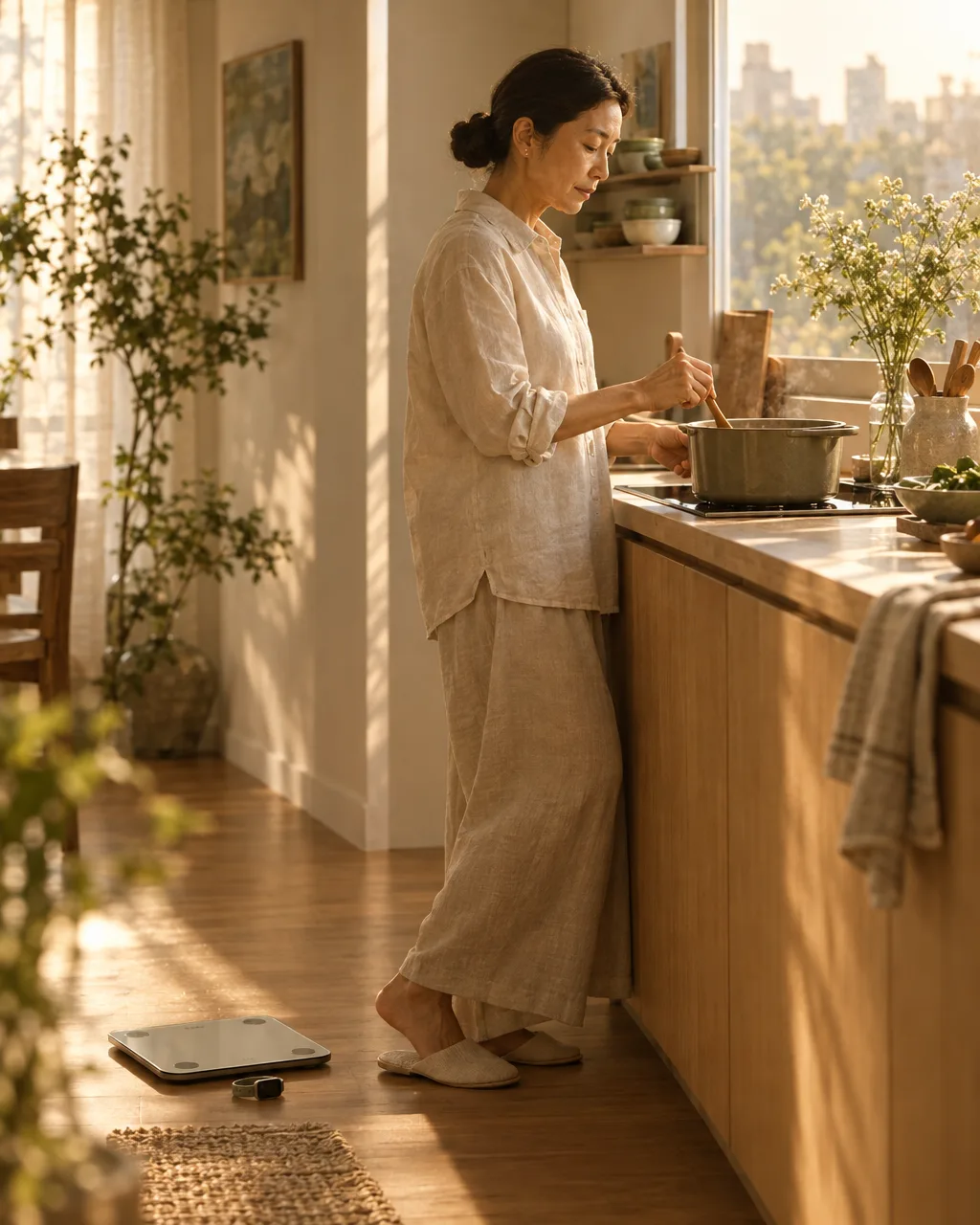
InBody BAND 3. InBody is South Korea's leading medical body composition technology company, whose clinical scanners are used in Korean hospitals and wellness centers. The BAND 3 is a wrist tracker worn throughout the day, measuring body composition continuously: muscle mass, body fat percentage, heart rate, stress levels, and sleep quality. It doesn't just count your steps. It tracks what those steps are actually doing to your body over time. This is the Korean approach to movement: not counting effort, but understanding transformation.
Shop InBody BAND 3 on Amazon →
If you're starting the practice:
InBody Dial H20 Body Composition Smart Scale. Rather than wearing anything, this one works the moment you step on it. Using the same bioelectrical impedance technology as InBody's clinical devices, it measures body fat, muscle mass, and BMI with genuine precision, delivering a clear, accurate snapshot of your body composition each time you use it. A meaningful starting point, because knowing where you are is the first step toward knowing where you're going.
Shop InBody Dial H20 on Amazon →
This Week's Seoul Ritual: Tomorrow, leave the car one stop further than you need to, or add a ten-minute walk after dinner. No gym bag, no schedule, no performance. Just movement as part of your day, the way Korean women have always understood it.
Next on Seoul Style Edit → What a daily spoonful of kimchi actually does to your gut, and why Korean women have treated fermented food as medicine for centuries.
Disclosure: As an affiliate partner, Seoul Style Edit may earn from qualifying purchases. We only feature products that align with our focus on wellness, longevity, design, and quality, researched products we genuinely believe are worth exploring.
Filed under 움직임Daily Movement