Kimchi vs Probiotic Supplements: Why Korean Women Choose Real Food for Anti-Inflammation & Immunity
The probiotic supplement industry is a multi-billion dollar market. Korean women largely ignore it. Here's the science behind why real fermented food may offer something capsules cannot replicate.
The global probiotic supplement market is expected to reach $11 billion by 2027. Korean women are not driving this growth.
It's worth asking why.
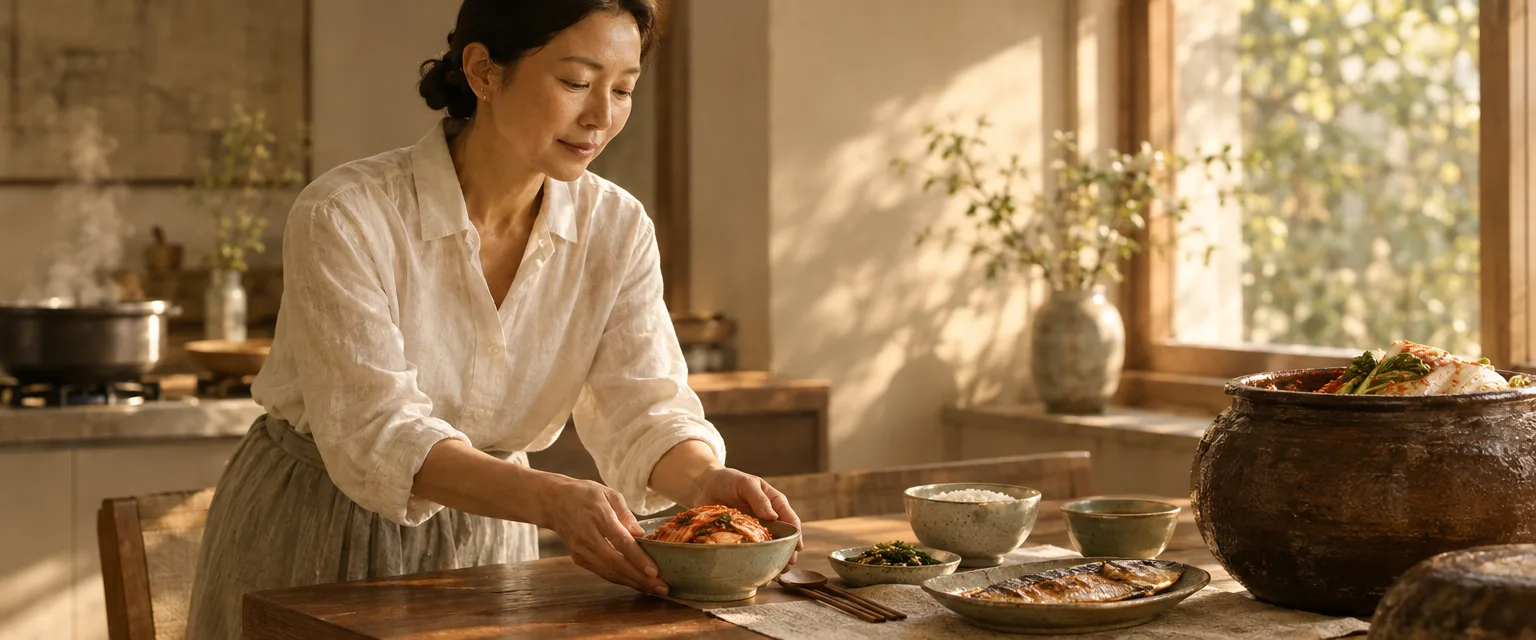
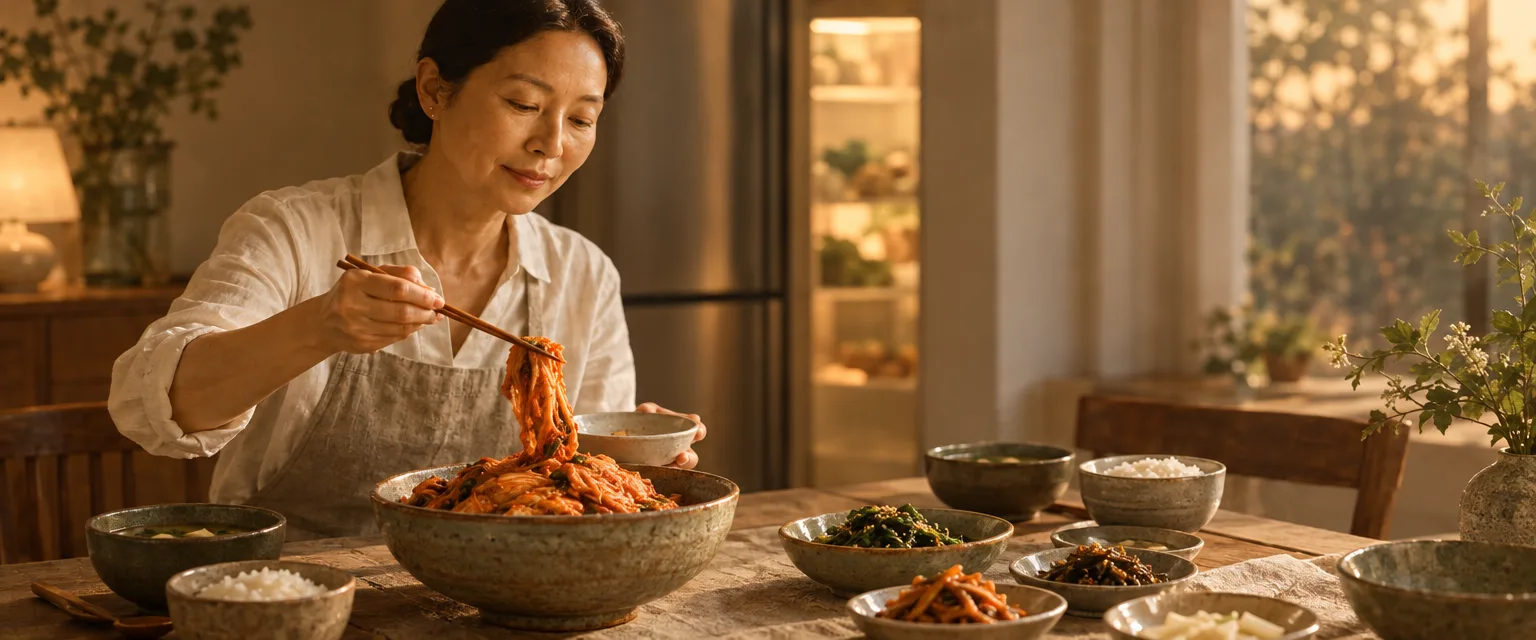
In Korea, gut health is not managed through supplementation. It's managed through food, specifically through a daily diet rich in fermented foods like kimchi, doenjang, and other banchan. The Korean approach to fermented foods for longevity and gut health isn't a wellness trend layered onto a modern lifestyle. It's a foundational nutritional practice with centuries of cultural continuity and, increasingly, strong scientific validation.
So what does the research actually show when you compare the two?
What Probiotic Supplements Do Well
Probiotic supplements have genuine utility. In specific clinical contexts, antibiotic recovery, IBS management, acute digestive disruption, a high-quality targeted probiotic can provide meaningful benefit. The science here is reasonably solid.
They're also convenient, shelf-stable, and highly standardized. If you travel frequently, if your diet is inconsistent, or if you've had significant gut disruption, a supplement provides something reliable in conditions where daily fermented food intake isn't feasible.
This is not an argument against supplements. It's an argument for understanding what they are and what they're not.
What Fermented Food Does That Supplements Can't Replicate
Here's where it becomes interesting.
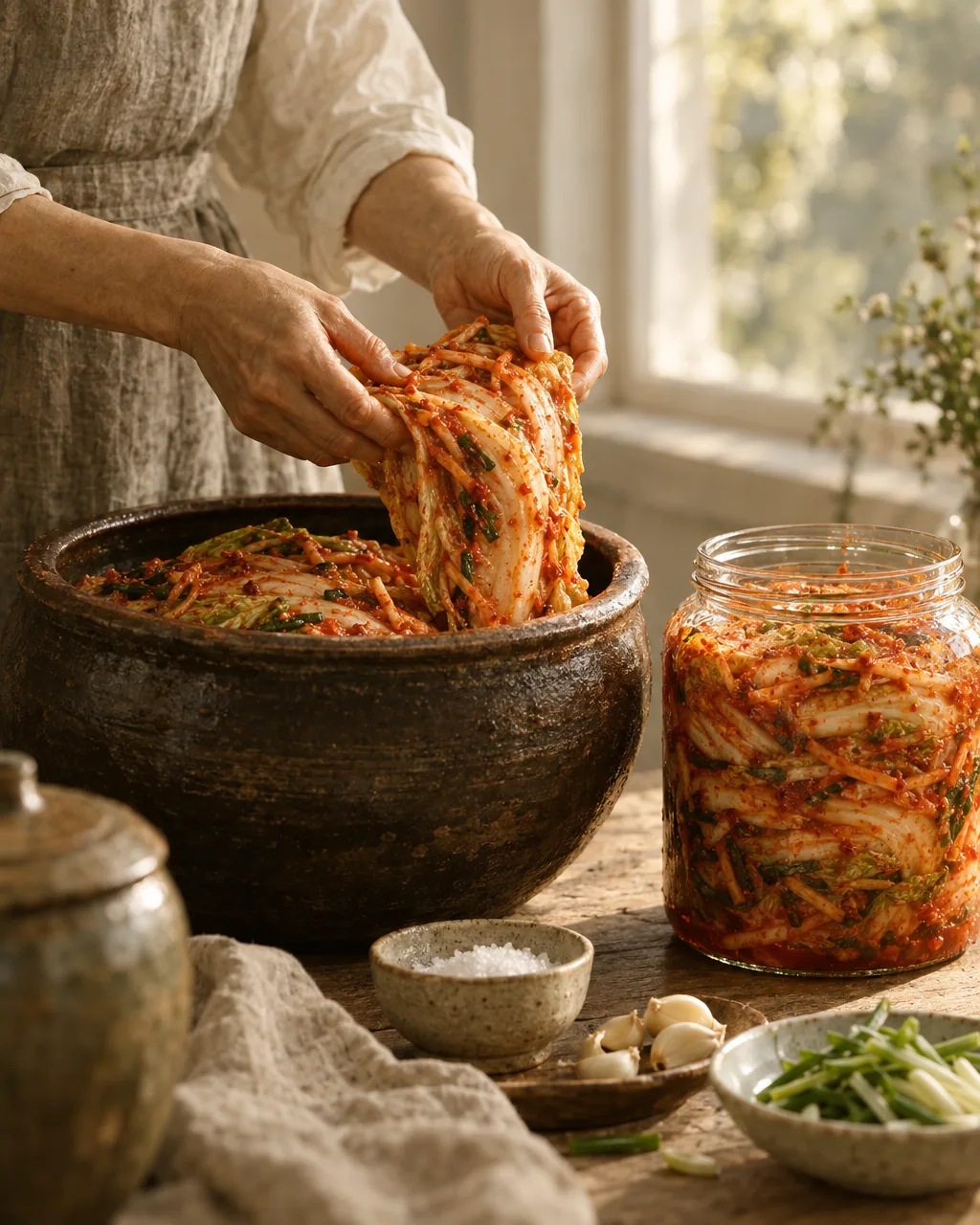
Microbial diversity. A premium probiotic supplement typically contains 5 to 15 bacterial strains. A well-fermented kimchi contains dozens, including wild-fermented species that don't survive the standardization process required for capsule production. The gut microbiome thrives on diversity; monocultures, even beneficial ones, don't replicate ecosystem dynamics.
The fiber matrix. Kimchi delivers its probiotics inside a vegetable matrix, rich in fiber, vitamins, and bioactive compounds. This fiber acts as prebiotics, selectively feeding the beneficial bacteria during and after transit. Supplements deliver bacteria without their preferred fuel source.
Live versus stable cultures. Many commercial probiotic supplements use freeze-dried or heat-treated strains that must be rehydrated in the gut before becoming active. Refrigerated, traditionally fermented kimchi contains fully active, live cultures that have been continuously metabolizing since fermentation began.
Bioactive compounds. Fermentation produces compounds, organic acids, bacteriocins, bioactive peptides, that are not present in the original cabbage and cannot be synthesized into a capsule. These compounds contribute to inflammation modulation, pathogen inhibition, and immune signaling in ways that researchers are still characterizing.
What the Research Says
The 2021 Stanford study comparing high-fiber and fermented food diets found that fermented food consumption, including kimchi, significantly increased microbiome diversity and decreased 19 inflammatory proteins. No supplement study has produced equivalent results in a comparable population.
This doesn't mean supplements are ineffective. It means we don't yet have evidence that they produce the same systemic benefits as consistent real-food fermentation.
The Honest Answer
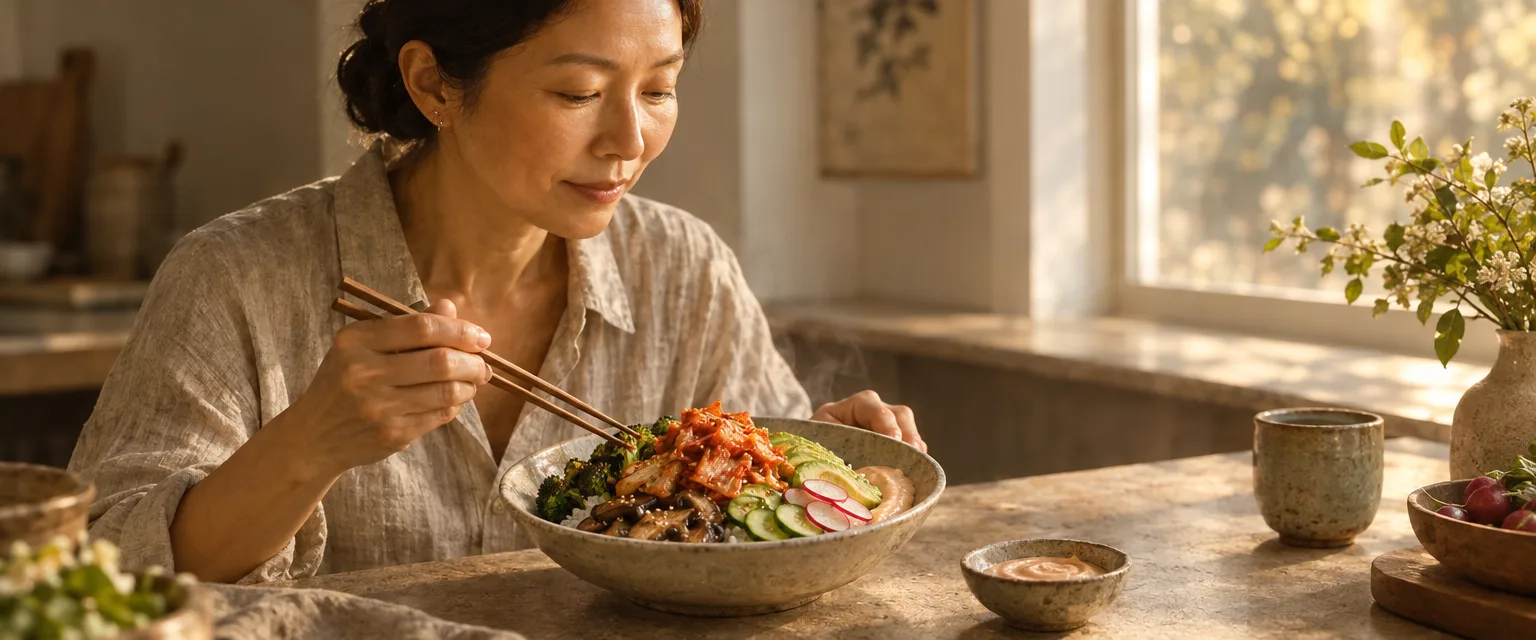
If you're taking a probiotic supplement and eating kimchi daily, you're probably not hurting yourself. But if you're using a supplement as a substitute for the daily fermented food practice, if you're taking a capsule and believing you've done what Korean women do, you may be missing the essential thing.
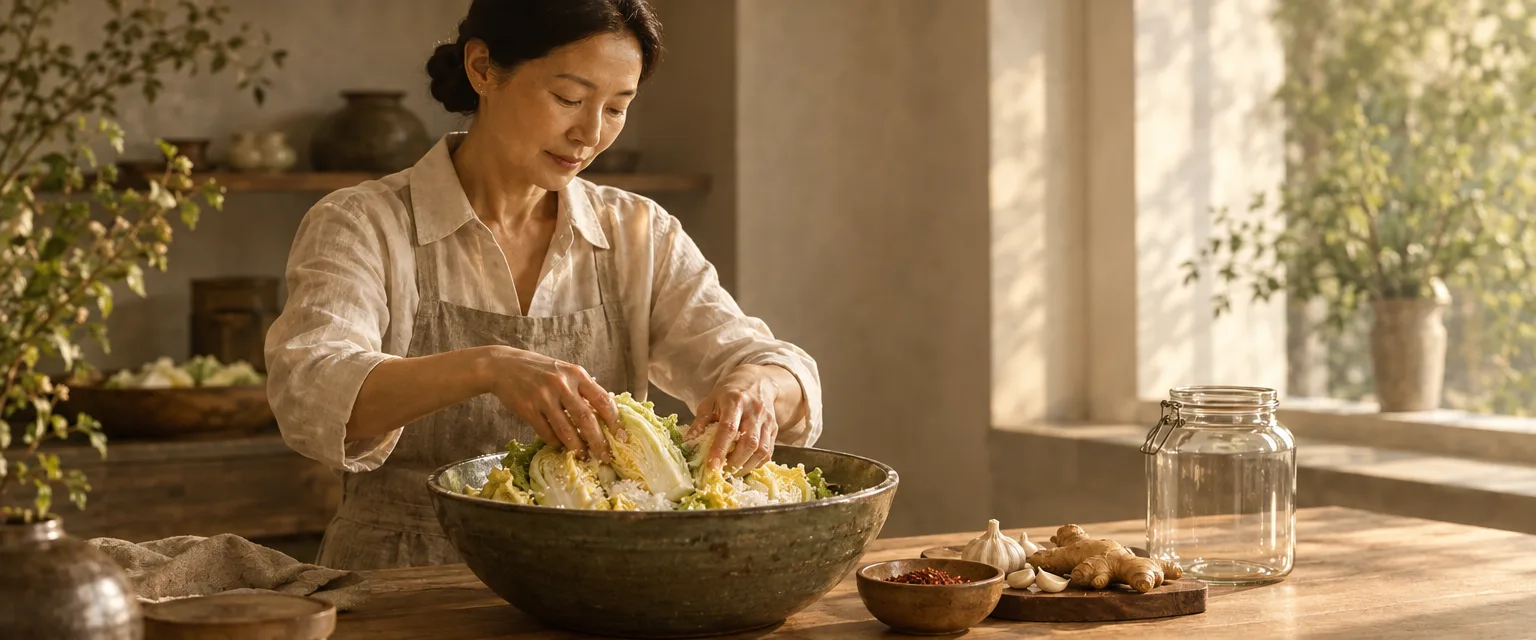
The Korean practice is daily. It's food. It's embedded in meals. It's cumulative over years and decades, not weeks. If you'd like to begin that practice for yourself, or understand the simplest possible entry point, I've written a beginner's guide to homemade kimchi that removes most of the perceived complexity.
Elle's Edit: Food First, With a Backup
Cleveland Kitchen Classic Kimchi. The easiest way to begin the daily practice is a good refrigerated kimchi with live cultures. This is the one I keep in my fridge.
Shop Cleveland Kitchen Kimchi on Amazon
Seed DS-01 Daily Synbiotic. For travel weeks and the days when kimchi simply is not possible. It combines a probiotic and a prebiotic in one daily capsule, and it is the supplement I would choose to support the practice, not replace it.
Filed under 발효Food & Fermentation