Korean Fermented Foods for Longevity & Gut Health: Why Women Over 40 Are Adding Kimchi Daily
Fermented food isn't a wellness trend in Korea. It never needed to be. Here's the science, the centuries-old practice, and the simple daily habit that Korean women credit for vibrant gut health, immunity, and graceful aging.
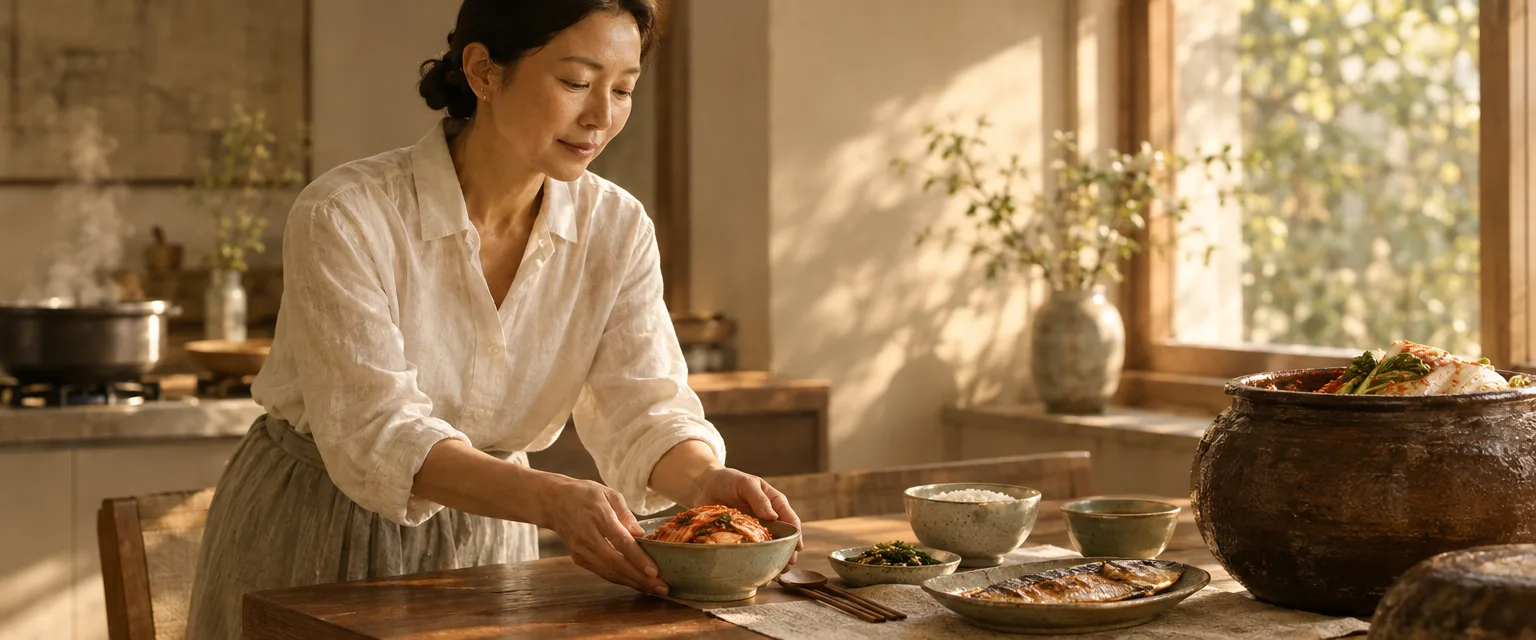
In the homes of affluent Korean women, longevity isn't pursued through complicated protocols or expensive supplements. It begins quietly at the table, with small, daily servings of fermented vegetables like kimchi that have been part of the culture for centuries.
Why Gut Health Becomes Everything After 40
As we move through our 40s and beyond, many of us notice subtle shifts: slower digestion, occasional bloating, fluctuating energy, or a sense that inflammation lingers a little longer than it used to. What feels like "normal aging" is often tied to changes in our gut microbiome, the trillions of bacteria that influence everything from immunity and mood to skin clarity and metabolic balance.
Korean women have long understood this connection intuitively. High intake of fermented foods, particularly kimchi, forms one of the foundational pillars of their approach to graceful, vibrant aging. What their grandmothers practiced at the kitchen table, clinical researchers in 2025 and 2026 are now confirming with remarkable precision.
The gut, it turns out, is not just a digestive organ. It is a central command system, and the condition of your microbiome at 45 may shape how you feel, look, and age at 65.
What the Latest Science Actually Shows
A groundbreaking 12-week clinical study from the World Institute of Kimchi, using advanced single-cell genetic analysis, found that daily kimchi consumption helps fine-tune the immune system: strengthening defenses against real threats while calming the harmful overreactions that contribute to chronic inflammation. Participants showed improved antigen-presenting cell function and better-regulated CD4+ T cells, supporting a more balanced, resilient immune response without broad systemic activation.
This is significant. Chronic low-grade inflammation, sometimes called "inflammaging," is now understood to be a primary driver of many of the conditions women in midlife most want to avoid: accelerated skin aging, metabolic shifts, joint discomfort, and cognitive fog. Kimchi, eaten consistently and simply, appears to address this at the root.
Additional recent findings link regular fermented kimchi intake to:
Increased gut microbial diversity, with improvements in digestion, bowel regularity, and reduced bloating. Lower systemic inflammation markers, particularly relevant for women navigating perimenopause and beyond. Support for metabolic health, including healthier blood sugar regulation, improved lipid profiles, and more stable body composition. Potential anti-aging effects through reduced oxidative stress and improved cellular redox balance.
Kimchi has even been formally recognized in the 2025 to 2030 U.S. Dietary Guidelines for Americans as a fermented food that helps maintain microbiome diversity and supports gut health, a meaningful shift for a food that was largely unknown to Western nutritionists a decade ago.
"In Korea, fermented food is not a trend. It is a centuries-old practice quietly shaping gut health and longevity from the inside out."
Why This Matters Specifically for Women Over 40
For women in midlife, these benefits feel especially personal. As estrogen levels shift and microbial diversity naturally declines with age, the gut becomes more vulnerable and more influential. Research now links gut health directly to hormone metabolism, mood regulation, skin quality, and even how well we sleep.
A simple daily habit like adding kimchi to meals can help restore this balance from within. Not through a dramatic protocol or a restrictive plan, but through an elegant, sustainable addition to your plate that tastes vibrant, feels nourishing, and aligns with the Korean philosophy of yak sik dong won: food and medicine as one.
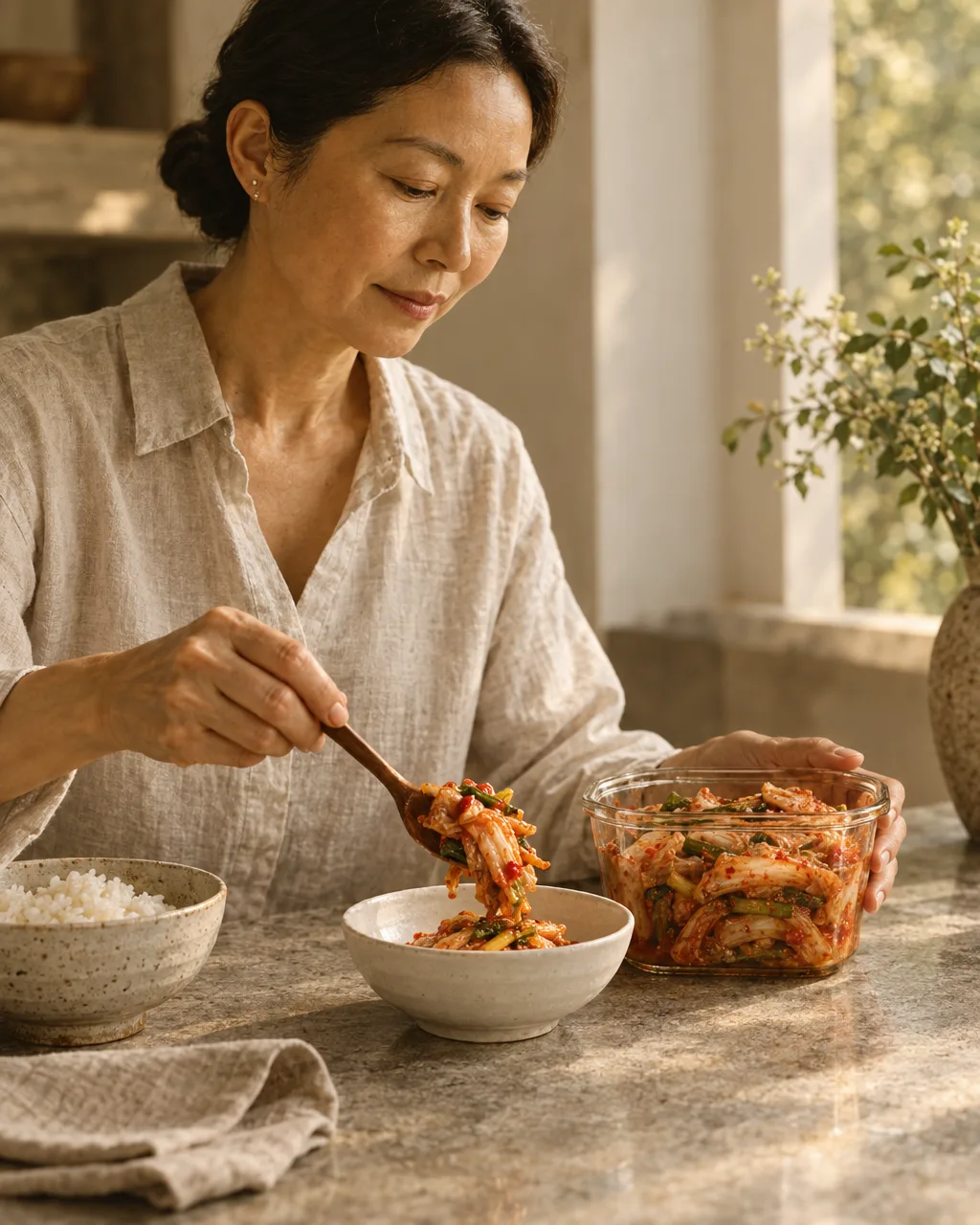
Most women who begin incorporating kimchi consistently start with just one to three tablespoons alongside meals. Many notice improvements in digestion and overall vitality within two to four weeks, not from a supplement, not from a detox, but from something that has been sitting quietly in Korean kitchens for generations.
How to Begin: An Elegant Entry Point
This is not about perfection or strict rules. It is about one small, considered addition, the kind Korean women make without thinking because it has always simply been part of the meal.
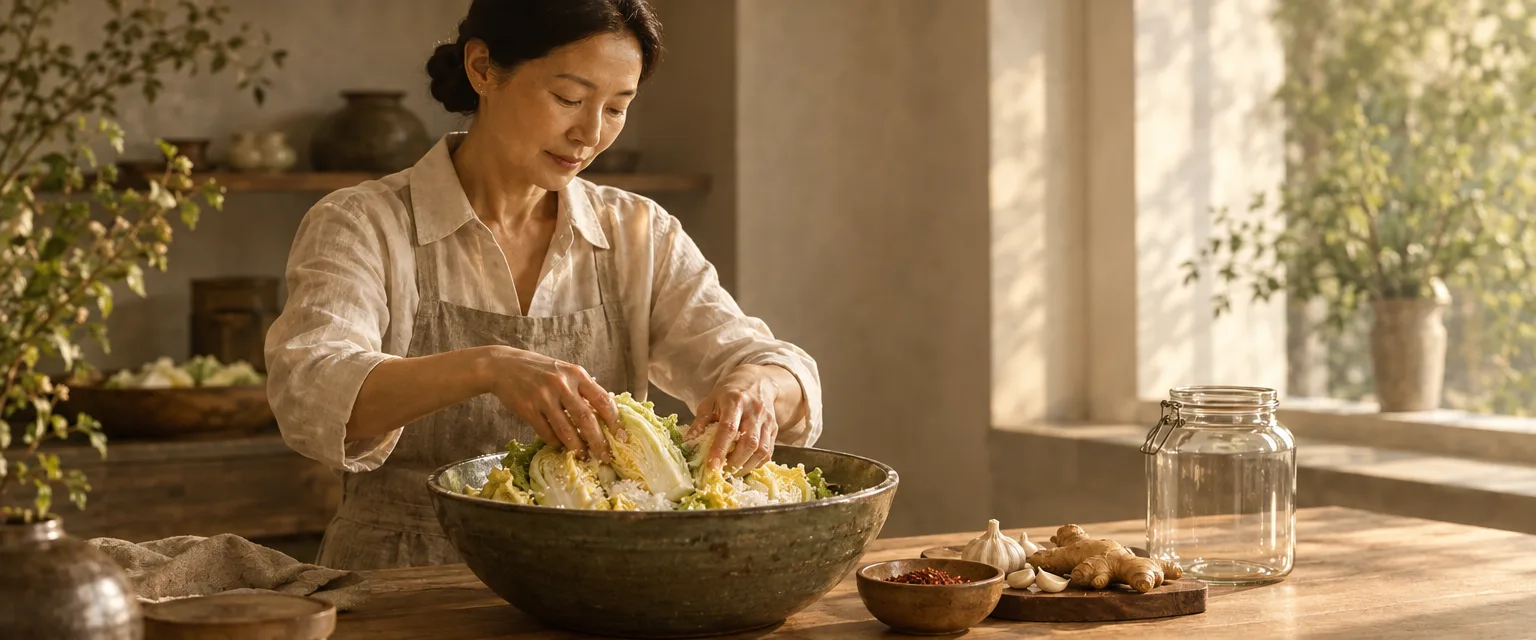
If you are new to kimchi, start with a good-quality store-bought version. Look for raw, unpasteurized kimchi in the refrigerated section, as the live cultures are what matter. When you are ready, making it at home is far simpler than it appears, and there is something genuinely satisfying about the process.
How Much Kimchi Per Day?
Most Korean women enjoy one to three tablespoons (roughly 15 to 50 grams) alongside meals. It is a modest amount, enough to deliver meaningful probiotic and prebiotic benefits while staying gentle on the digestive system. Start with a single small spoonful and build up gradually as your body adjusts. Many women notice easier digestion and steadier energy within one to two weeks.
Simple Ways to Add Kimchi Daily
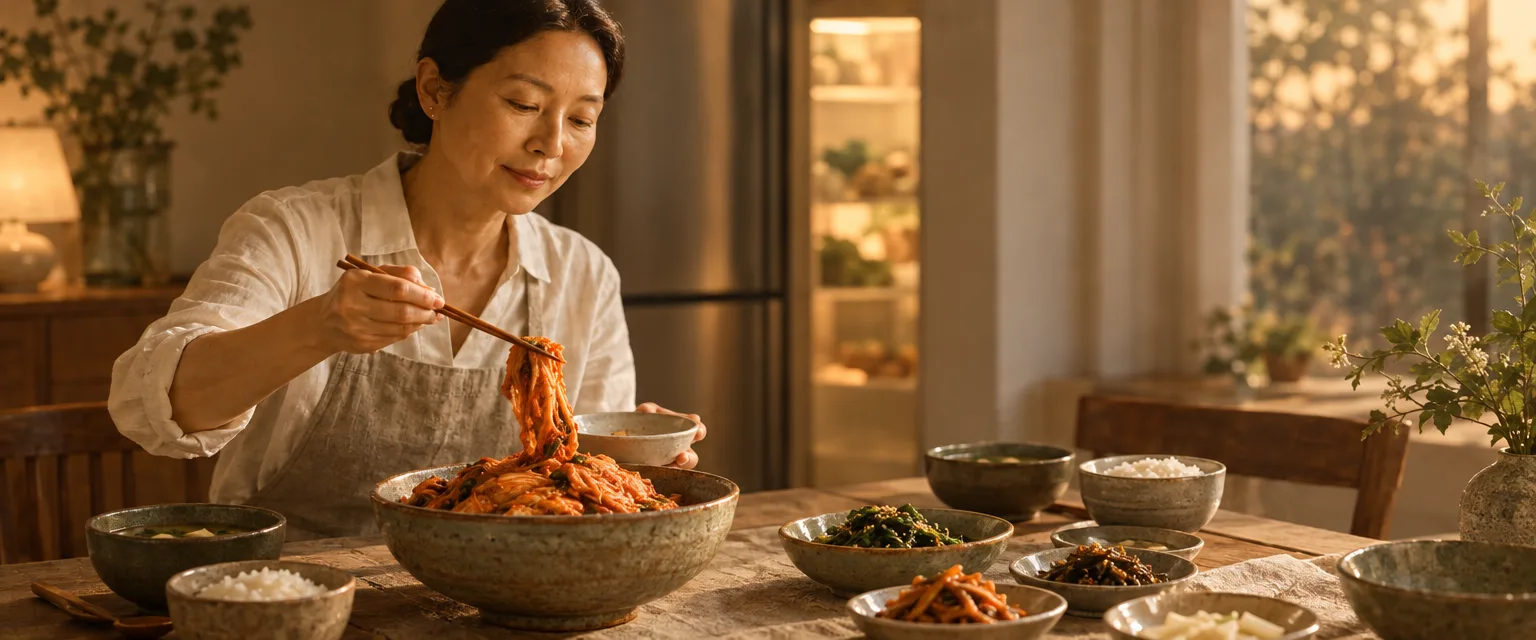
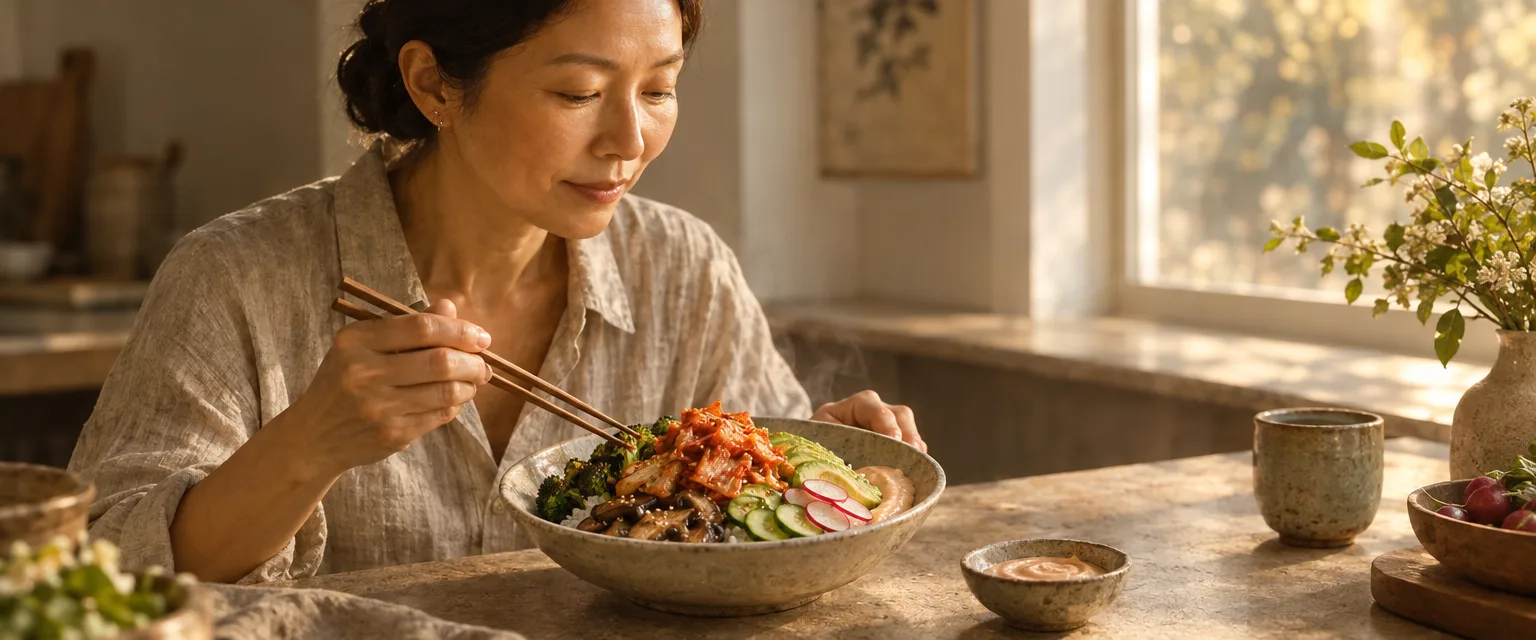
The flavor is more versatile than people expect, tangy, savory, with a gentle heat that pairs as easily with Western meals as with Korean ones. Stir a spoonful into scrambled eggs or onto avocado toast at breakfast. Add it to rice bowls, grain salads, or noodles at lunch. Serve it alongside grilled fish, chicken, or tofu at dinner. Over time it stops feeling like an addition and simply becomes part of the plate.
Elle's Edit: Two Easy Ways to Add Fermented Foods
Cleveland Kitchen Classic Kimchi. The simplest place to begin is a raw, refrigerated kimchi with live cultures. One spoonful with dinner is all it takes to start.
Shop Cleveland Kitchen Kimchi on Amazon
TEAZEN Kombucha Powder Sticks, Korean Plum. Not everyone loves kimchi, and that is fine. This Korean kombucha comes in single sticks that you simply stir into cold water, with a lightly sweet, fruity flavor. An easy, refreshing way to bring a fermented drink into your day.
Shop TEAZEN Kombucha on Amazon
The articles below will take you further, from the foundational science to practical daily habits to a beginner's guide to making your own.
Filed under 발효Food & Fermentation