The Korean Wellness Home: How Affluent Koreans Are Turning Their Homes Into Longevity Sanctuaries
In Seoul's most discerning homes, wellness is no longer something you go somewhere to experience. It is built into the walls, the floors, the air, and the light, and the rest of the world is quietly catching up.
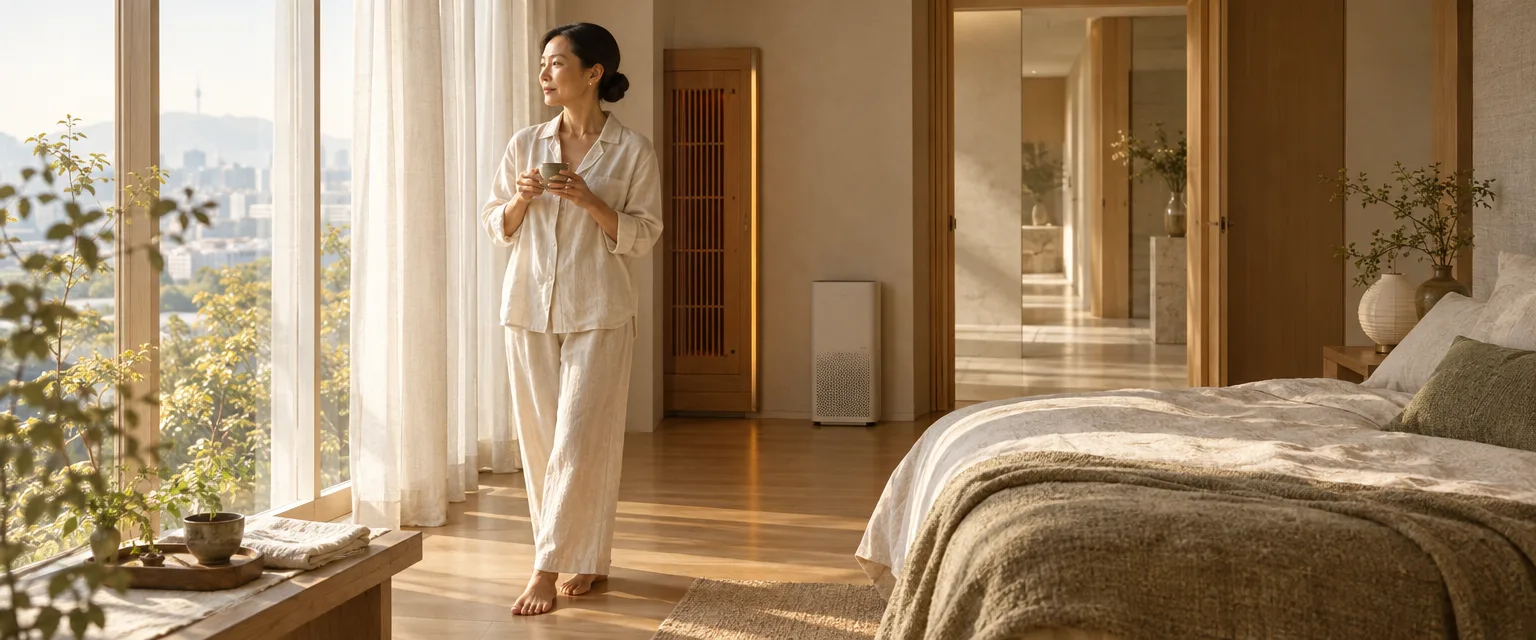
There is a particular kind of woman in Seoul who has quietly stopped thinking about wellness as something she schedules. She does not drive to a clinic for her infrared therapy or book a month in advance for her sauna session. She walks down the hallway.
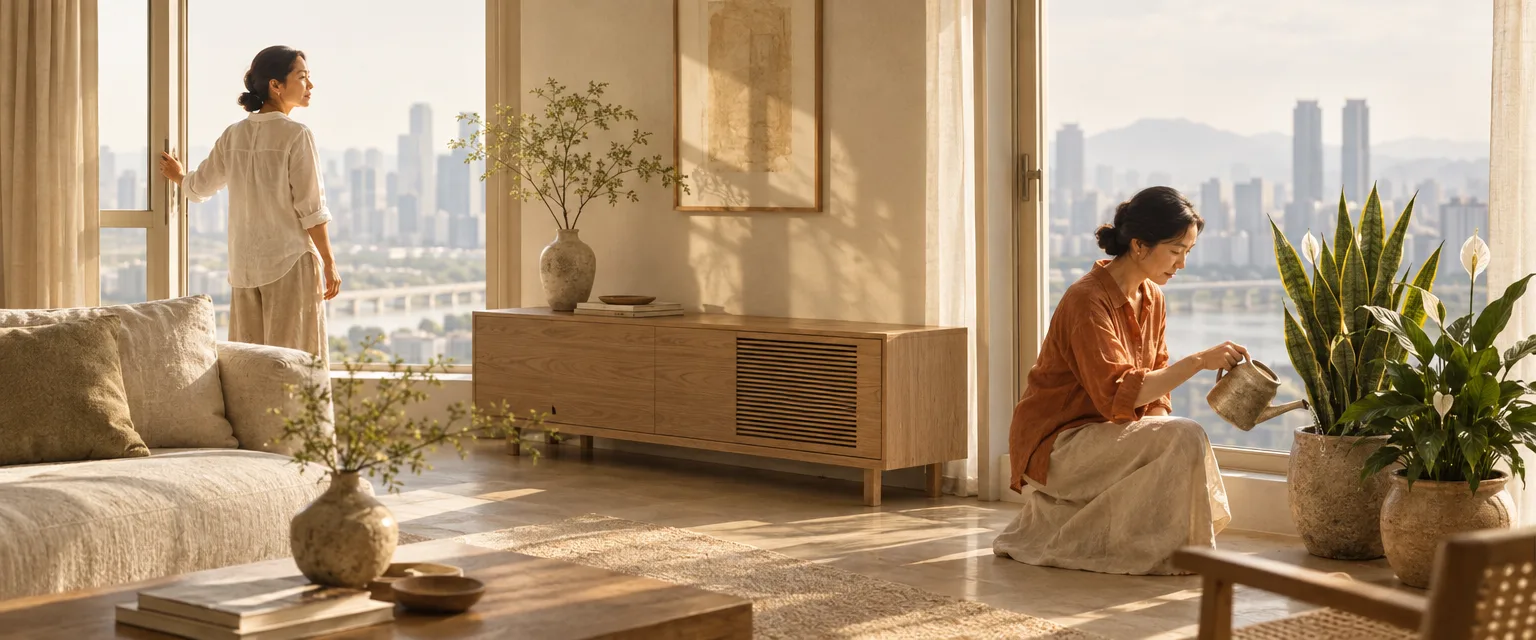
In South Korea's most design-forward homes, a profound shift has been underway for several years, one that is now beginning to capture the attention of architects, wellness researchers, and discerning women across the West. The home is no longer simply where life happens. It is an active participant in health, longevity, and the slow, intentional process of aging beautifully.
This is not about excess. It is about philosophy, specifically the Korean understanding that the environment you inhabit every day is either working for your health or quietly working against it. And once you see it that way, the upgrades make complete sense.
What Is a Korean Wellness Home?
The term gaining traction in South Korea is 헬스케어 홈, healthcare home, or more broadly, 스마트 웰니스 홈: a smart wellness home. But the concept goes far deeper than technology. It is the integration of preventative health infrastructure into the architecture and rhythm of daily life.
Think of it as the physical expression of yak sik dong won, the Korean philosophy of food and medicine as one, extended beyond the kitchen to every room. The air you breathe, the light that wakes you, the surface you walk on, the temperature of the space where you rest. All of it, considered. All of it, intentional.
In affluent Korean homes this currently encompasses several distinct categories, each addressing a specific dimension of longevity and wellbeing.
The Six Pillars of the Korean Wellness Home
1. Air Quality & Environmental Purity
Korean wellness culture has long understood something Western design is only beginning to acknowledge: indoor air quality is one of the most significant and most overlooked factors in long-term health. South Korea's urban environment, and its winters, which keep windows closed for months, has made this a practical priority as much as a wellness one.
High-performance HEPA air purification systems are now standard in health-conscious Korean homes, often installed room by room rather than as a single central unit. The goal is consistent filtration of particulates, allergens, VOCs from furniture and paint, and the invisible byproducts of everyday cooking and cleaning.
For women in midlife, air quality has direct implications beyond respiratory health. Clean indoor air has been linked to better sleep quality, reduced inflammatory markers, and clearer skin. The bedroom, in particular, is treated as a purified zone.
Where to begin: A high-quality room air purifier in the bedroom is the single highest-impact starting point. The Vnitoz Plug-In Air Purifier is a compact, effective entry point for bedrooms and smaller spaces, quietly working through the night while you sleep.
2. Thermal Wellness: Heated Floors, Dry Sauna & Infrared Therapy
No element of the Korean home is more culturally embedded than ondol, the traditional underfloor heating system that has warmed Korean homes for centuries. Modern iterations use water-heated or electric radiant floor systems that distribute gentle, even warmth from the ground up, the way the body naturally absorbs heat most efficiently.
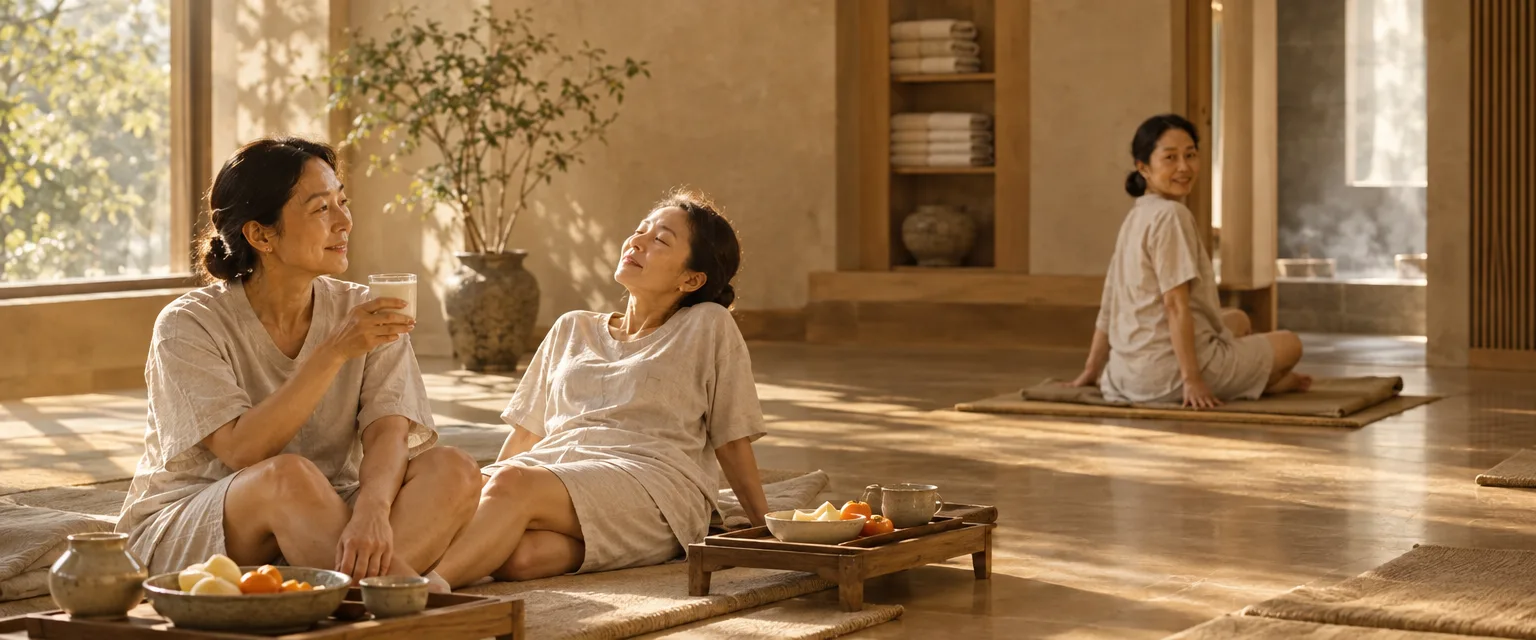
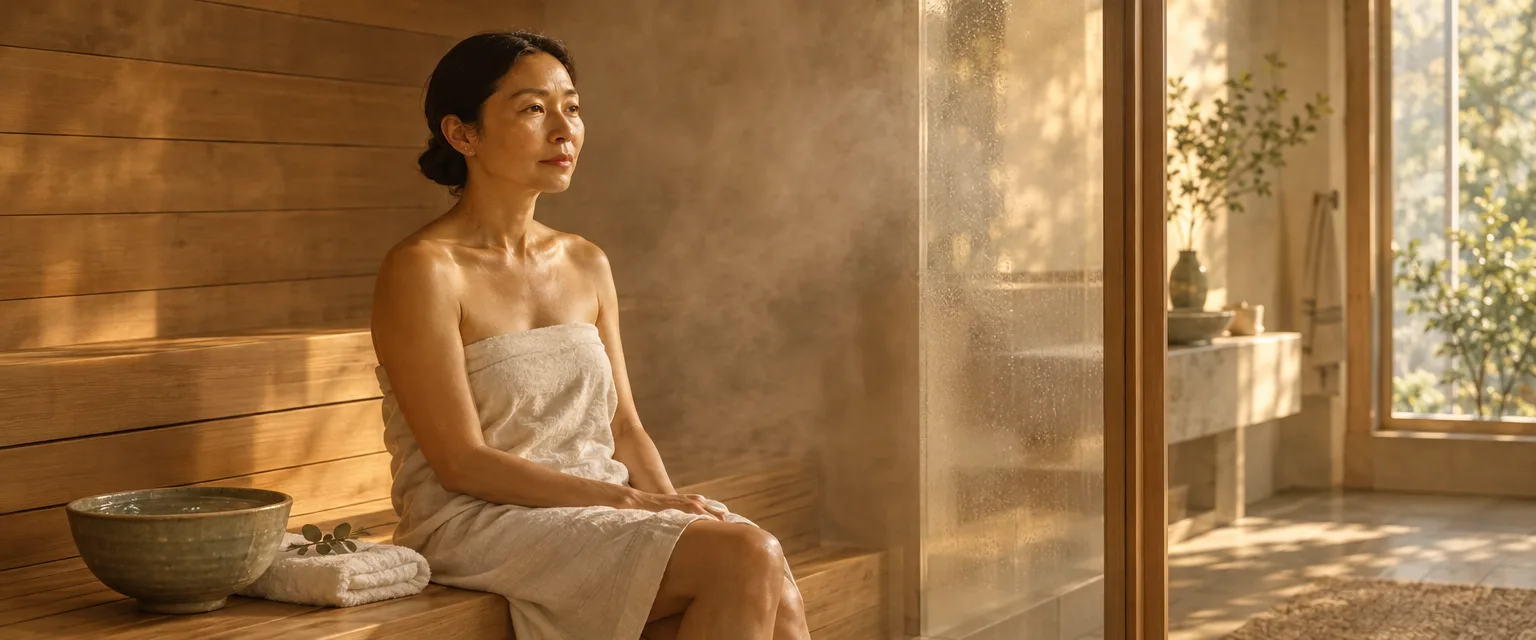
Beyond ondol, Korean wellness homes now increasingly incorporate dedicated sauna spaces, both dry and infrared. What was once exclusively the domain of the public jjimjilbang is moving into private residences, driven by a growing body of research on heat therapy's role in cardiovascular health, cellular repair, detoxification, and longevity.
For women over 40, regular sauna use has been associated with reduced cortisol, improved circulation, better sleep, and support for the lymphatic system, benefits that compound quietly over months and years of consistent use.
"The most powerful wellness tools are not the ones you use occasionally at a spa. They are the ones that become so woven into your daily life that you stop noticing you are using them."
Full home saunas are now genuinely accessible. The Far Infrared Sauna for One Person in Canadian Hemlock and the SALUSHEAT Ultra Low EMF Far Infrared Sauna represent the kind of investment Korean wellness homes are making, private, daily, deeply restorative.
For those not yet ready for a full cabin, the HigherDOSE Far Infrared Sauna Blanket delivers comparable infrared benefits in a form that stores in a cupboard and requires nothing more than thirty minutes lying down, a genuinely elegant entry point.
3. Light as Medicine: Circadian & Cognitive Wellness Lighting
Korean wellness design increasingly treats light not as a decorative consideration but as a biological one. Circadian lighting systems, which shift in colour temperature and intensity to mirror the natural arc of daylight, are being installed in bedrooms, living spaces, and home offices to support the body's internal clock.
The implications for women over 40 are significant. As estrogen levels shift, sleep architecture becomes more vulnerable. Disrupted circadian rhythms are now understood to affect not just sleep quality but immune function, mood regulation, metabolic health, and even skin cell repair, all of which happen primarily during deep sleep cycles.
Morning light exposure (bright, cool-toned) signals the brain to suppress melatonin and elevate cortisol appropriately. Evening light (warm, low-intensity) does the opposite. A home that manages this transition intentionally is one that is actively supporting your hormonal health every single day.
4. Smart Health Monitoring: Medical-Grade Technology for the Home
Perhaps the most striking shift in Korean wellness homes is the arrival of technology previously reserved for clinical settings. Body composition analysis, skin diagnostics, and metabolic monitoring, once requiring a trip to a specialist, are now available as home devices of remarkable accuracy.
InBody, the South Korean company whose professional-grade body composition analysers are used in hospitals, sports medicine clinics, and research institutions worldwide, now produces consumer devices that bring this precision home.
The InBody Dial H20 Body Composition Smart Scale goes far beyond weight, measuring muscle mass, body fat percentage, and hydration levels with clinical methodology. The InBody Band 3 Fitness Tracker extends this to continuous heart rate monitoring and daily activity data, providing the kind of longitudinal health picture that helps women in midlife understand what is actually changing in their bodies, and respond intelligently rather than reactively.
For women over 40, this matters enormously. Muscle mass preservation, metabolic health, and hydration are the invisible foundations of how we age, and they are nearly impossible to manage without accurate data. Knowing your numbers is not vanity. It is strategy.
Smart mirrors with integrated skin analysis are also entering the Korean wellness home, devices that can assess hydration levels, pore condition, pigmentation, and early signs of collagen loss over time, tracking changes the eye cannot see and flagging them before they become visible concerns.
5. Red Light Therapy & Recovery Panels
Red and near-infrared light therapy has moved from specialist clinics into Korean wellness homes at significant pace, driven by growing clinical evidence of its effects on skin collagen production, muscle recovery, mitochondrial function, and inflammation reduction.
For women over 40, the skin benefits are the most immediately visible: regular red light exposure has been shown to stimulate fibroblast activity, increasing collagen and elastin production in a way that is measurable over consistent use. But the systemic benefits, cellular energy production, reduced joint inflammation, improved circulation, are arguably more significant for long-term vitality.
The HigherDOSE Full Body Red Light Therapy Mat with 1,000 LEDs brings this technology to the home in full-body format, something previously requiring clinic visits costing hundreds per session. Twenty minutes lying on this mat while reading or listening to a podcast is the kind of effortless, compounding habit the Korean wellness home is built around.
6. Non-Toxic Kitchen & Clean Living Environments
The Korean wellness home extends its philosophy to cookware, cleaning products, and the materials used throughout the living space. Non-toxic ceramic and cast iron cookware, filtered water systems, and the elimination of VOC-heavy synthetic materials from furniture and textiles form the environmental foundation of clean living.
This is not minimalism for aesthetic reasons. It is the reduction of the daily toxic load that accumulates quietly over decades, in the non-stick pans that off-gas at high heat, the synthetic fragrances in cleaning products, the formaldehyde in pressed wood furniture. Korean wellness design treats the home as a system, and asks: what is this space doing to our bodies over time?
How to Begin: The Korean Wellness Home for Western Women
The Korean wellness home is not built overnight, and it does not require a renovation budget. It is built incrementally, with intention, one considered addition at a time.
A suggested sequence for women beginning this journey:
Start with air, a bedroom air purifier is the highest-impact, lowest-effort first step. Then light, adjust your evening lighting to warmer, lower tones after 8pm. Then data, invest in a body composition scale that gives you real numbers to work with. Then heat, even an infrared sauna blanket used three times a week begins to shift how you feel within weeks.
Each addition compounds. Each one makes the next feel more natural. This is how Korean women approach it, not as a project to complete, but as a home to inhabit more intentionally, season by season.
This Week's Seoul Ritual: Tonight, switch your bedroom lighting to the warmest, lowest setting available from 8pm onward, no overhead lights, no cool blue screens. Notice the quality of your sleep. This single change, practiced consistently, is one of the most researched and most underused longevity interventions available to you, and it costs nothing.
Next on Seoul Style Edit → The Korean cookware philosophy that is quietly replacing non-stick pans in health-conscious homes, and the cleaner, more elegant alternatives that Korean women have been using for decades.
Filed under 집Home as Medicine