Why Korean Women Over 40 Swear by SPF 50, and the 6 Sunscreens Worth Trying
In Korea, sunscreen isn't a summer afterthought. It's the single most important step in any anti-aging routine. Here's what that means for your skin, and the six Korean SPFs that are changing everything.
You've invested in serums. You've found a moisturizer that actually works. You're sleeping better, drinking more water, maybe even taking collagen. And yet, quietly, persistently, the sun is undoing a portion of all of it, every single day, whether you notice or not.
This isn't about fear. It's about understanding the one step that Korean dermatologists, beauty editors, and women in their 50s with genuinely luminous skin name first, every single time, when asked what they do differently. The answer is never a serum. It's never a treatment. It's always, without exception, sunscreen.
But not just any sunscreen. And not applied the way most of us were taught to think about it.
Why Korean Sunscreen Culture Is Different
In South Korea, SPF isn't seasonal. It isn't optional. It isn't something that happens at the beach. It is step one of a morning routine, applied after moisturizer and before anything else, every day, year-round, regardless of weather.
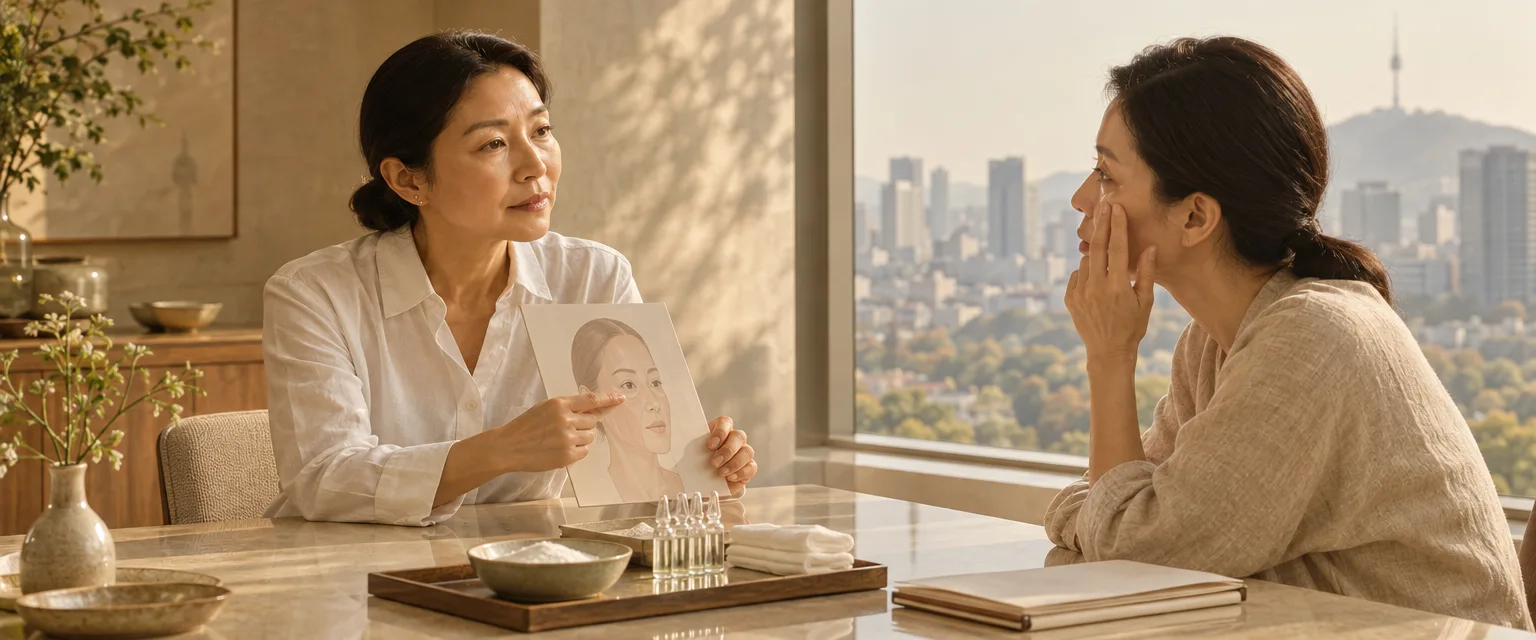
Korean dermatologists refer to UV exposure as "silent aging," the kind that accumulates across decades without a single dramatic moment. No burn, no obvious damage. Just a quiet, compounding process that affects collagen structure, elasticity, and evenness of tone in ways that no serum can fully reverse.
The logic is elegant in its simplicity: protect what you already have, and everything you invest in afterward works harder.
What makes Korean sunscreens remarkable isn't just the philosophy. It's the formulation. Korean cosmetic chemists have spent decades solving the exact problem that kept so many of us inconsistent with SPF: the texture. Heavy, white-cast, pore-clogging sunscreens that made skin look dull or feel suffocating by midday. Korean formulas, with their watery gels, skin-perfecting finishes, and skin-caring actives, solved all of that. And once you've tried them, you will not go back.
Here's where it gets particularly interesting for mature skin, because SPF formulation matters more, not less, as skin changes with age.
The Six Sunscreens Worth Trying
Rather than reprint a full set of reviews here, I keep all six recommendations in one place, three for mature skin and three for sensitive or acne-prone skin, each with notes on texture, finish, and exactly who it suits best.
See the full guide: The 6 Best Korean Sunscreens for Women Over 50 →
"The best anti-aging product you will ever use is one you actually apply every single morning, and Korean sunscreens finally make that easy to want to do."
How to Actually Wear Korean Sunscreen Every Day
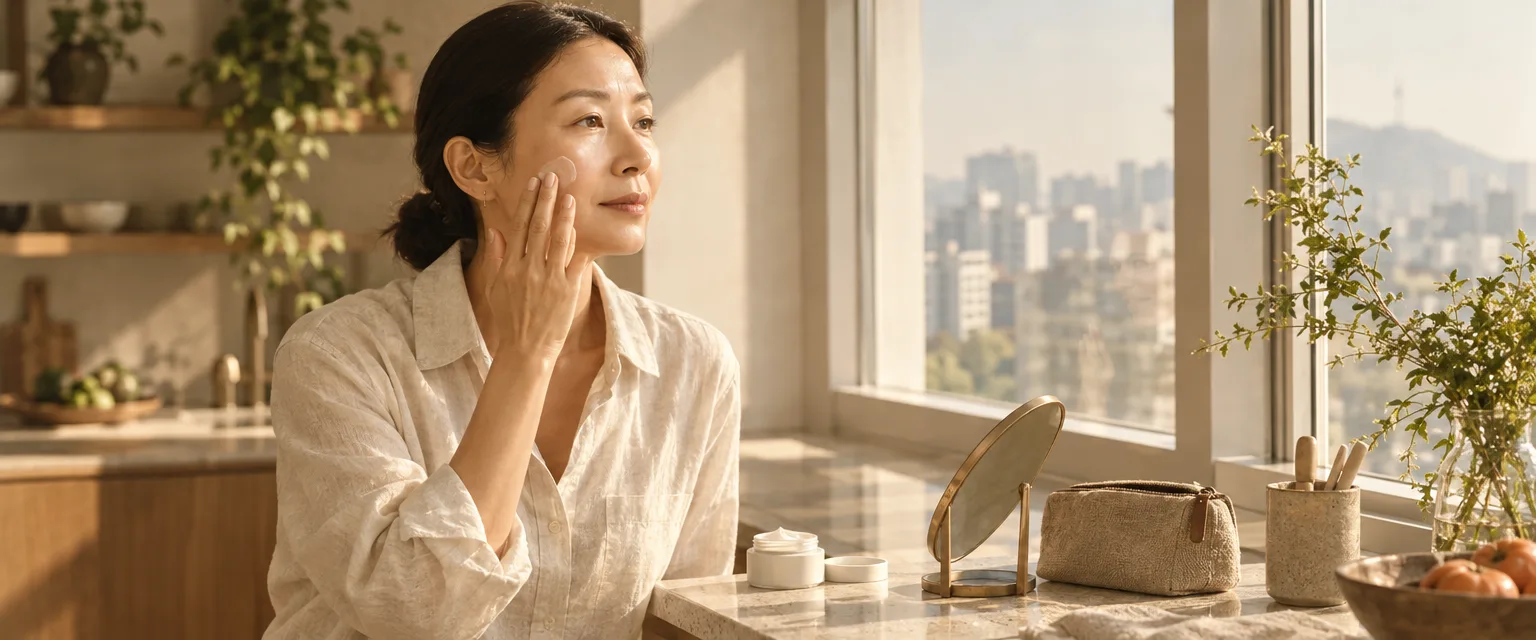
The Korean approach isn't about applying once and hoping for the best. A full teaspoon for the face, that's roughly two finger lengths, is the amount that achieves the SPF stated on the bottle. Less than that, and protection is meaningfully reduced.
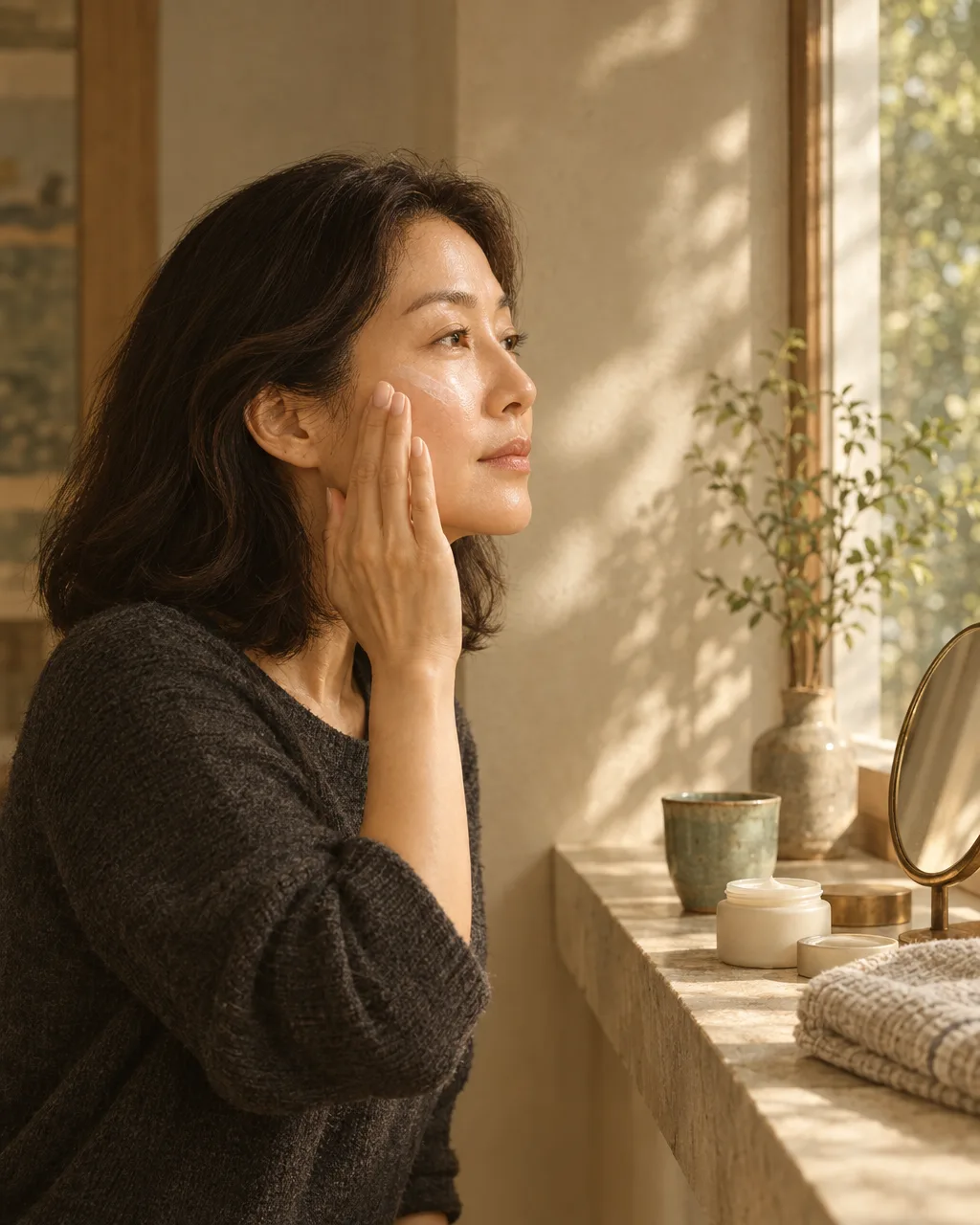
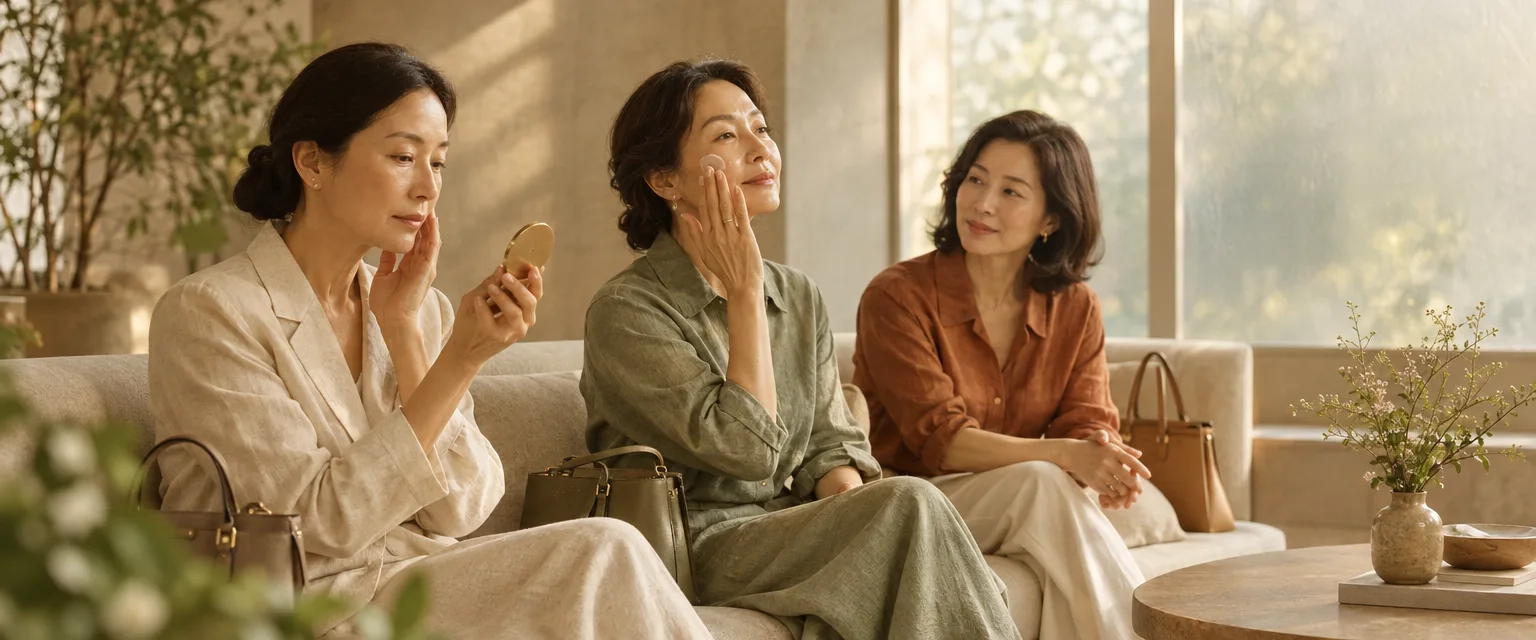
Reapplication is also part of the culture in Korea. A small SPF cushion compact in a bag, used to refresh protection mid-afternoon, is completely normal and considered sensible rather than excessive.
And the sequence matters: moisturizer first, then sunscreen, then, if you wear it, makeup. This isn't arbitrary. Sunscreen needs to form a continuous film on the skin to work as intended, which means it belongs closest to the skin's surface before any other product goes on top.
One more thing, and this is the part that surprises most people. SPF protection is needed indoors too, particularly near windows. UVA rays, the ones that affect collagen and long-term aging, pass through glass. The dermatological recommendation in Korea is daily SPF regardless of whether you plan to be outside, and the texture of Korean formulas makes that kind of everyday compliance genuinely achievable.
Which brings us to the final, unavoidable truth about skincare: the most effective product is always the one you consistently use.
This Week's Seoul Ritual: Choose one of the six sunscreens above that matches your skin type and order it this week. When it arrives, spend one morning applying it slowly and deliberately, the full amount, properly layered, and notice how your skin looks an hour later. That's your new baseline. That's what protection that actually agrees with your skin feels like.
Next on Seoul Style Edit → The Korean ingredient that dermatologists are calling the most underestimated brightener in skincare, and why it has nothing to do with vitamin C.
Filed under 재생Korean Longevity & Skin Rejuvenation