Nunchi: The Korean Art of Reading a Room and Why It Lowers Cortisol and Strengthens Every Relationship You Have
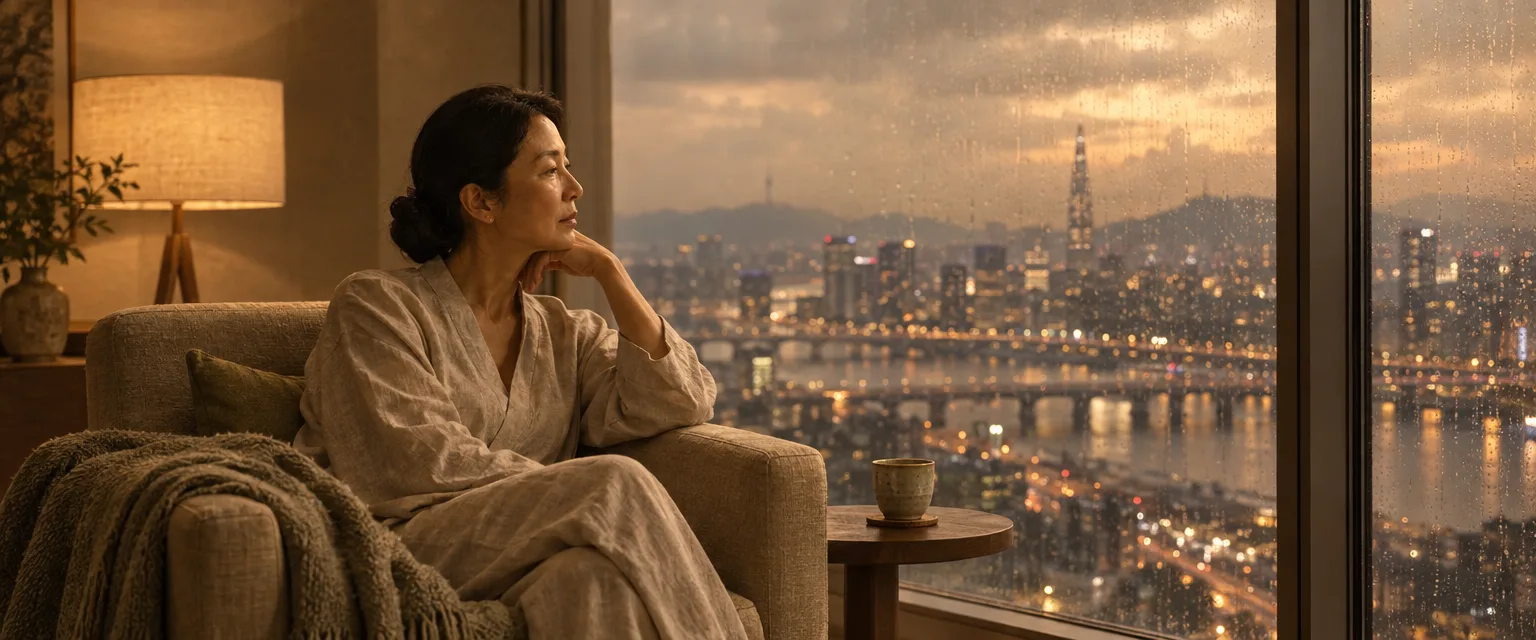
In Seoul, the most socially fluent women don't command a room. They read it. Nunchi, the Korean art of emotional attunement, is one of the most quietly powerful longevity tools available to women over 40, and the science behind it will change how you walk into every room for the rest of your life.
What You'll Learn
- What nunchi actually means and why it has no direct English equivalent
- How chronic social friction elevates cortisol and accelerates visible aging
- Why Seoul's most influential women treat nunchi as a daily practice rather than a personality trait
- A 3-step nunchi protocol you can apply at your next dinner, meeting, or family gathering
The Woman Who Never Exhausts Herself at Dinner
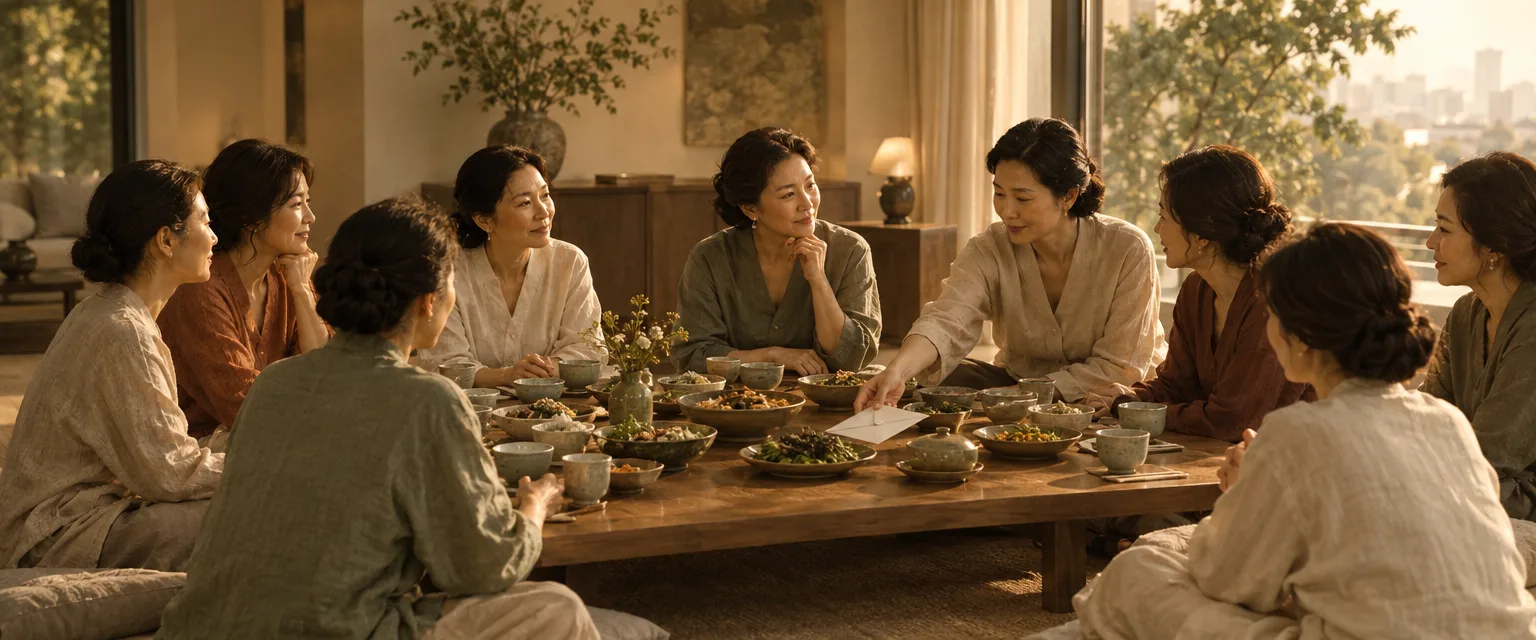
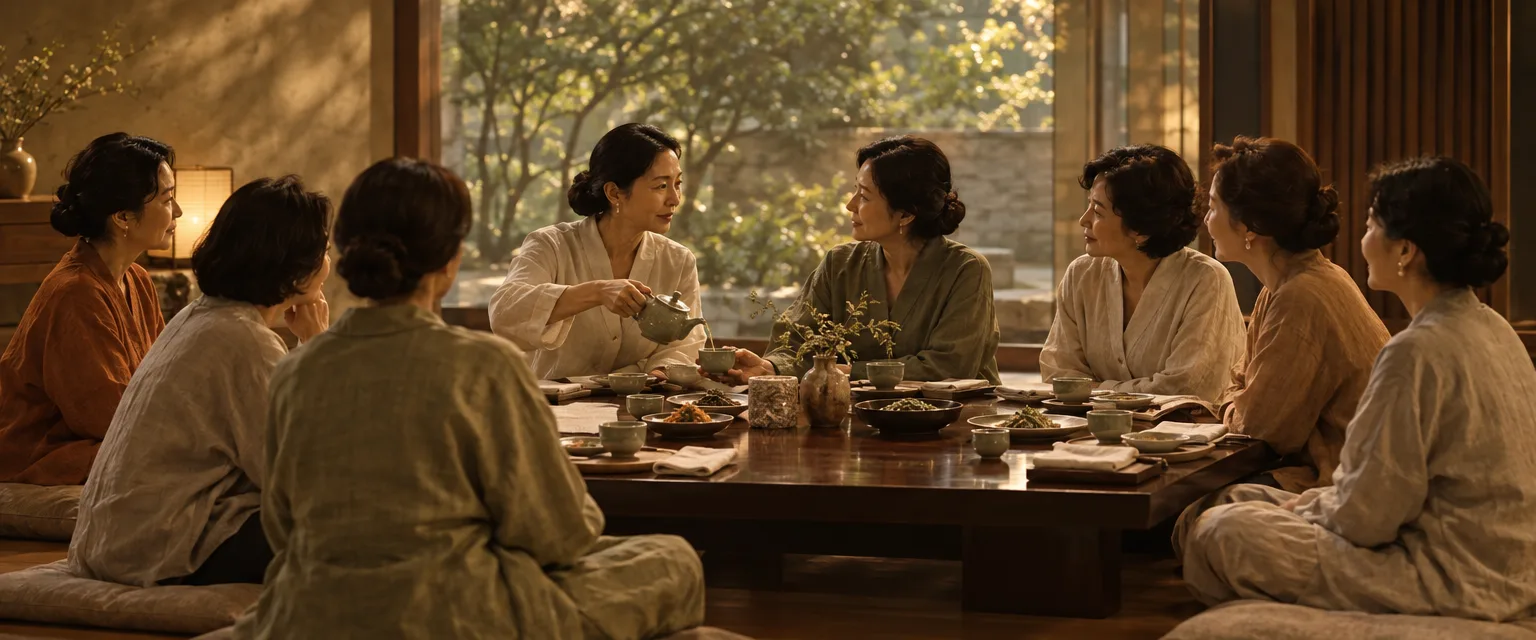
Picture an evening in Gangnam. A private dinner, eight women in their late 50s gathered around a low lacquered table at a restaurant they've frequented for fifteen years. The conversation moves easily, the way it does between people who've learned not to fight the current of a room.
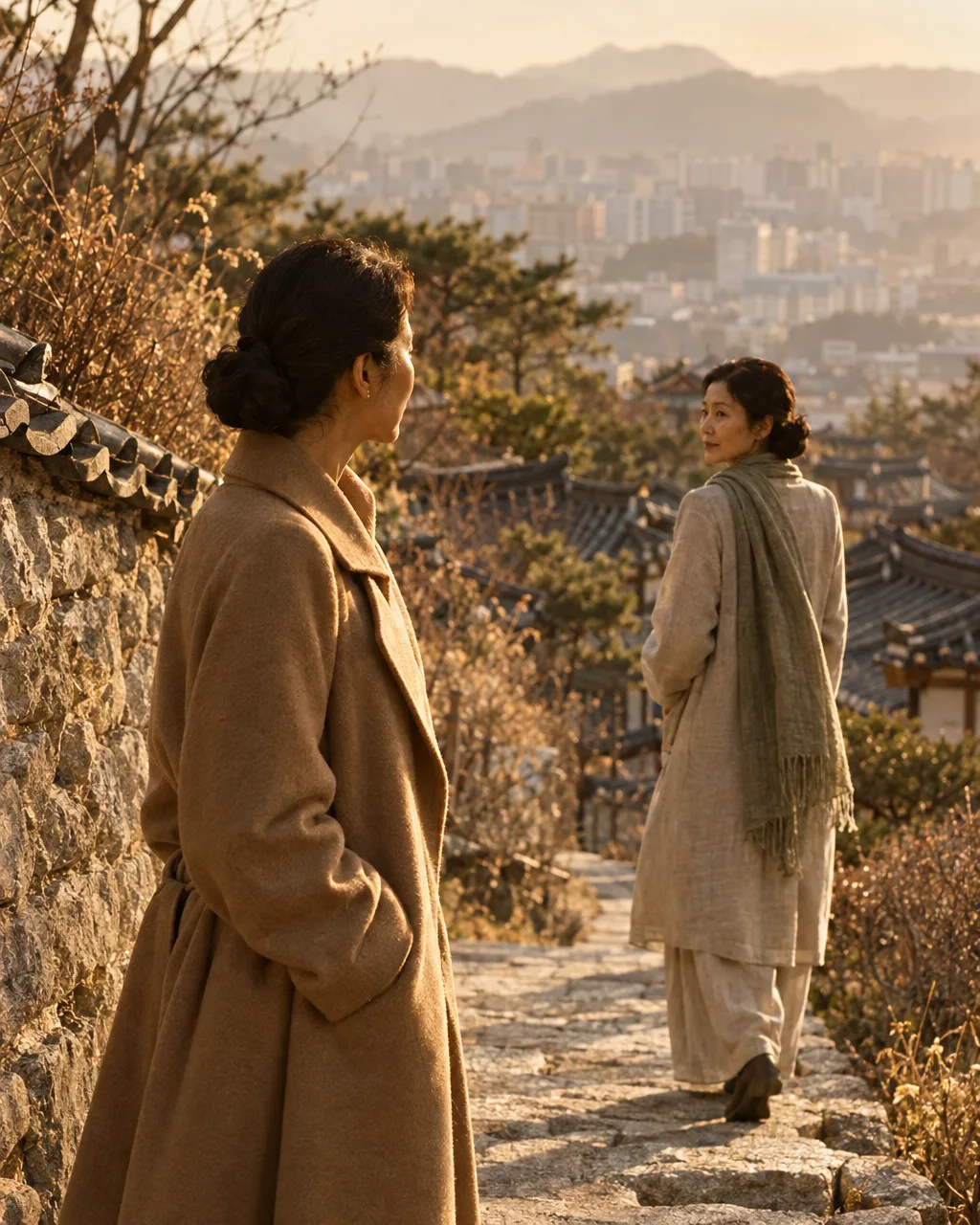
One woman speaks less than the others. She laughs at the right moments. She shifts the subject when she senses someone is uncomfortable. She notices, without being told, that the woman beside her is carrying something difficult tonight, and she says nothing about it directly. She simply turns slightly toward her, pours her tea first, and asks about her daughter's new job.
By the end of the evening, everyone feels heard. No one feels performed at. The woman who spoke least is, by every social measure, the most respected person in the room.
What she's practicing has a name. In Korean, it's called nunchi (눈치), which translates most closely as "eye measure": the ability to gauge, in real time, the emotional atmosphere of a room and respond to what's unsaid rather than merely to what's spoken. In Korean culture, it's considered a skill developed across a lifetime, and one of the most important social assets a woman can possess.
Nunchi Inside Modern Korean Life
Cultural observation: Nunchi isn't an abstract virtue in Korea. It's a social currency with real consequences. To be described as nunchi ppareuda (눈치 빠르다), "quick with nunchi," is a high compliment. To be nunchi eopseo (눈치 없어), "without nunchi," is a gentle but serious criticism, implying someone who doesn't read the room, who speaks when silence would serve better.
In practice, nunchi operates at every level of Korean social life. In professional settings, it's what allows a junior colleague to know when to speak and when to let her senior lead. In family life, it's what a daughter uses to sense her mother's unspoken worry before it surfaces as conflict. In friendship, it's the invisible intelligence that makes a gathering feel effortless rather than effortful.
For affluent Korean women over 40, nunchi is less a social skill than a philosophy of presence, grounded in a belief that listening is more powerful than speaking and that the most influential person in any room is almost never the loudest one. This orientation shapes how they enter a dinner party, how they conduct a business meeting, and how they maintain friendships across decades without the friction that quietly erodes so many Western social circles. The practice begins with the body before the mind: before speaking, the nunchi-aware woman pauses, taking in who's making eye contact, who's holding tension, what the room is telling her before anyone has said a word.
What Social Friction Does to the Aging Body
Clinical evidence: Cortisol, the body's primary stress hormone, is released in response to perceived threat, including social threat. Research published in Psychoneuroendocrinology has consistently found that social conflict, the anticipation of conflict, and the feeling of being misread all trigger measurable cortisol elevation. In the short term, this is adaptive. Chronically, it's destructive. Sustained cortisol elevation is associated with accelerated telomere shortening, impaired immune function, disrupted sleep architecture, and suppressed collagen synthesis. Chronic social friction ages you. Not metaphorically. Biologically.
Emerging evidence: Researchers studying social pain, the neurological experience of rejection and exclusion, have found it activates the same neural pathways as physical pain. The brain doesn't distinguish clearly between being hit and being humiliated.
What nunchi offers, biologically, is a reduction in the frequency and intensity of that social stress response. A woman who reads a room accurately is less likely to say the wrong thing, create friction, or feel the particular exhaustion of an interaction that went sideways. This isn't a minor benefit. For women over 40, whose cortisol regulation is already shifting due to declining estrogen, anything that reduces chronic low-grade social stress carries compounding physiological value. The calm of a well-read room isn't just pleasant. It's protective.
The 3-Step Nunchi Protocol
This isn't a meditation technique. Nunchi is a practice of attention, and attention can be trained.
Step 1: Arrive and observe before you contribute. For the first five minutes of any gathering, resist the impulse to fill silence or establish your presence. Notice who's sitting close to whom, who's avoiding eye contact, what the energy is telling you before anyone speaks to you directly. Treat these minutes as data collection rather than social performance.
Step 2: Listen for what isn't being said. Most people listen for the pause that signals their turn to speak. Nunchi asks you to listen for the subject someone changes too quickly, the tension that appears and disappears. You don't need to address it directly. Often the most nunchi-aware response is simply to soften your presence or turn the conversation gently toward something safer.
Step 3: Let your silence be generous. Before you speak, ask one internal question: does saying this serve the room, or does it serve my need to be heard right now? You won't always choose silence, but the question changes the quality of everything you do say.
Practice these three steps at your next dinner, then your next meeting. Nunchi, like any skill, becomes fluent with repetition.
Frequently Asked Questions
Is nunchi the same as emotional intelligence? They share overlap, but nunchi is more specific. Western emotional intelligence frameworks tend to focus on managing one's own emotional responses. Nunchi is primarily other-directed, about reading the room rather than yourself, reflecting a distinctly Korean cultural value.
Can nunchi be learned as an adult, or is it developed in childhood? Cultural observation: In Korean culture, nunchi is often taught informally through family dynamics and social modeling. Children observe and absorb it, adults refine it. The good news is that the protocol above targets attentional habits, which research shows are trainable at any age.
How does nunchi relate to the stress of being around difficult people? A woman with developed nunchi doesn't try to change difficult people. She reads them accurately and adjusts her response accordingly, rather than expending biological resources fighting the texture of a room she can't control. That's a meaningful longevity decision.
Elle's Perspective
I came to nunchi the way I come to most things Korean: through observation rather than instruction. I noticed that the women I most admired in Seoul social settings were never the most talkative. They were the most attuned, making everyone around them feel seen without demanding to be seen themselves.
What I understand now, that I didn't understand before, is that this attunement isn't a passive quality. It's an active, disciplined practice of presence that protects the nervous system, sustains relationships across decades, and produces the particular calm that sits on a well-rested face.
Nunchi isn't submission. It's precision. And precision, in a world of noise, is the rarest form of power.
Disclosure: Seoul Style Edit occasionally includes affiliate links to products we have researched and believe align with our focus on evidence-based wellness and longevity. These are marked clearly and never influence our editorial content.
Next on Seoul Style Edit: The Gye: Why Affluent Korean Women Treat Female Friendship as a Longevity Strategy.
Filed under 마음Mind & Community