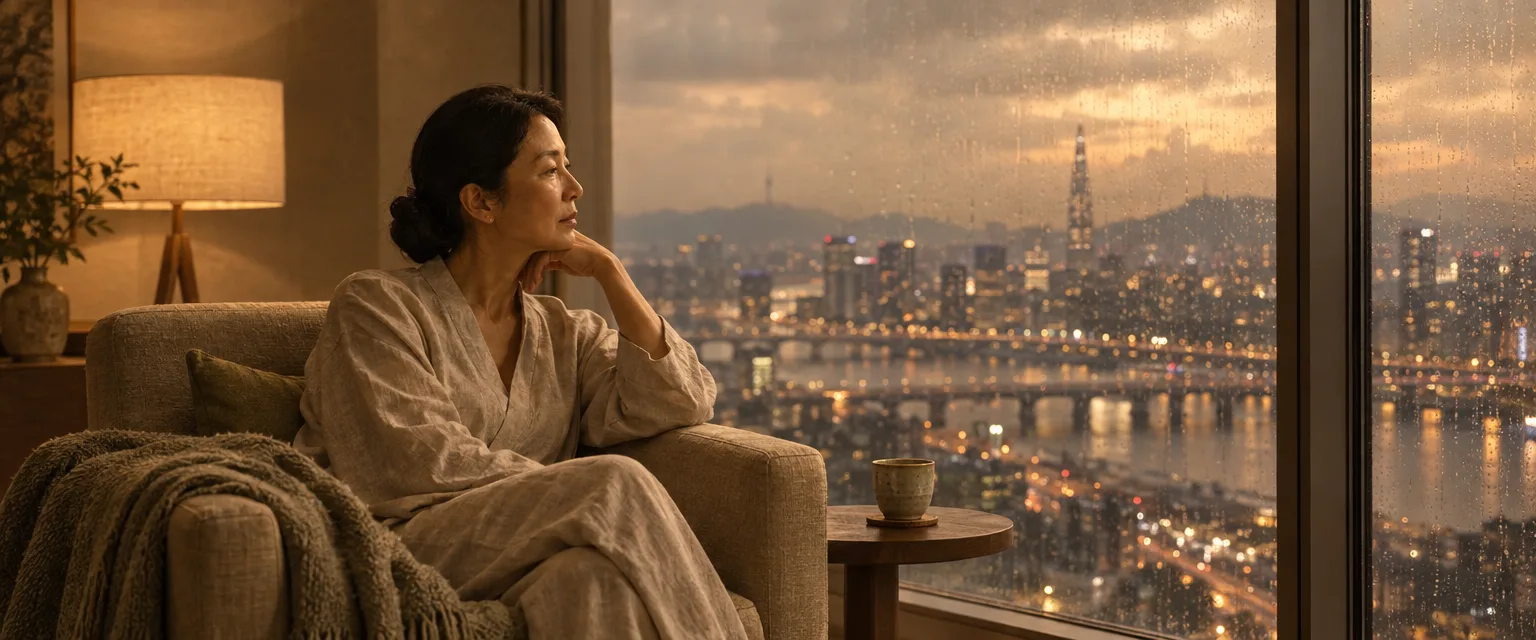
The Gye: Why Affluent Korean Women Treat Female Friendship as a Longevity Strategy
In Seoul, the most resilient women don't age alone. They age inside a Gye: a private, fiercely loyal circle of women who pool resources, protect each other's wellbeing, and show up across decades. Science is only now catching up to what Korean women have always known.
What You'll Learn
- What the Gye actually is and how it evolved from a financial tradition into a longevity infrastructure
- Why The Lancet's longevity research points to social structure as a primary driver of Korean women's healthspan
- How affluent Korean women manage friendship with the same intentionality they bring to their health portfolios
- A practical framework for building your own version, starting this month
The Circle That Has Met Every Month for Thirty Years
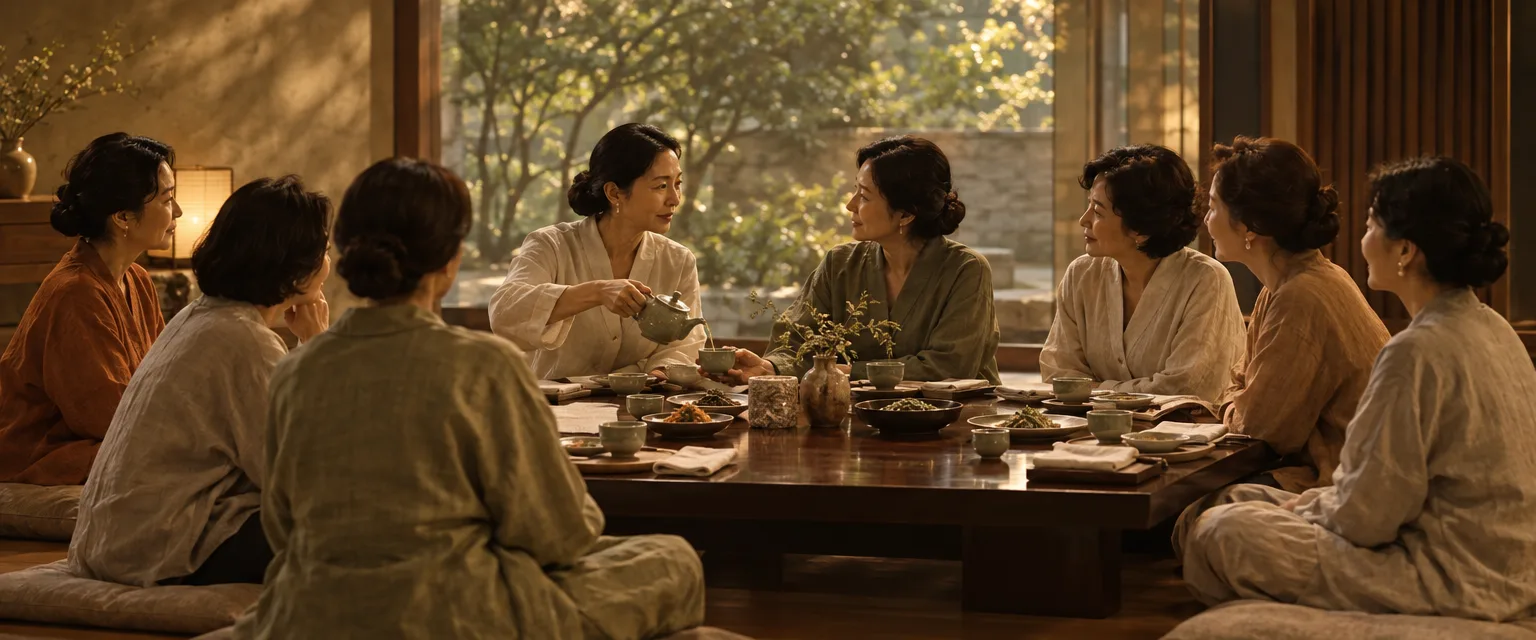
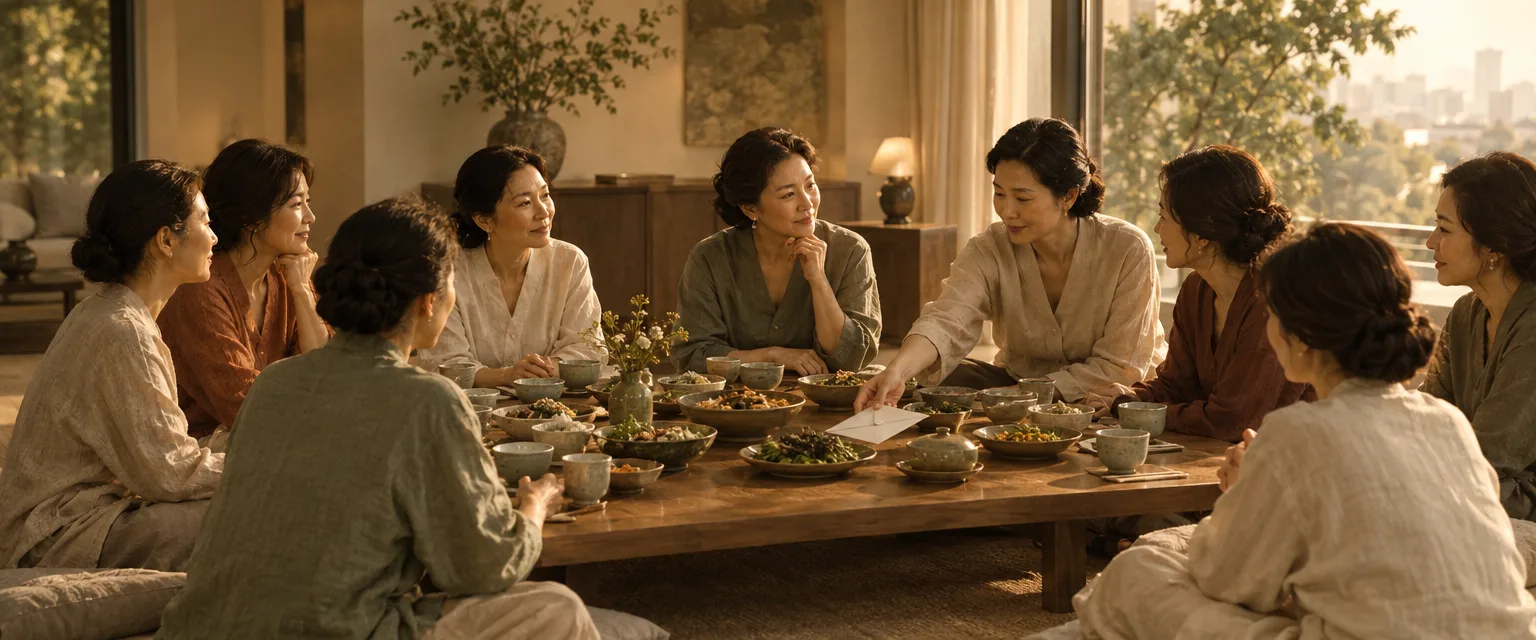
Picture a group of nine women in Apgujeong, the quietly wealthy neighborhood tucked inside Gangnam, meeting on the second Saturday of every month for thirty years. They rotate homes. The host prepares a meal. An envelope passes around the table, a financial contribution each woman makes into a shared pool, and a brief conversation about whose turn it is to receive the accumulated sum. Then they eat, they talk, and they stay until late.
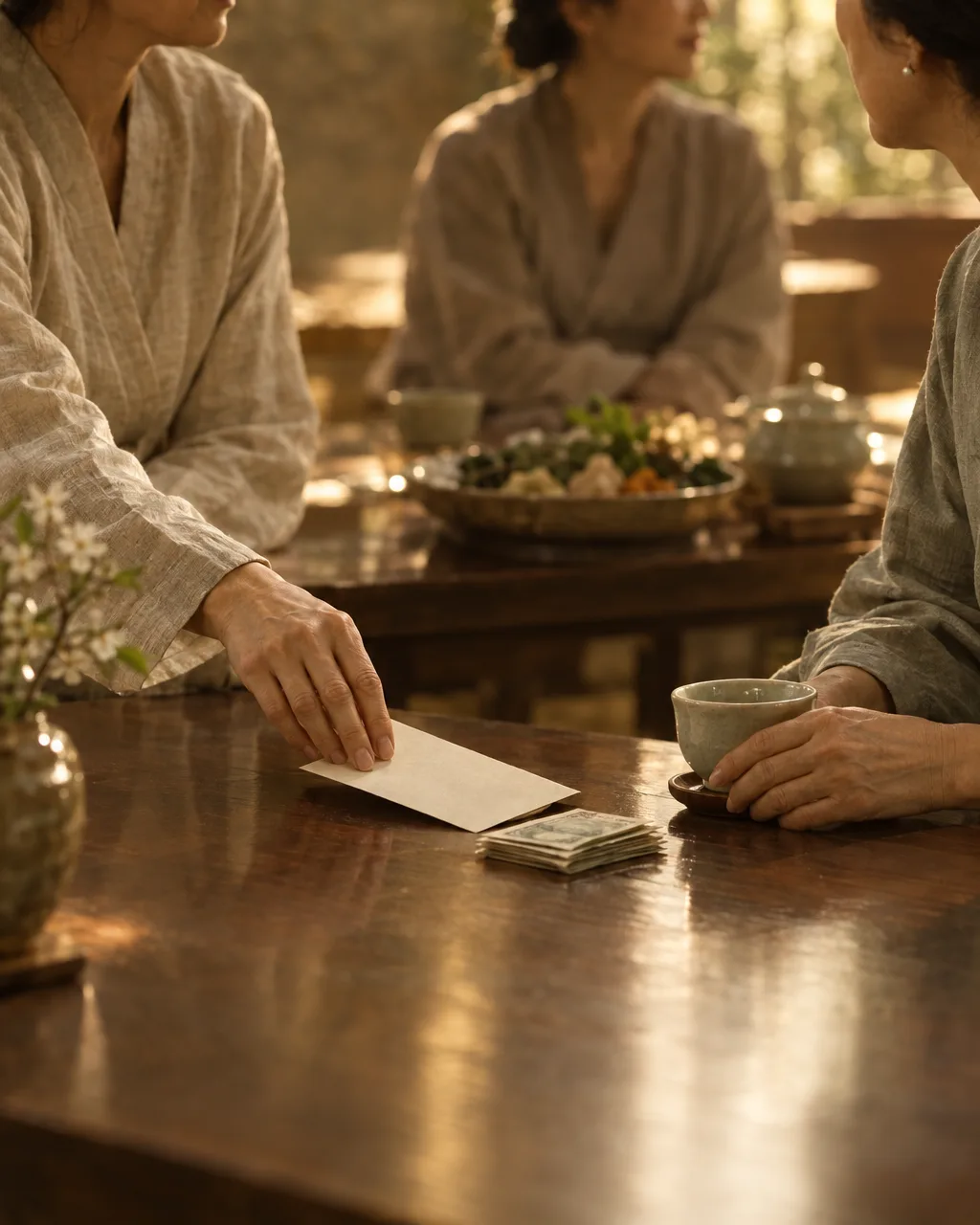
The women around these tables have weathered illness, loss, and reinvention together. One member used the pooled funds to start a small business. Another found that when her life changed suddenly, it was this circle, not anyone else, that kept the structure of her days from collapsing. In Korean female social life, these aren't exceptional stories. They're ordinary ones.
This is a Gye (계). And in Korea, it's as ordinary as it is profound.
What the Gye Actually Is
Cultural observation: The Gye is a traditional Korean rotating savings and support circle with roots stretching back centuries. A group of trusted individuals, almost always women, contribute a fixed sum at regular meetings. Each month, one member receives the full pooled amount, rotating until every member has received it once.
But to describe the Gye purely as a financial instrument is to miss most of what it does. The financial structure is a frame. What it creates inside that frame is a mandatory, recurring commitment to show up for the same women across years and decades. The money creates accountability. The accountability creates continuity. The continuity creates the conditions for jeong (정), the deep relational bond that develops between people who've shown up for each other long enough that the relationship itself becomes a form of infrastructure.
In modern Seoul, the Gye has evolved considerably. Affluent women in Gangnam may not need the financial pooling mechanism. What they preserve is the structure: a fixed group, a regular meeting, a rotating host, and an implicit agreement that this circle comes before the rest of the social calendar.
Cultural observation: Canceling on your Gye requires a serious reason. Repeatedly canceling is understood as a kind of social withdrawal the group will gently but firmly address. This accountability isn't experienced as pressure. It's experienced as being held.
What the Science Says About Aging in Groups
Clinical evidence: The Lancet Commission on healthy longevity identified social engagement, and the absence of social isolation, as among the most significant modifiable factors in healthy aging. Social isolation is associated with substantially higher mortality risk, placing chronic social disconnection among the most consequential modifiable health risks identified in public health research.
The mechanism isn't simply psychological. Loneliness and social disconnection trigger sustained activation of the body's stress response systems, elevating inflammatory markers including interleukin-6 and C-reactive protein. Chronic low-grade inflammation is one of the primary biological drivers of accelerated aging, cognitive decline, cardiovascular disease, and impaired immune function. Connection, by contrast, is anti-inflammatory. Not metaphorically. Measurably.
Clinical evidence: A landmark study published in PLOS Medicine, analyzing data from 308,849 participants, found that adequate social relationships were associated with a 50% increased likelihood of survival compared with those with poor or insufficient social connections. The effect held across age groups, health status, and cause of death.
Korean public health infrastructure: South Korea's investment in community infrastructure for older adults, tens of thousands of senior centers, intergenerational mentorship programs, and national fitness initiatives, reflects a public health philosophy that treats social engagement as a medical resource rather than a lifestyle preference. The Gye predates this infrastructure by centuries, but it runs on the same biological logic: women who age inside a committed, recurring group of peers live longer, recover faster, and maintain cognitive function later into life than those who age alone.
What makes the Gye particularly effective is its combination of three elements research consistently identifies as protective: social accountability, reciprocal support, and long-term continuity. Most Western social structures provide one or two of these. The Gye provides all three by design.
Building Your Own Version: The Elle-Approved Gye Framework
You don't need the financial mechanism, and you don't need nine women. What you need is structure, commitment, and enough trust to protect the circle from the entropy that dissolves most adult friendships.
Choose your circle deliberately. Three to eight women is the workable range. Choose women whose company you find genuinely restorative rather than merely pleasant. The Gye is a longevity circle, not a networking one.
Establish a non-negotiable rhythm. Monthly is the Korean standard and the research-supported minimum for building the relational continuity that produces jeong. Protect the date with the seriousness of a medical appointment, because biologically, that's what it is.
Rotate the hosting or the venue. This distributes the labor and creates a gentle accountability: each woman's turn to host is a commitment the group is counting on.
Create a small ritual that belongs only to this group. A specific tea, a question someone asks at the start of every gathering, a tradition around birthdays. Shared ritual is one of the mechanisms through which jeong accumulates.
Protect the circle from the social calendar. The Gye meeting isn't the thing you reschedule when something more interesting appears. It's the thing everything else works around. State it explicitly when the circle forms.
Frequently Asked Questions
What if I don't have a group of women I trust enough to form a Gye? Start smaller than you think you need. Two women meeting monthly with genuine commitment is more protective than a loose network of twelve. Identify one woman whose company you find genuinely restorative and propose a standing monthly commitment. The circle can expand as trust accumulates.
Is there a version that works for women who travel or live in different cities? Cultural observation: Korean Gye circles do adapt to geography. The key elements are the recurring commitment and accountability rather than physical proximity. A monthly video call with a rotating host, plus an annual in-person gathering, can preserve much of the structure.
How does the Gye differ from a Western "support group" or "women's circle"? Support groups are typically organized around a shared difficulty. Women's circles often carry a spiritual framing. The Gye is neither. It's simply a committed, reciprocal, long-term social structure organized around mutual loyalty and regular presence, its power built from shared time accumulated across years rather than a shared wound or philosophy.
Elle's Perspective
I think about circles like the one in Apgujeong often. The woman who received the envelope when she needed to start over. The one whose grief was held by the circle when her family couldn't hold it all. The one who's still hosting, still cooking, still passing the envelope around a table she's sat at for thirty years.
What strikes me isn't the money. It's the architecture. These women built something that outlasted careers, marriages, health crises, and decades of change, not through grand gestures but through the simple, repeated act of showing up on the second Saturday of every month.
That's what longevity looks like from the inside. Not a supplement. Not a protocol. A circle of women who decided, quietly and without fanfare, to be each other's infrastructure.
Disclosure: Seoul Style Edit occasionally includes affiliate links to products we have researched and believe align with our focus on evidence-based wellness and longevity. These are marked clearly and never influence our editorial content.
Next on Seoul Style Edit: Meong: The Korean Art of Intentional Blankness and Why the Busiest Women in Seoul Swear by It.
Filed under 마음Mind & Community