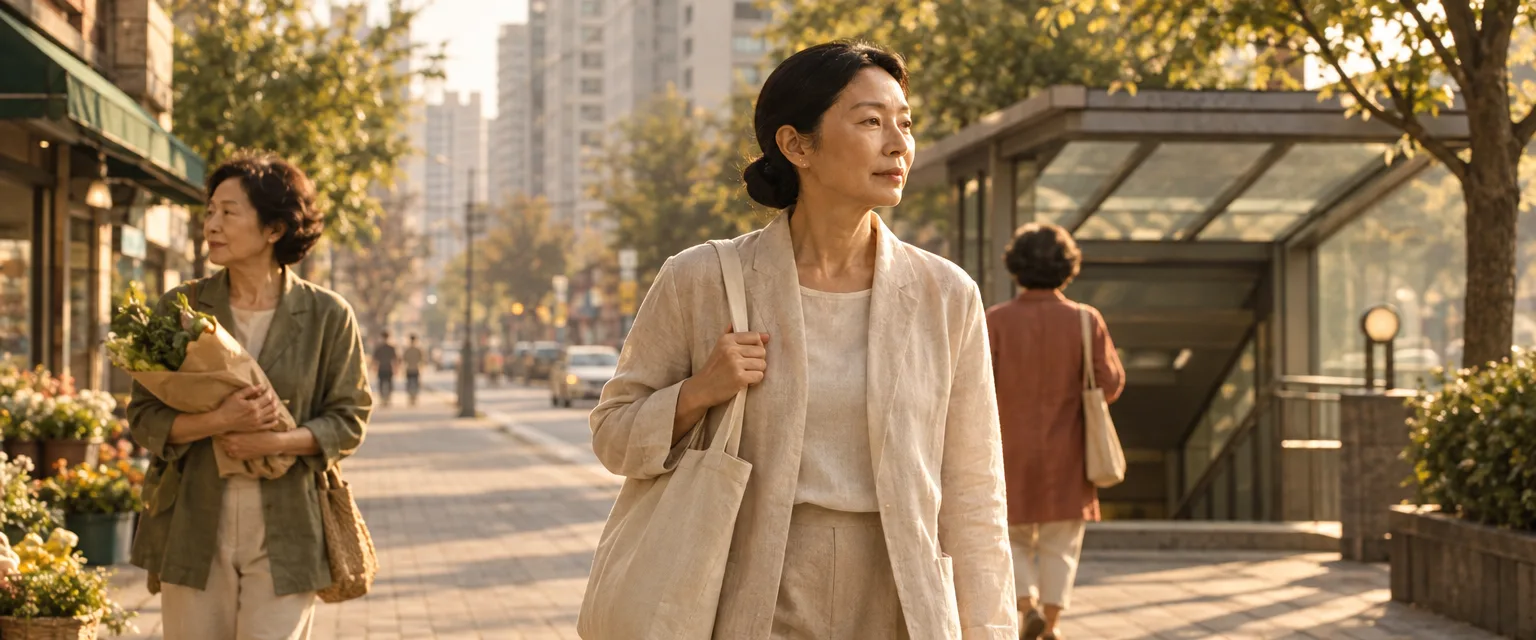
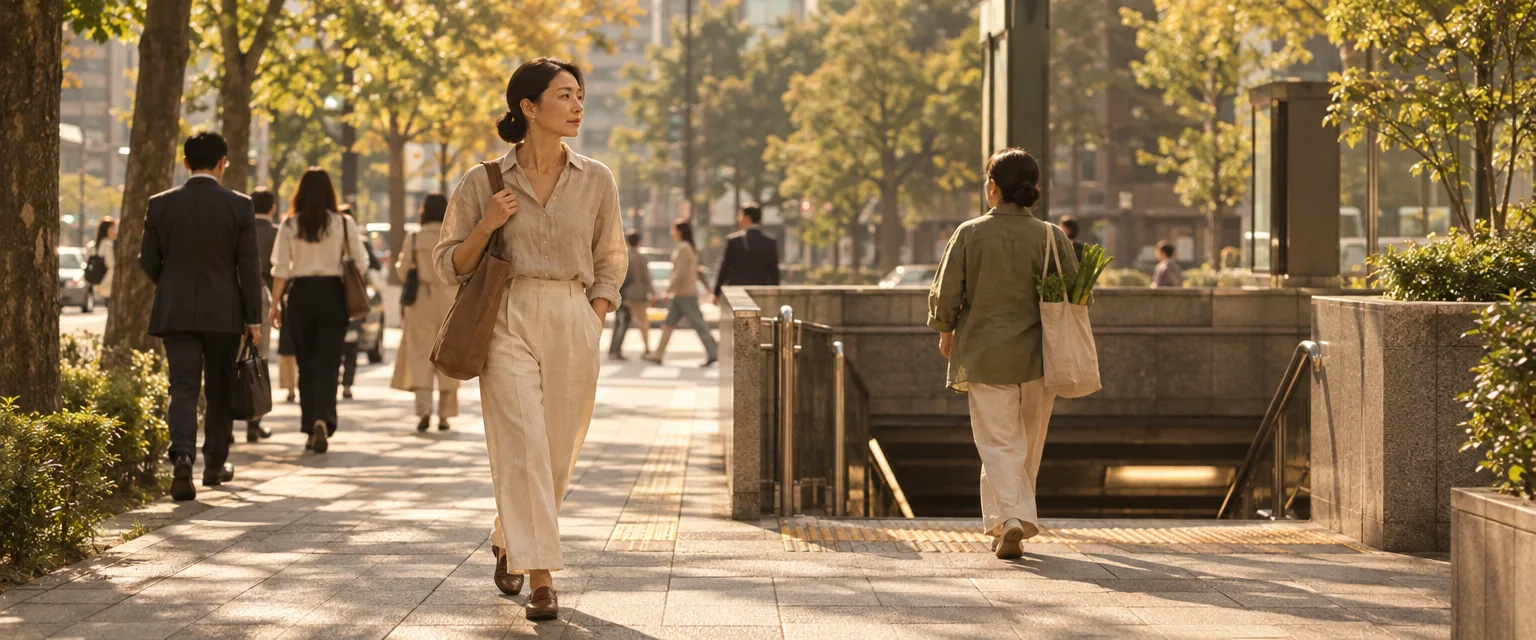
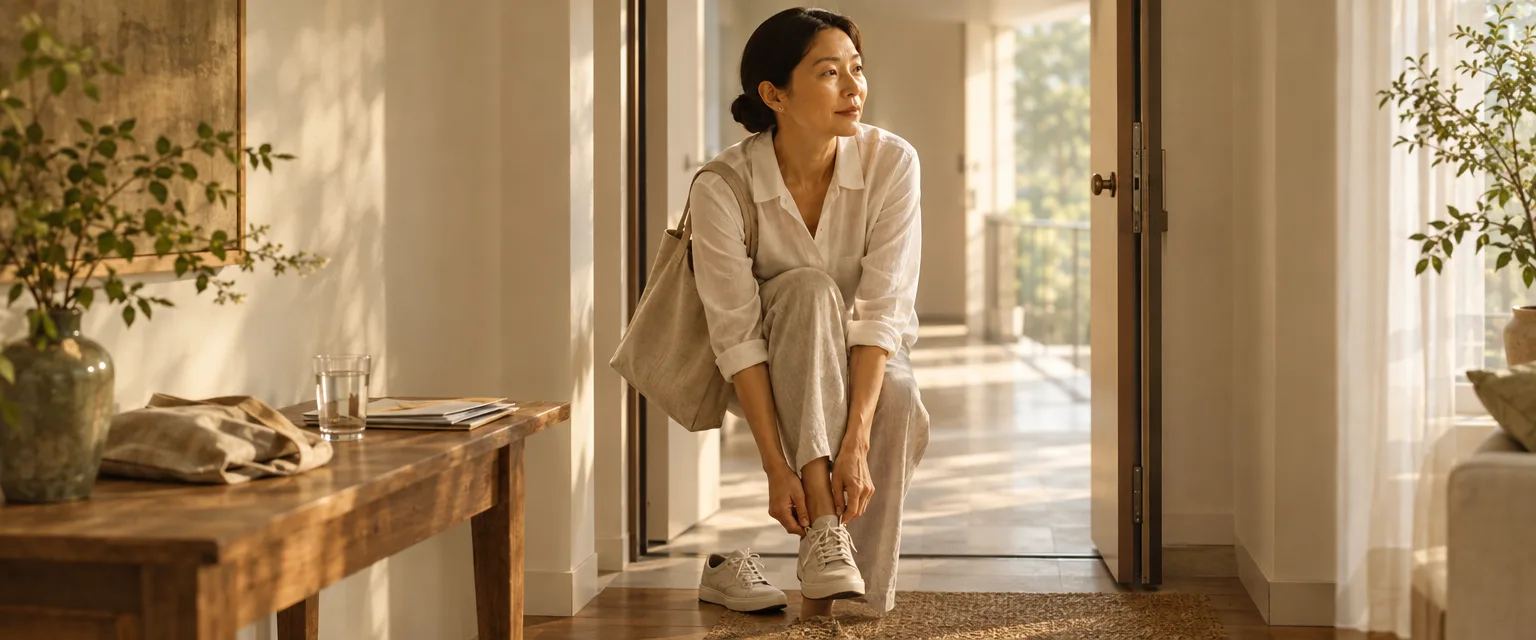
The Korean Anti-Frailty Protocol: How Women Over 50 Stay Strong, Mobile, and Independent
Frailty is not inevitable, and it is not simply about age. Many of its key drivers are modifiable through strength, movement, and preventive care. This is the evidence-based Korean approach to staying physically independent for decades, and the protocol Western women can start this week.
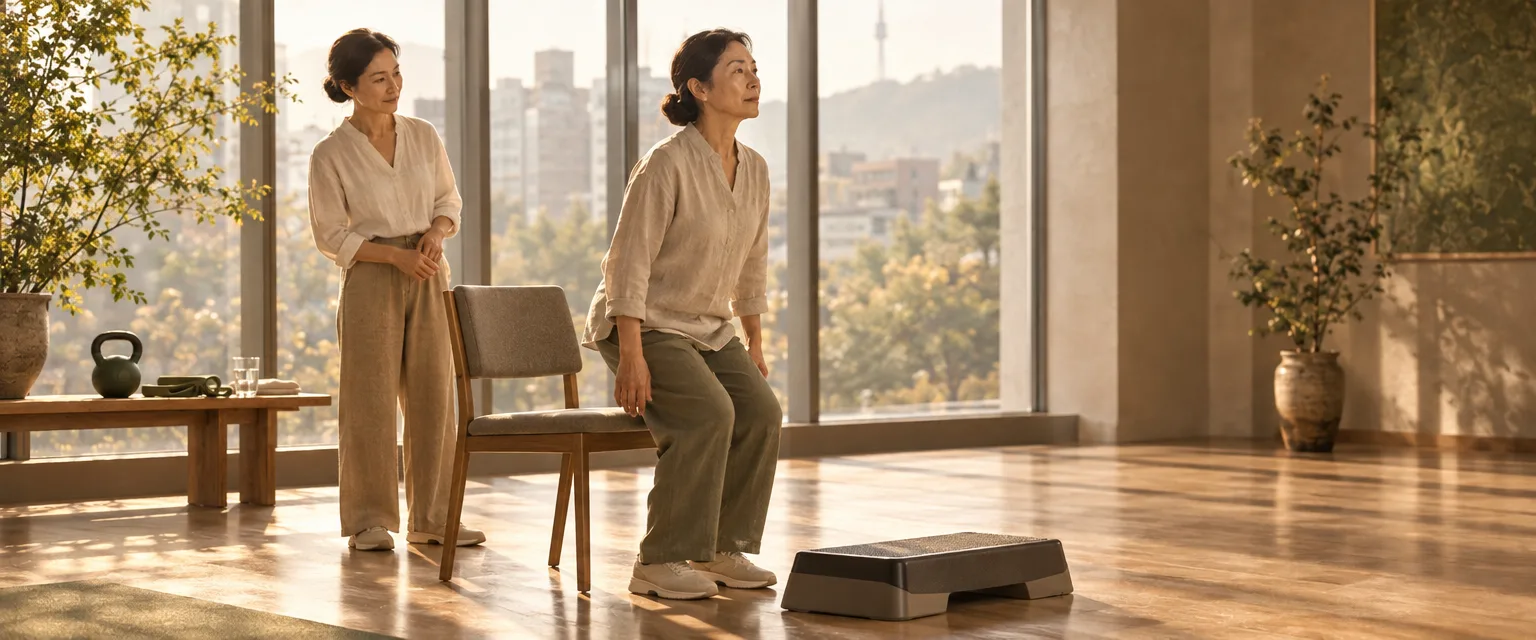
A science-first guide to the strength and movement practices that protect your physical independence for decades to come.
There is a clinical term for what most women are actually afraid of when they think about getting older. It is not wrinkles, or grey hair, or any of the visible markers that the wellness industry has built a considerable business around addressing. The term is frailty, and it is defined, in geriatric medicine, by five specific criteria: unintentional weight loss, exhaustion, weak grip strength, slow walking speed, and low physical activity. Meet three of those five and you are clinically frail. Meet one or two and you are pre-frail, quietly approaching a threshold most women never knew existed.
Frailty is what makes it difficult to get out of a low chair without using your arms. It is what turns a flight of hotel stairs into a problem. It is what determines whether you recover quickly after a procedure or slowly, whether you can carry your own luggage, whether a walk through a foreign city feels like pleasure or like something you have to manage. It has almost nothing to do with how old you are and everything to do with how much functional strength and reserve capacity your body has maintained.
The research suggests that many of the key drivers of frailty are modifiable through strength, movement, nutrition, and preventive care. The practices that address those drivers are not complicated, not expensive, and not time-consuming. Korea has increasingly prioritized frailty prevention as a public health concern, drawing on the same global research that shows regular resistance training combined with consistent daily movement is among the most effective things a woman can do in the decades around and after menopause. This article draws on that research, those Korean clinical practices, and the cultural habits that support them, to offer a concrete protocol you can begin this week.
A note on how this article is structured: throughout, I will be clear about the kind of evidence underlying each claim. Clinical research, Korean medical guidance, and cultural observation are meaningfully different things. You deserve to know which is which.
What Frailty Actually Is
Evidence Lens: Clinical Evidence
The Clinical Definition: More Than "Feeling Old"
The Fried Frailty Phenotype, first described by geriatrician Linda Fried and colleagues in 2001, remains the most widely used clinical framework for identifying frailty. It defines frailty by five measurable criteria.
- Unintentional weight loss: losing 10 or more pounds in the past year without trying.
- Exhaustion: self-reported fatigue and low energy most of the time.
- Weakness: low grip strength, measured by a dynamometer.
- Slow walking speed: taking more than six or seven seconds to walk 15 feet at your normal pace.
- Low physical activity: expending fewer than 383 kilocalories per week in physical activity (for women).
Meeting three or more criteria places someone in the frail category. Meeting one or two is classified as pre-frailty, a condition that can progress or improve depending on what interventions are made.
What the research shows clearly is that frailty predicts disability, hospitalization, falls, and mortality more reliably than chronological age alone. A 70-year-old woman who is robust, meaning she meets none of these criteria, has fundamentally different health prospects than a 65-year-old who meets three. Age is a rough approximation. Frailty status is a more precise one.
The daily-life translation of frailty is worth understanding concretely. It is what makes it difficult to rise from a sofa or low chair without pushing off with both hands. It is what causes a stumble on an uneven sidewalk to become a fall, and a fall to become a fracture, and a fracture to become a cascade of complications. It is what limits the ability to recover from surgery, to tolerate medical procedures, or to participate in the kind of active life that makes the investment in travel, wellness, and experience worthwhile. The woman who cannot navigate the hillside neighborhoods of Seoul or the cobblestone streets of a European city at 70 has usually not run out of desire. She has run out of reserve capacity.
Addressing that reserve capacity, before it becomes the problem, is what this article is about.
Frailty, Sarcopenia, and the Muscle Connection
Evidence Lens: Clinical Evidence
Beneath most cases of frailty is sarcopenia, the age-related loss of skeletal muscle mass, strength, and function. The two conditions are closely related. Sarcopenia reduces walking speed and grip strength, two of the five frailty criteria, directly. It reduces the reserve capacity that allows recovery from illness or physical stress. It is, in a meaningful sense, the structural underpinning of frailty.
Sarcopenia begins earlier than most women realize. Muscle mass starts declining gradually in the 30s, accelerates somewhat in the 40s, and then tends to accelerate more significantly around and after menopause, when the loss of estrogen removes one of the key signals that supports muscle protein synthesis. The process is quiet. It does not announce itself. A woman may not notice meaningful functional changes until her 60s or 70s, by which point the decline has been accumulating for decades.
Research suggests that adults lose roughly 3 to 8 percent of muscle mass per decade after age 30, with rates increasing after 60. Without intervention, this contributes to the slower walking speeds, weaker grip, and reduced activity associated with frailty in clinical assessment.
This is preventive medicine territory, not crisis medicine. The best time to address sarcopenia is before it produces visible frailty. Later in this article, we will look at how Korean health systems have increasingly oriented themselves to do exactly that, and what it means practically for women who want to apply the same upstream thinking to their own lives.
Inside Korea's Approach to Aging and Frailty
Evidence Lens: Korean Medical Guidance + Cultural Observation
A Society That Takes Aging Seriously
South Korea became an "aged society" by the World Health Organization's definition in 2017, meaning more than 14 percent of its population is over 65. Projections suggest it will reach "super-aged" status, above 20 percent, within the coming years, making it one of the fastest-aging populations in the world. This demographic reality has generated significant public health investment in understanding and preventing frailty.
Korean national health screenings are conducted biennially and include functional assessments relevant to frailty, among them muscle strength tests, mobility evaluations, and cognitive screening. Large-scale aging cohort studies, including the Korean Longitudinal Study of Aging and the Korean Frailty and Aging Cohort Study, have tracked thousands of older Koreans using validated frailty indices and physical performance tests. Korean clinical guidelines for frail older adults recommend multicomponent interventions combining exercise, nutritional support, and attention to psychological wellbeing, in alignment with international geriatric guidance.
What is notable in Korea's increasingly proactive public health approach is its orientation toward intervention before crisis. In Korea's most health-forward clinical settings, frailty screening is part of routine preventive care rather than something triggered by a fall or hospitalization. Many Western healthcare systems, excellent at treating acute illness and managing disease, still tend to identify frailty after it has already caused a problem. The distinction matters for the woman who is investing thoughtfully in her health in every other way while the foundational strength question quietly goes unaddressed.
One important caveat: direct country-to-country comparisons of frailty prevalence are complicated by differences in measurement tools, population characteristics, and study design. What can be said accurately is that Korea has increasingly prioritized frailty prevention as a public health matter, and that Korean clinical research contributes meaningfully to the global evidence base on what actually works.
Body Composition Culture: Measuring What Actually Matters
Evidence Lens: Korean Medical and Wellness Practice + Limited Evidence on Direct Frailty Outcomes
One of the more striking features of Korean health culture, visible in gyms, corporate wellness programs, clinics, and even some pharmacies, is the routine use of body composition analysis. Devices like InBody, a Korean-developed bioelectrical impedance system, measure lean muscle mass, fat mass, and segmental muscle distribution separately, rather than providing a single body weight or BMI figure.
The practical consequence of this culture is that muscle mass becomes a visible, trackable metric rather than a vague concern. A woman who tracks her skeletal muscle mass over time has something concrete to respond to. A woman who only tracks body weight may see a stable number while simultaneously losing muscle and gaining fat, a pattern sometimes called sarcopenic obesity that carries its own health implications.
Consumer-grade body composition devices, including home bioelectrical impedance scales, are best used for tracking directional trends rather than precise measurements. The absolute numbers vary with hydration, time of day, and device quality. What matters is the underlying orientation: tracking muscle and strength, not only weight, reflects a more accurate picture of long-term health. Later in this article, we will look at simple performance tests that offer an equally clear picture without any equipment at all.
Daily Movement and Walking Culture
Evidence Lens: Cultural Observation Consistent with Clinical Evidence
Korean urban daily life tends to involve a pattern of movement that clinical exercise science would recognize as protective: regular walking, stair use, and physical errands completed on foot as a matter of routine rather than intention. The weekly culture of mountain hiking, which draws participants across a wide range of ages and fitness levels, adds sustained cardiovascular effort, meaningful lower-body loading, and the balance challenge of uneven terrain.
It would be an overstatement to say that these cultural habits directly explain population-level frailty outcomes. The relationship between movement patterns and long-term health involves many variables. What can be said is that these habits are consistent with what clinical trials show: programs combining walking, strength work, and balance training are associated with improvements in the physical performance measures that frailty assessments track. Korean walking culture, and the infrastructure that supports it, reflects what the evidence recommends.
If you have already worked through the Seoul Walking Protocol, you have built the cardiovascular and metabolic foundation. This article delivers the second half of that picture: the strength work that walking alone cannot provide.
The Science of Resistance Training After Menopause
Evidence Lens: Clinical Evidence
What Menopause Does to Muscle and Bone
Estrogen plays a meaningful role in muscle protein synthesis, connective tissue integrity, and bone mineral density. As estrogen levels decline during perimenopause and fall further after menopause, the body becomes less efficient at building and maintaining both muscle and bone. Research suggests women can lose between 1 and 2 percent of bone density per year in the years immediately following menopause, and muscle loss tends to accelerate during this same window.
Walking is excellent for cardiovascular health, blood sugar regulation, and mood, and the Seoul Walking Protocol addressed those benefits in depth. But aerobic exercise does not provide the mechanical loading signal that bone and muscle require to maintain their density and strength. Resistance training does. This is why the two practices are complementary rather than interchangeable, and why these two articles in the Daily Movement pillar are designed as a pair.
The Minimum Effective Dose
Evidence Lens: Clinical Evidence + Korean Trial Examples
The question most women ask is a reasonable one: how much resistance training is actually necessary? The answer from clinical research is more accessible than most fitness culture suggests.
Current evidence supports the following as a meaningful minimum for women 50 and older:
- Frequency: 2 to 3 non-consecutive days per week.
- Volume: 2 to 3 sets per exercise, targeting major muscle groups.
- Repetitions: 8 to 12 per set for most exercises.
- Intensity: The final 2 to 3 repetitions of each set should feel genuinely challenging. Challenging but manageable, not maximal effort.
Korean clinical trials examining resistance training in women around age 50 have shown meaningful improvements in muscle mass, strength, and functional performance using structured programs that include multi-joint exercises: squats, hip hinges, presses, and rows. These findings are not unique to Korean research; they align with global guidance. What Korean trials contribute is confirmation that these principles translate effectively across different body types and population characteristics, and that structured programs produce real functional benefit in the women who follow them.
The goal is not athletic performance. It is functional capacity: the ability to rise from a chair easily, carry groceries without fatigue, navigate stairs without holding the rail, and recover from minor illness or procedure without extended deconditioning.
Bodyweight, Bands, or Weights
Evidence Lens: Clinical Evidence
Bodyweight training is a sound starting point, particularly for women who are returning to exercise after a long break. Chair squats, wall push-ups, glute bridges, and balance work require nothing but floor space and provide a genuine foundation.
Over time, evidence suggests that external resistance becomes necessary to sustain meaningful muscle preservation. The body adapts to bodyweight load, and once adaptation occurs, the stimulus for further muscle maintenance diminishes. Resistance bands are an accessible, affordable, and joint-friendly way to add that external load. Light dumbbells extend the options further, and adjustable sets keep the investment modest.
Progression in this context does not mean chasing heavier lifts indefinitely. It means ensuring the work remains genuinely challenging as your body adapts, which it reliably will. A set of 12 chair squats that felt difficult in Week 1 may feel entirely comfortable by Week 6. Adding a band, holding light weights, or progressing to a single-leg variation is how you maintain the stimulus that keeps muscle and bone responding.
Korean Anti-Frailty Movement Practices
Evidence Lens: Korean Medical Guidance + Cultural Observation
Clinically Recommended Movements in Korea
Korean geriatric and community health programs for older adults consistently emphasize a set of functional movements that overlap substantially with what international frailty and fall-prevention research recommends. None of these are exotic. They are the functional patterns that directly address the frailty criteria most responsive to training, and they are the same movements you will find in the home protocol below.
Sit-to-stand: Used in Korean community programs and in clinical frailty assessment worldwide. The ability to rise from a seated position without using your arms is one of the most functionally relevant indicators of lower-body strength.
Heel raises: Calf strength contributes to walking stability, push-off power, and ankle control. An underappreciated factor in fall risk, and one of the most convenient exercises available: it can be done at a kitchen counter.
Step-ups: Single-leg strength and stability, trained through the simple act of stepping up and down, is the loading pattern most directly relevant to stairs, curbs, and any uneven surface.
Single-leg stance: Balance is trainable, and it declines with inactivity. Practicing single-leg standing is straightforward preventive work that costs nothing and can be done anywhere.
Tandem walking: Dynamic balance, the kind needed on uneven ground and in crowded spaces, responds to regular practice. Walking heel-to-toe trains exactly the coordination that prevents a stumble from becoming a fall.
These five patterns form the functional core of Korean community exercise programs for older adults, and they correspond to the frailty domains most responsive to training.
Hiking, Stairs, and Group Movement
Evidence Lens: Cultural Observation Consistent with Evidence
Korea's mountain hiking culture is worth understanding in this context because it combines several elements in a single activity: sustained cardiovascular effort, meaningful lower-body loading on the ascent, balance and proprioceptive challenge on uneven terrain, and the social dimension of group activity, which research associates with better adherence and psychological wellbeing.
Direct frailty-specific trial data from hiking in Korean women is limited. What the evidence does support is that activities combining cardiovascular challenge, lower-body muscle loading, and balance demand are associated with improvements in the physical performance measures that frailty assessments track. The terrain does something that flat pavement cannot.
For women outside Korea, the direct translation is not finding a Korean mountain. It is adopting the pattern: one weekly walk in a natural setting with genuine elevation change, combined with deliberate stair use wherever the opportunity exists. This is the retreat walk from the Seoul Walking Protocol, now understood with a more specific functional rationale.
Sauna, Heat, and Recovery
Evidence Lens: Emerging and Limited Evidence + Cultural Observation
The jjimjilbang, Korea's communal bathhouse and sauna tradition, serves as a space for physical recovery, social connection, and restorative rest. Regular sauna use has been studied most extensively in Finnish populations, where evidence suggests associations with reduced cardiovascular mortality and, in some studies, lower rates of cognitive decline. Direct frailty-specific evidence from sauna research is limited, and most existing studies involve male participants or mixed populations.
What can be said with reasonable confidence is that regular heat exposure appears to support cardiovascular health and may help modulate systemic inflammation, both of which are relevant to healthy aging and functional capacity. Heat therapy belongs in the category of supportive recovery practice, not primary anti-frailty intervention. Alongside adequate sleep and stress management, it is meaningful but not a substitute for the strength and movement work at the core.
If you have read the Jjimjilbang article in the Seoul Style Edit archive, you will find a fuller treatment of the heat therapy evidence. For this protocol, the relevant point is simpler: recovery is part of the practice. The Korean instinct to treat rest and thermal therapy as integral to physical life, rather than as an indulgence, is consistent with what exercise science recommends for women doing regular resistance training.
The Korean Anti-Frailty Protocol at Home
Evidence Lens: Evidence-Based Synthesis
Who This Protocol Is For
This protocol is designed for women in their 50s and beyond who want to protect their physical independence over the next two to three decades. It suits women who may already be walking consistently, through the Seoul Walking Protocol or their own established habit, but who have not yet added structured strength work. It also suits women returning to exercise after a gap, who want a grounded, practical starting point.
The exercises below are drawn from multicomponent anti-frailty programs tested in clinical trials, Korean community health programs, and widely used functional performance assessments. A sturdy chair, a small amount of floor space, and an optional resistance band are sufficient to begin.
Before starting any new exercise program, particularly if you have existing joint concerns, bone density issues, or cardiovascular conditions, a brief conversation with your physician is worthwhile. This protocol reflects general clinical guidance, not personalized medical advice.
Weekly Structure: Walking and Strength Together
Walking addresses cardiovascular health, blood sugar regulation, and the daily movement accumulation that Korean health culture has long understood as foundational. Strength training addresses muscle mass, bone density, balance, and functional capacity. Neither fully substitutes for the other.
The combined weekly structure:
- 5 days per week: Walking, as outlined in the Seoul Walking Protocol.
- 2 to 3 non-consecutive days per week: Anti-frailty strength and balance session, 30 to 40 minutes.
Foundational Weekly Schedule (for women beginning or returning to strength work):
| Day | Activity |
|---|---|
| Monday | Walking (30-40 min) |
| Tuesday | Strength + Balance session |
| Wednesday | Walking (30-40 min) |
| Thursday | Rest or gentle walking (20 min) |
| Friday | Strength + Balance session |
| Saturday | Retreat walk (45-60 min, park or trail) |
| Sunday | Rest |
Active Weekly Schedule (for women already exercising regularly):
| Day | Activity |
|---|---|
| Monday | Walking (40-45 min) + post-meal walk |
| Tuesday | Strength + Balance session |
| Wednesday | Walking (40-45 min) + post-meal walk |
| Thursday | Strength + Balance session |
| Friday | Walking (40-45 min) |
| Saturday | Retreat walk with elevation (60 min) |
| Sunday | Rest or gentle movement |
These are starting frameworks, not prescriptions. The best schedule is the one you will actually sustain.
The Core Exercise Menu
Evidence Lens: Clinical Evidence + Korean Medical Guidance
This menu reflects what has been tested in multicomponent anti-frailty programs and resistance training trials, adapted for home use with no or minimal equipment.
Lower Body
Chair Squat (Sit-to-Stand)
Why it matters: One of the most clinically relevant indicators of lower-body strength. Trains the quadriceps, glutes, and hip extensors required for rising from chairs, car seats, and low surfaces independently.
How to do it: Sit toward the front of a sturdy chair. Cross your arms over your chest or extend them forward. Rise to standing using only your legs, then lower back to seated with control. Do not push off with your hands.
Sets and reps: 2 to 3 sets of 8 to 12 repetitions.
Progression: Add a resistance band above the knees, hold light weights at your sides, or slow the lowering phase to 3 to 4 seconds.
Heel Raises
Why it matters: Calf strength supports walking stability, push-off power, and ankle control. Declining calf strength is an underappreciated contributor to slow walking speed and fall risk.
How to do it: Stand behind a chair or at a counter for light support. Rise onto your toes as high as comfortable, pause briefly, then lower with control.
Sets and reps: 2 to 3 sets of 10 to 15 repetitions.
Progression: Perform on one foot at a time. Hold a light weight in the free hand.
Step-Up
Why it matters: Trains single-leg strength and stability, the loading pattern most relevant to stair climbing, curbs, and uneven terrain.
How to do it: Use a bottom stair or a low, stable step. Step up with one foot, bring the other foot to meet it, then step back down with control. Alternate the leading foot with each set.
Sets and reps: 2 to 3 sets of 8 to 10 repetitions per side.
Progression: Increase step height slightly, or hold light weights at your sides.
Hip Hinge (Bodyweight Deadlift)
Why it matters: Trains the hamstrings, glutes, and lower back, which support walking mechanics, posture, and the ability to bend forward safely.
How to do it: Stand with feet hip-width apart and a slight bend in the knees. Hinge forward from the hips, keeping your back flat and weight in your heels, until you feel a gentle stretch in the back of your thighs. Return to standing by pressing your hips forward.
Sets and reps: 2 to 3 sets of 8 to 12 repetitions.
Progression: Hold light dumbbells, or loop a resistance band under your feet and hold the ends.
Balance
Single-Leg Stance
Why it matters: Balance is trainable and declines with inactivity. The ability to stand on one leg for 10 seconds or more is used in clinical frailty assessment and is associated with reduced fall risk.
How to do it: Stand near a wall or counter for safety. Shift your weight to one foot and lift the other slightly off the ground. Hold for as long as comfortable, working toward 10 to 30 seconds. Switch sides.
Sets: 2 to 3 holds per side. Practice daily if possible.
Progression: Close your eyes, which significantly increases the balance challenge. Or move the raised foot slightly forward, back, or to the side.
Tandem Walk
Why it matters: Trains dynamic balance, the kind needed on uneven surfaces, in crowded spaces, and anywhere the ground is not perfectly flat.
How to do it: Walk heel-to-toe in a straight line for 10 to 15 steps. Turn carefully and walk back.
Sets: 2 to 3 passes per session.
Progression: Slow the pace, carry a light object in one hand, or practice with eyes closed for short sections.
Upper Body
Wall Push-Up
Why it matters: Upper body pushing strength supports the ability to push up from a low surface, open heavy doors, and manage a wide range of daily physical demands.
How to do it: Stand arms' length from a wall, hands at shoulder height and slightly wider than shoulder-width. Bend your elbows to bring your chest toward the wall, then push back to the start.
Sets and reps: 2 to 3 sets of 8 to 12 repetitions.
Progression: Move feet farther from the wall to increase the angle, or progress to a counter push-up.
Resistance Band Row (optional, requires a band)
Why it matters: Upper back strength supports upright posture, which affects breathing, balance, and long-term spinal health. Rounded forward posture is a common and often overlooked consequence of upper-body muscle loss.
How to do it: Loop a resistance band around a door handle or fixed anchor at waist height. Hold one end in each hand and step back to create tension. Pull your elbows back past your sides, squeezing your shoulder blades together. Return with control.
Sets and reps: 2 to 3 sets of 10 to 12 repetitions.
Progression: Use a band with greater resistance, or slow the tempo.
Core and Hips
Glute Bridge
Why it matters: Hip extension strength is foundational to walking mechanics, rising from seated positions, and lower back stability. The glutes are among the largest and most functionally important muscles in the body, and among the first to weaken with inactivity.
How to do it: Lie on your back with knees bent and feet flat on the floor, hip-width apart. Press through your heels and lift your hips toward the ceiling until your body forms a straight line from knees to shoulders. Hold for 2 seconds and lower with control.
Sets and reps: 2 to 3 sets of 10 to 15 repetitions.
Progression: Extend one leg while keeping the hips level (single-leg bridge), or place a resistance band above the knees and press outward throughout.
Bird Dog
Why it matters: Trains spinal stability, hip extension, and coordination between opposite limbs, all directly relevant to walking mechanics and balance.
How to do it: Begin on hands and knees with a neutral spine. Extend your right arm forward and your left leg back simultaneously, holding both parallel to the floor. Hold for 3 to 5 seconds, return, and switch sides.
Sets and reps: 2 to 3 sets of 8 repetitions per side.
Progression: Slow the tempo, or add a longer hold at full extension.
Dead Bug
Why it matters: Trains deep core stability while teaching the spine to remain neutral as the limbs move independently, a pattern directly relevant to fall prevention and everyday movement quality.
How to do it: Lie on your back with arms extended toward the ceiling and knees bent at 90 degrees, feet lifted. Slowly lower your right arm overhead and extend your left leg toward the floor simultaneously, keeping your lower back pressed into the ground. Return and switch sides.
Sets and reps: 2 to 3 sets of 6 to 8 repetitions per side.
Progression: Increase range of motion gradually as control improves.
Session Template
Each strength session follows this structure:
Warm-up (5 to 10 minutes): Easy walking at a relaxed pace, followed by gentle joint circles for the ankles, hips, and shoulders. Warming connective tissue before loading it is particularly worthwhile for women over 50.
Main work (20 to 30 minutes): 6 to 8 exercises from the menu above, 2 to 3 sets each, with 60 to 90 seconds of rest between sets. A complete session does not require every exercise. Choose two from each category, or focus on lower body and core one session and rotate upper body emphasis to the next.
Cool-down (5 minutes): Gentle stretching for the quadriceps, hamstrings, hip flexors, and calves. Slow, deliberate breathing throughout. This final few minutes, quiet and unhurried, reflects something the Korean approach to physical practice understands instinctively: rest is part of the work, not an afterthought.
How to Track Progress
Evidence Lens: Clinical Evidence
Your Personal Lab Markers
One of the most practically useful things Korean health culture offers is the habit of making health metrics concrete and trackable rather than leaving them as vague impressions. You do not need a clinic visit or expensive equipment to do this. The following four tests are used in clinical frailty assessment and can be completed at home in under five minutes.
The 30-Second Chair Stand Test: Sit in a standard chair with arms crossed over your chest. Count how many times you can rise fully to standing and return to seated within 30 seconds. For women aged 60 to 64, a score of 12 or above is generally considered in the normal range. Track this once a month.
Single-Leg Balance Time: Stand near a wall, lift one foot slightly off the floor, and time how long you can hold the position before touching down. Ten seconds is a commonly cited clinical benchmark; 30 seconds or more is a strong result. Practice this daily and note your progress weekly.
4-Meter Gait Speed: Mark a 4-meter distance on a flat floor. Walk at your comfortable, natural pace and time yourself. A gait speed below 0.8 meters per second, which is 5 seconds or more to cover 4 meters, is associated with frailty risk in clinical research. Above 1.0 meters per second, or 4 seconds or less, is considered a robust result. Retest every 4 to 6 weeks.
Optional: Body Composition Tracking: If you choose to use a home bioelectrical impedance scale, track the skeletal muscle mass trend rather than the absolute number. Use the scale at the same time of day, under similar hydration conditions, to ensure readings are consistent enough to be meaningful.
Elle's Pick: InBody Dial H20 Smart Scale. InBody is the Korean company behind the body composition machines you see in Korean clinics and gyms, and this is their home scale. It shows your skeletal muscle mass, not just your weight, which is exactly the trend this protocol asks you to follow. Weigh in at the same time of day each time, and watch the direction rather than the daily number.
Shop the InBody Dial H20 on Amazon
These four markers offer a picture of functional status that no aesthetic measurement can provide. They answer the question that actually matters: can my body carry me through the next 20 years on my own terms?
Preventive, Not Reactive
Korean preventive medicine culture is built on the idea of intervening upstream, before the problem becomes visible. That orientation is worth adopting wherever you live.
This protocol is not designed for women who have already experienced a fall or significant functional decline. It is designed for women who want to stay well ahead of that point. Strengthening the muscles that prevent falls before a fall happens. Building the hip stability that protects bone before a fracture occurs. Maintaining the walking speed and grip strength that keep frailty at clinical distance before those metrics begin to slide.
Western healthcare, at its considerable best, excels at treating problems. Korea has increasingly oriented its public health approach toward preventing them. Neither approach is complete without the other, and a woman can draw from both: the diagnostic expertise and treatment options available in her own healthcare system, and the upstream, preventive orientation that Korean health culture has modeled with growing sophistication.
The Seoul Style Edit Philosophy on Strength
Strength is not about performance. It is not about a number on a barbell or a body that looks a certain way. It is the quiet infrastructure that lets a woman keep choosing her life: choosing the window seat on the airplane without worrying about the overhead bin, choosing the walking tour over the bus, choosing to climb the stairs in her own home at 80 without planning around them. Strength is the physical expression of autonomy. And it is built, not in dramatic moments, but in the ordinary accumulation of sessions that did not feel particularly significant at the time.
This is what the Seoul Style Edit approach to movement is ultimately about. Not optimization. Not performance. The practical freedom that comes from a body that has been cared for consistently, starting before it was urgent.
Connecting This to Your Seoul Style Edit Journey
Walking and Strength as a Complete System
The Seoul Walking Protocol and this anti-frailty protocol are designed to be implemented together. Walking builds cardiovascular endurance, metabolic stability, and the accumulated daily movement that Korean health culture has long understood as foundational to healthy aging. Strength training builds the muscle mass, bone density, and balance that determine functional independence. One without the other is genuinely incomplete.
If you have not yet worked through the Seoul Walking Protocol, it is the natural starting point. Build the walking habit first. It is easier to establish, provides the aerobic foundation that makes strength sessions more effective, and supports faster recovery between them. Once walking is a settled part of your week, add strength sessions on two non-consecutive days. Within four to six weeks, you will have the full integrated practice in place.
For additional context on how everyday movement patterns contribute to long-term health, Why Korean Women Are Slimmer and Healthier Without Ever Setting Foot in a Gym is a natural companion. And for the broader philosophy of intentional home and lifestyle design that supports all of this, The Korean Wellness Home is worth reading alongside it.
Three Actions for This Week
First: Identify two non-consecutive days in your calendar this week that have 40 minutes available. Block them for your first two strength sessions. Schedule the commitment before waiting for motivation to arrive.
Second: Perform the chair-stand test, the single-leg balance test, and the 4-meter gait speed test before you begin. Record your numbers somewhere you will find them. In 12 weeks, the comparison will tell you more about your progress than any mirror.
Third: Decide whether you want to begin with bodyweight only or add a resistance band from the start. A set of resistance bands is the only additional tool the protocol eventually calls for as you progress. Start with what you have. Add tools as the practice takes hold and you understand what you need.
The women who maintain their strength, mobility, and physical confidence through their 60s, 70s, and beyond are not doing anything heroic. They are doing something consistent. Korean longevity culture understands this well: the practices that protect your future are not dramatic. They are simply regular. The time to establish them is now, in the years before you need them, in the upstream window where they do the most good.
Elle's Perspective
When I first began researching what Korean women do differently as they age, I expected to find something more unusual. A specific treatment, a rare ingredient, a protocol that required a clinic in Seoul. What I found instead, beneath all of it, was something far more ordinary: they keep their bodies strong, and they begin before they have a reason to worry.
The research on frailty is sobering if you read it as a prediction. But read it as a map, and it becomes something else entirely. Here are the specific physical qualities that determine independence. Here is what the evidence says about preserving them. Here is exactly how much time and effort is required. That is not a frightening picture. It is a useful one.
The women I return to when I think about this work are not young, and they are not performing. They are simply moving through the world with a quiet assurance that takes years to build and is, in its way, one of the most elegant things a woman can cultivate. Not because it looks a particular way. Because it lets her keep living on her own terms.
That is what this protocol is for. Not performance. Not appearance. The kind of physical confidence that lets you say yes to the things that matter, for as long as possible.
{/* IMAGE PLACEHOLDER — Near Elle's Perspective: A woman's hands holding a warm cup of tea on a calm, uncluttered surface. Warm light. Quiet and contemplative. */}
Frequently Asked Questions
What is frailty and how is it different from normal aging? Frailty is a clinical syndrome defined by five specific criteria: unintentional weight loss, exhaustion, weakness, slow walking speed, and low physical activity. It is distinct from normal aging because it can affect women in their 60s who have been largely sedentary, while women in their 70s who have maintained strength and movement may be fully robust. Age and frailty status are not the same thing.
Can frailty be reversed once it develops? Research suggests that pre-frailty, and in some cases frailty itself, can be meaningfully improved with structured exercise and nutritional intervention. Resistance training combined with adequate protein intake has shown positive results in clinical trials involving older women. That said, the evidence consistently supports prevention as substantially more effective than reversal, which is why the upstream approach matters.
How much resistance training do women over 50 actually need? Current evidence supports 2 to 3 sessions per week, each targeting major muscle groups with 2 to 3 sets of 8 to 12 repetitions at a challenging but manageable intensity. This is the minimum effective dose supported by clinical research, not a reduced version of something more demanding.
Is bodyweight training enough for frailty prevention? Bodyweight training is a valuable starting point, particularly for balance and functional movement patterns. Over time, however, evidence suggests that adding external resistance, bands or light weights, is necessary for meaningful muscle preservation. The body adapts to bodyweight load, and the protocol needs to adapt with it.
What is sarcopenia and why should women in their 40s care about it? Sarcopenia is the age-related loss of muscle mass, strength, and function. It begins gradually in the 30s and tends to accelerate around menopause. Women in their 40s who establish strength training before significant muscle loss occurs are building a reserve that pays dividends in their 60s and 70s. The most effective time to address sarcopenia is before it becomes functionally apparent.
How does Korea's approach to frailty differ from typical Western healthcare? Korea has increasingly prioritized frailty prevention through biennial health screenings that include functional assessments, large-scale research cohorts studying aging and frailty specifically, and clinical guidelines recommending exercise, nutrition, and psychological support for at-risk older adults. Many Western healthcare systems tend to identify frailty after a fall or hospitalization rather than screening for it in advance. The orientation differs: upstream prevention in Korea's most proactive settings, versus downstream treatment in much of Western medicine.
Disclosure: Seoul Style Edit may recommend products that support the practices discussed in our articles. We only feature items that genuinely align with our focus on longevity, wellness, and quality.
Filed under 움직임Daily Movement