The Korean Art of Maintaining Your Future Self
Why the timing of preventive habits matters as much as the habits themselves: Korea's documented health-screening system, the 1990 and 2024 studies proving it's never too late to build strength, and a realistic way to start.

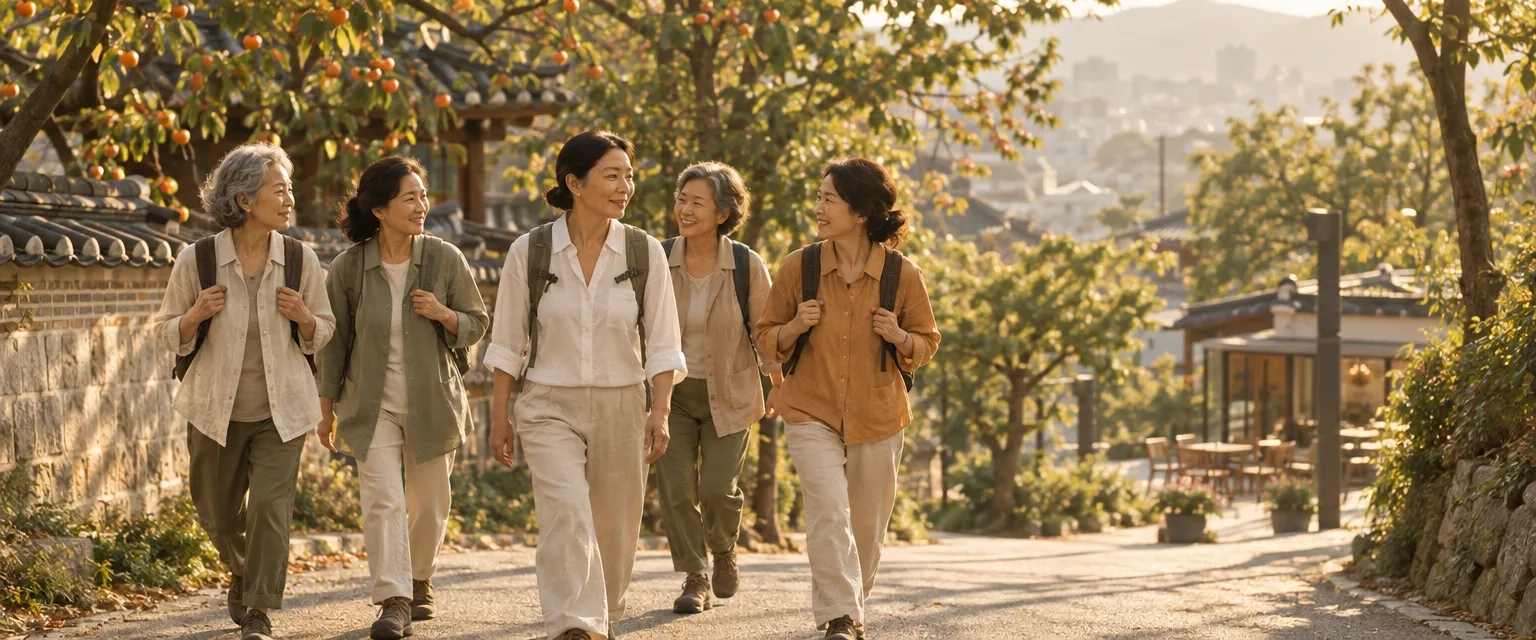
You begin to consider what she might need. The strength to travel comfortably. The energy to enjoy a long dinner with friends. The confidence to move through her home independently. The curiosity to begin something new at an age when the world may expect her to slow down.
What interests me about Korea's approach to longevity is not simply its advanced medical technology or sophisticated skincare. It is the broader idea that maintaining your health can become an ordinary part of how you live, long before you feel an urgent need to change.
This is not about preserving youth indefinitely. It is about creating the conditions for a life that remains rich, capable, and distinctly your own.
What You'll Learn
- Why the timing of preventive habits matters as much as the habits themselves
- What Korea's documented national health-screening system can teach us about building maintenance into ordinary life
- What everyday movement, strength, recovery, and relationships have to do with each other
- What clinical research on late-life resistance training actually shows, and what it doesn't
- A realistic, non-elaborate way to begin caring for your future self at any age
The Decade Before You Need to Change
There is a quiet decade in a woman's life when the decisions she makes may matter more than the changes she can see.
Her forties become her fifties. The demands of family and career begin to shift. She may have more freedom than she did at thirty, but her days are still full, and her own health can remain somewhere near the bottom of the calendar.
Nothing necessarily feels urgent. She can still climb the stairs. She sleeps well enough. She has no particular reason to question whether the routines that have carried her this far will continue to serve her twenty years from now.
Then, gradually, the small changes begin to accumulate. Recovery takes longer. Strength is not quite what it once was. A disrupted night of sleep carries into the following afternoon. The body that once seemed willing to accommodate almost anything begins asking for a little more attention.
This is often when we decide it is time to take better care of ourselves. But what if we changed the timing? What if the years before a problem becomes apparent were considered just as important as the years spent addressing it?
For an American woman in her forties, fifties, or sixties, this does not require a different healthcare system, an elaborate routine, or a collection of expensive devices. It begins with a different relationship to time.
You do not have to wait until something needs rescuing to decide that it deserves maintaining.
Two Cultures, Two Approaches to Prevention
South Korea's National Health Insurance Service provides a General Health Screening Program for enrollees aged 20 and older: a comprehensive checkup offered once every two years for most subscribers, annually for certain non-office worker categories, with each person's eligible year determined by the parity of their birth year. Alongside it, a National Cancer Screening Program, established in 1999, covers six major cancers at defined ages and intervals. It is a structured, government-run system with defined rules about who is screened, for what, and how often, and it offers a documented example of prevention built into the basic infrastructure of healthcare.
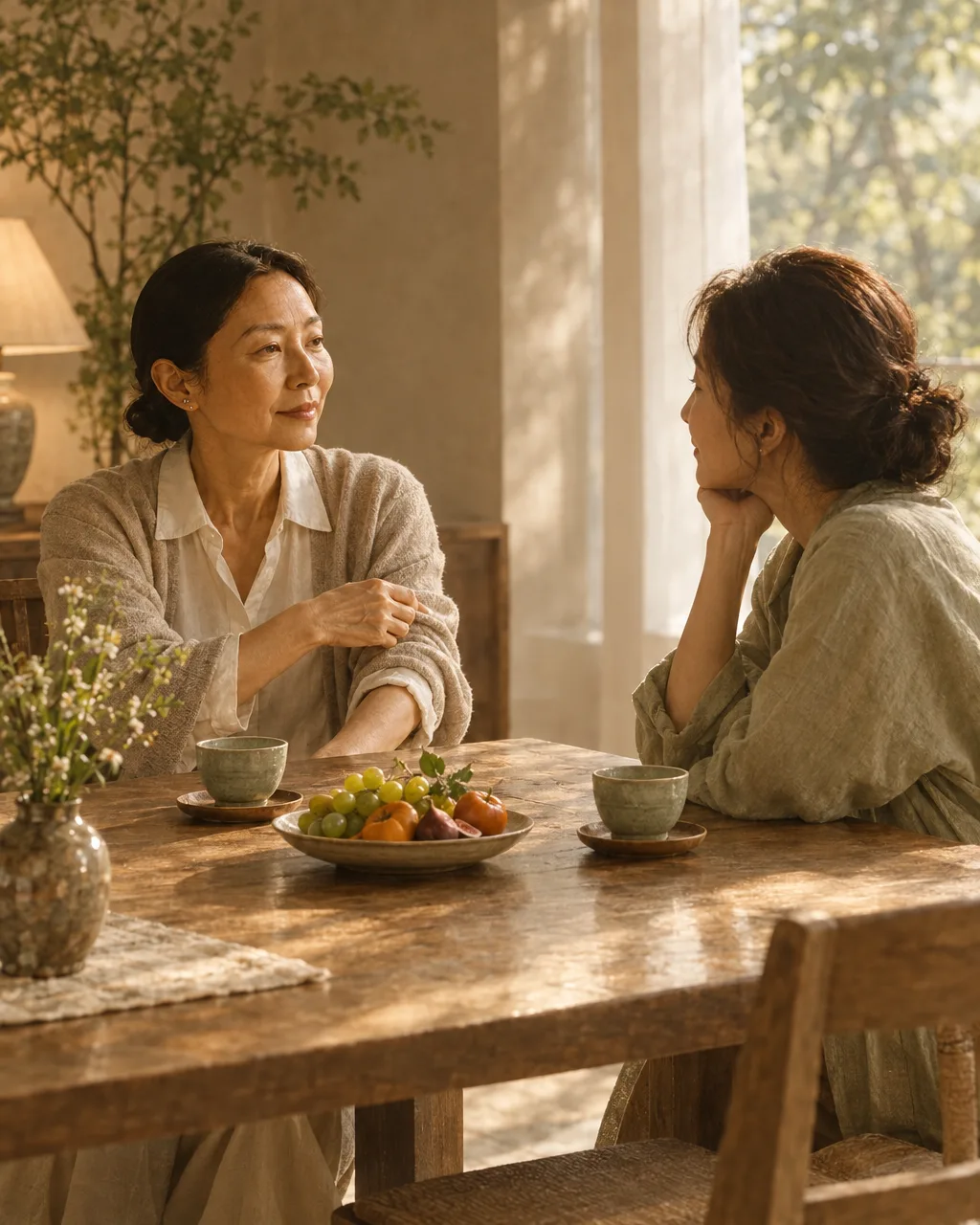
How individual women actually relate to that system day to day is a more personal question, shaped by their own circumstances, priorities, and access to care. Access, income, and individual health needs all shape how any given woman uses the system available to her, and it would be a mistake to assume every Korean woman follows an identical routine simply because the infrastructure exists.
The lesson worth considering is not that every Korean woman does the same thing. It is that maintenance can become an ordinary, expected commitment rather than an occasional response to a problem. Nor is prevention uniquely Korean. American medicine has extensive preventive-health guidelines, screening programs, and clinicians dedicated to helping patients reduce future health risks. The distinction worth exploring is less about which country possesses the better medicine and more about how prevention becomes part of an individual's ordinary life.
Consider the difference between scheduling an appointment because something has changed and scheduling one because maintaining your health is already part of your annual calendar. Neither approach guarantees a particular outcome. But the second creates more opportunities to catch modifiable risks and preserve physical capacity before real limitations develop.
The Quiet Work of Maintaining Your Future Self
Maintenance is not one habit. It is several ordinary ones, held together over time.
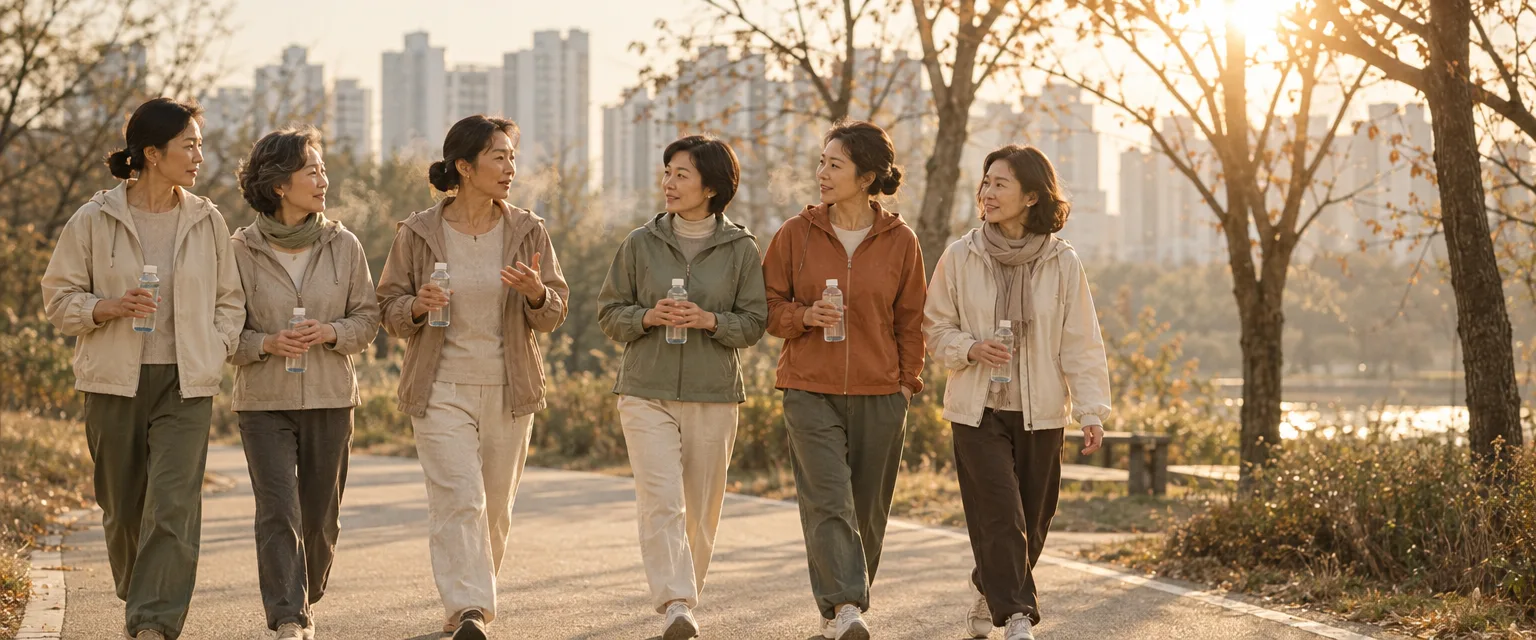
Movement, as a daily practice. Walking is a practical way to bring physical activity into ordinary life. It supports cardiovascular and metabolic health, and regular movement helps preserve the ability to remain active as we age. The goal is not to turn every walk into a workout. It is to make movement a familiar part of the day.
Strength, as a form of independence. Muscle strength and physical function deserve particular attention as we grow older. Resistance training helps preserve strength, supports bone health, and improves the physical abilities required for everyday living. It is not about developing a gym identity. It is about maintaining a body capable of supporting the life you want, a point the research in the next section makes concretely.
Recovery, as a commitment. Sleep is not simply the interval between productive days. Consistent, adequate sleep supports physical recovery, cognitive function, and metabolic health. Protecting time for rest is a practical investment in your ability to function well tomorrow and in the years ahead.
Relationships that endure. Healthy aging is not solely a physical undertaking. Supportive relationships and meaningful social participation are associated with better health and wellbeing. Making time for friendship, family, and community is part of maintaining a life worth participating in.
None of these practices needs to become an elaborate personal project. A woman who walks regularly, maintains her strength, protects her sleep, and invests in her relationships is not necessarily following a formal longevity protocol. She is building habits that support her future capacity, quietly, alongside the rest of her life.
Why Starting Later Still Matters
There is a persistent misconception about healthy aging: that its most meaningful benefits belong to people who began early. If you did not establish excellent habits in your thirties, the reasoning goes, you have already missed an important opportunity.
The clinical research on resistance training in older adults complicates that assumption, and the specifics matter more than the general claim.
In 1990, researchers Maria Fiatarone and colleagues published a study in JAMA examining high-intensity resistance training in ten frail, institutionalized nursing-home residents with an average age of 90. Over eight weeks of supervised training, the nine participants who completed the program showed an average increase in measured muscle strength of 174 percent, along with a 9 percent increase in midthigh muscle area and a 48 percent improvement in walking speed on a standard test. The study measured strength gained through training. It did not establish how much previously lost strength, if any, that represented, and it involved a small, closely supervised group, so the results should be read as a demonstration of capacity rather than a promise of a specific outcome for any individual.
What the study did show clearly is that people at an advanced age, including those living with considerable physical frailty, can respond meaningfully to an appropriately designed training program. That was the genuinely significant finding, distinct from any claim about reversing aging itself.
More recent research looked at a different population entirely: healthy adults at the point of retirement. A 2024 long-term follow-up of the Danish LISA trial, published in BMJ Open Sport & Exercise Medicine, tracked 451 adults at retirement age randomized to a year of heavy resistance training, moderate-intensity training, or no structured exercise. Four years later, with 369 participants still being assessed, the heavy-resistance group had maintained their leg strength while the moderate-intensity and control groups had measurably declined. The trial supports a real, lasting benefit specifically in leg strength for people who followed this particular program. It does not establish that starting later produces an equivalent, measurable, lasting benefit for every habit or every person, and exercise still needs to be adapted to individual health, mobility, and physical capacity. Women with existing joint, bone, or cardiovascular concerns, or who feel uncertain about where to begin, will benefit from individualized guidance from a physician or qualified clinician before starting.
Taken together, what these two studies support is more modest than a universal promise, and also more useful: meaningful physical improvement is not reserved for people who started young. A woman who begins resistance training at 65 will not have the same starting point as someone who has trained consistently since 35. She can still work toward genuinely greater strength and function, and the evidence suggests that benefit can last well beyond the training period itself.
If you want the full evidence-based protocol for building strength specifically, including exercise-by-exercise programming and how to track your own progress, see The Korean Anti-Frailty Protocol. This article is about the philosophy of timing. That one is the practical plan.
A More Intentional Way to Live After 40
The challenge with longevity advice is that it can make maintaining your health feel like another full-time occupation. There is always another measurement to track, another supplement to consider, another device promising to optimize a function you had not previously thought about.
A sustainable approach to healthy aging should make life more manageable, not more complicated. Rather than adopting an entirely new lifestyle, begin by examining the routines you already have, and pick one place to start.
Make movement ordinary. Choose a rhythm you can maintain, whether that is a walk after dinner or a regular strength-training appointment. The routine should be realistic enough to survive an ordinary Tuesday, not just an unusually motivated Monday.
Put prevention on the calendar. Work with your clinician to understand which screenings, vaccinations, and preventive appointments are appropriate for your age, medical history, and risk factors, the same way a Korean adult's biennial screening simply happens on schedule rather than waiting for a symptom.
Protect the routines that restore you. Give sleep and recovery a reliable place in your life. A sustainable longevity practice includes time when you are not trying to accomplish anything.
Make room for the life you want to keep living. Maintain the relationships, interests, and experiences that give your years meaning. The point of preserving your health is to remain capable of participating in a life that matters to you.
These commitments will look different for every woman. Someone recovering from illness may begin with a short daily walk. Someone with an established exercise routine may focus specifically on the resistance training piece above. Another woman may realize her most important change is finally protecting time for sleep.
If contribution, community, and a bigger life-design framework are what you are looking for, Designing Your Second Act covers that ground in depth. This article is deliberately narrower: it is about the decision to start maintaining, not the full architecture of what comes after.
There is no single Korean longevity routine that can be transferred wholesale into an American household. What we can borrow is the intention behind maintenance: making room for the practices that support our health before we are forced to reorganize our lives around its loss.
Elle's Perspective: The Life You Are Maintaining
I think we sometimes misunderstand what it means to take aging seriously.
We imagine it requires constant attention to what is changing: the face, the body, the numbers on a laboratory report, the things we can no longer do quite as effortlessly as we once did.
But perhaps taking aging seriously means paying more attention to what we want to preserve.
The freedom to travel somewhere unfamiliar. The strength to carry our own bags. The energy to enjoy an evening that runs later than expected. The confidence to begin a new chapter without assuming our most interesting years are behind us.
What I find compelling about the preventive approach is that it asks us to care for those privileges before they begin to disappear. Not through fear. Not through an endless pursuit of youth. And certainly not through the belief that every aspect of aging can be controlled.
Simply through the repeated decision to make our future wellbeing part of the lives we are living now. There is something quietly generous about that.
We cannot know exactly who we will be at seventy or eighty.
But we can begin treating that woman as someone whose life deserves our attention.
Starting at forty-five gives you more time. Starting at seventy still matters.
The goal is not to remain the woman you were.
It is to give the woman you are becoming every reasonable opportunity to live well.
Filed under 의도Purposeful Living