The Seoul Walking Protocol: The Daily Habit That Protects Your Future Independence
Korean women don't walk for fitness. They walk because it's how life works, and the health consequences of that accumulated movement are significant. Here is the exact protocol Western women can build deliberately, starting this week.
{/* IMAGE PLACEHOLDER — Hero: softly lit neighborhood path or tree-lined sidewalk, warm morning light, warm taupe and green tones, no athletic gear */}
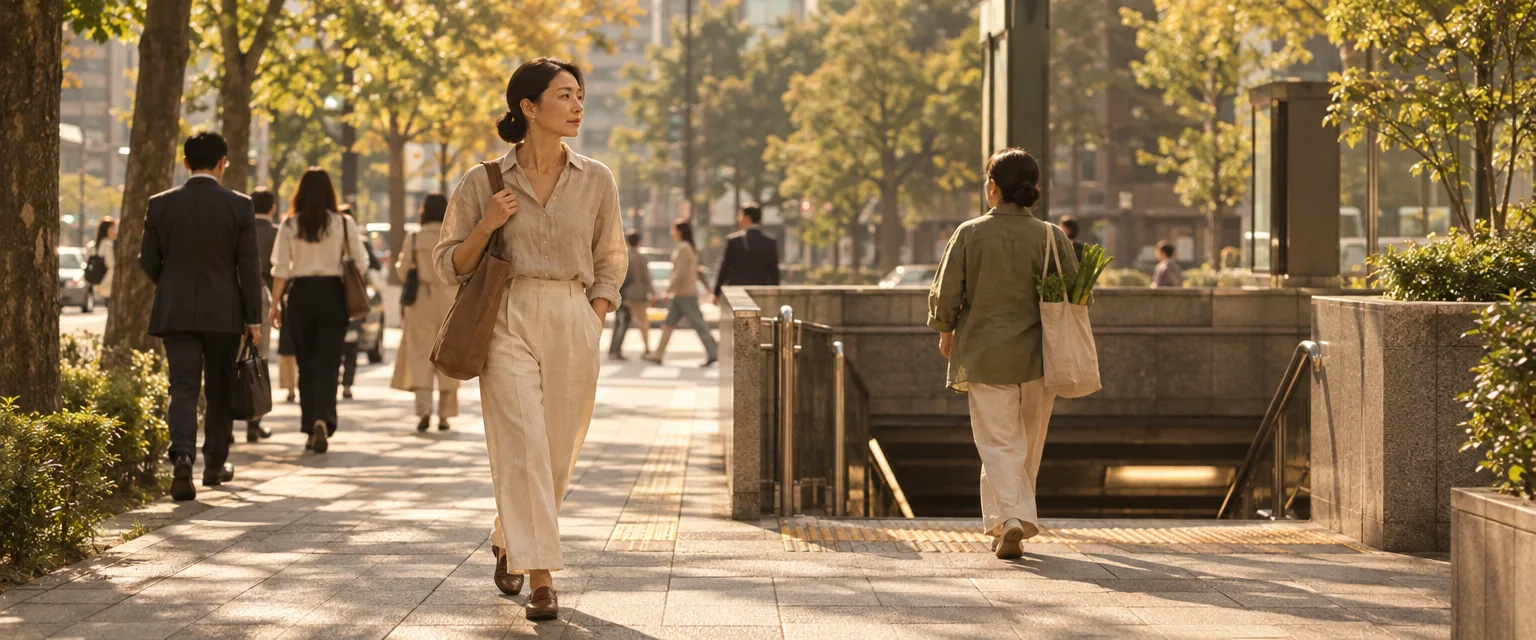
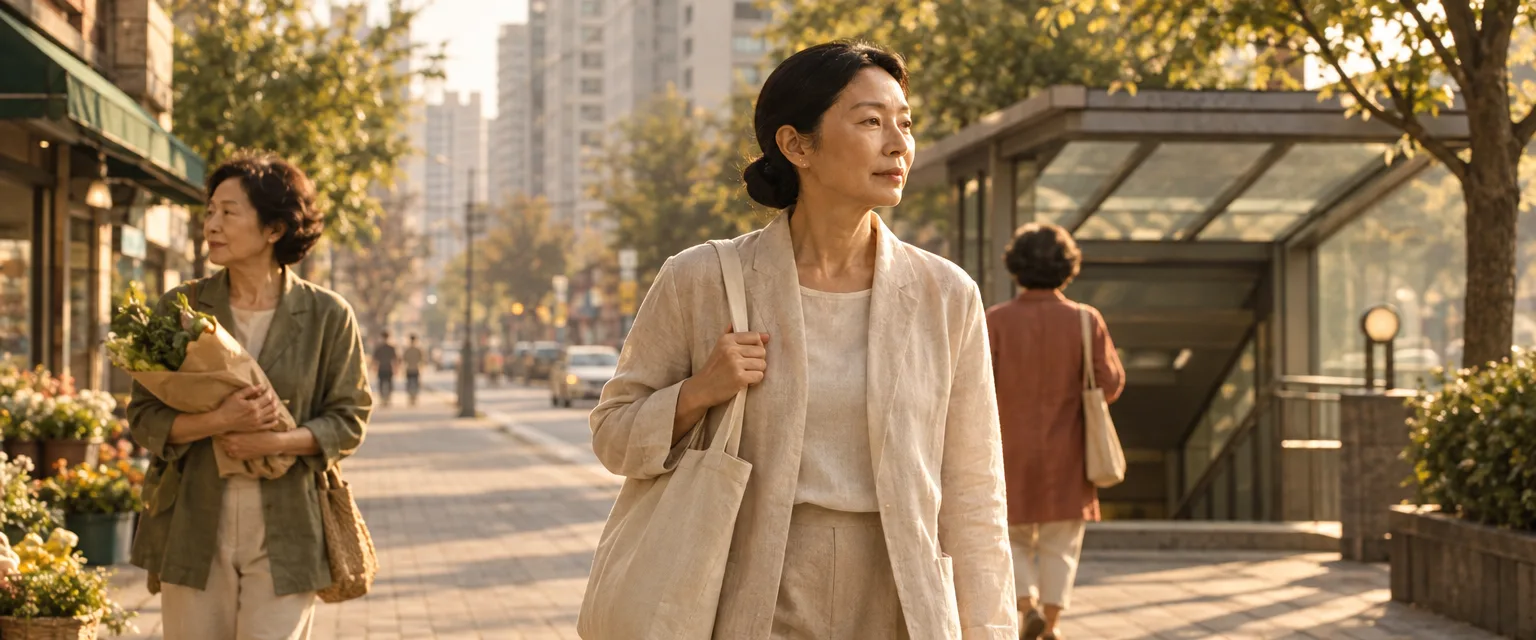
Walk through any residential neighborhood in Seoul on a Tuesday morning and you will notice something that has no real equivalent in most American cities. Women in their 60s and 70s are everywhere, and they are moving. Not power-walking in athletic gear, not training for anything. Just walking, purposefully and without fanfare, as though this has always been part of the day and always will be. Because for them, it has.
What you are observing is not genetics, and it is not a cultural mystique. It is the visible result of decades of accumulated daily movement, built into the infrastructure of everyday life and reinforced by the way Seoul's neighborhoods, transit systems, and urban rhythms were designed. Korean women do not walk because they are disciplined. They walk because their environment makes it the path of least resistance.
Korea consistently ranks among the most walkable countries in the world. Its cities were not designed around the car. Public transit requires significant walking between platforms, between exits, between stops. Dense mixed-use neighborhoods mean that a pharmacy, a market, and a lunch spot are all within reach on foot. Apartment towers have stairs that residents use as a matter of routine. Errands are completed on foot rather than through a windshield. The result is a population that accumulates movement the way other cultures accumulate sitting time, not through willpower, but through the simple architecture of daily life.
This is not an article about 10,000 steps or wearable fitness trackers. It is about understanding the structural habit that lies beneath South Korea's extraordinary rates of healthy aging, and how to build a version of it into your own life, wherever you live. By the end, you will know exactly how much to walk, how to build routes suited to your environment, and how to follow a four-week plan that Korean women would recognize as simply sensible.
Why Walking Is Central to Korean Longevity Culture
The Everyday Walking Life in Seoul
In Seoul, walking is not a workout. It is the way the day moves.
A typical morning might begin with a 10-minute walk to the subway. Then stairs, sometimes many flights of them, between platforms. The walk from the station to the office. At lunch, another short walk to a nearby restaurant rather than a delivery app. After work, the same route in reverse. In the evening, perhaps a short circuit around the neighborhood with a neighbor or spouse, a practice so common it has its own quiet social texture.
This daily accumulation is not unique to Seoul's most health-conscious residents. It is simply what life looks like when a city is designed for density and transit rather than driving. The walkability is structural: destinations are close together, public transportation requires movement between stops, and daily errands are completed on foot as a matter of practicality rather than intention. The health benefits are, in this sense, a byproduct of urban design rather than individual virtue.
By the time a Korean woman reaches her 60s, she has accumulated decades of this kind of movement. She has not thought of it as exercise. She has simply lived in a body that moves. The health consequences of that accumulation are significant.
Western wellness culture, in contrast, tends to compartmentalize movement. Exercise is something you schedule and then spend the rest of the day avoiding. This is not a character flaw; it is an infrastructure problem. Most American cities and suburbs were not designed for walking, which means the habit must be built consciously in ways that Seoul's urban architecture has always provided automatically. That is precisely what this protocol is designed to help you do.
What Walking Does for a Woman's Body After 40
The science here is well-established, and it is worth taking seriously.
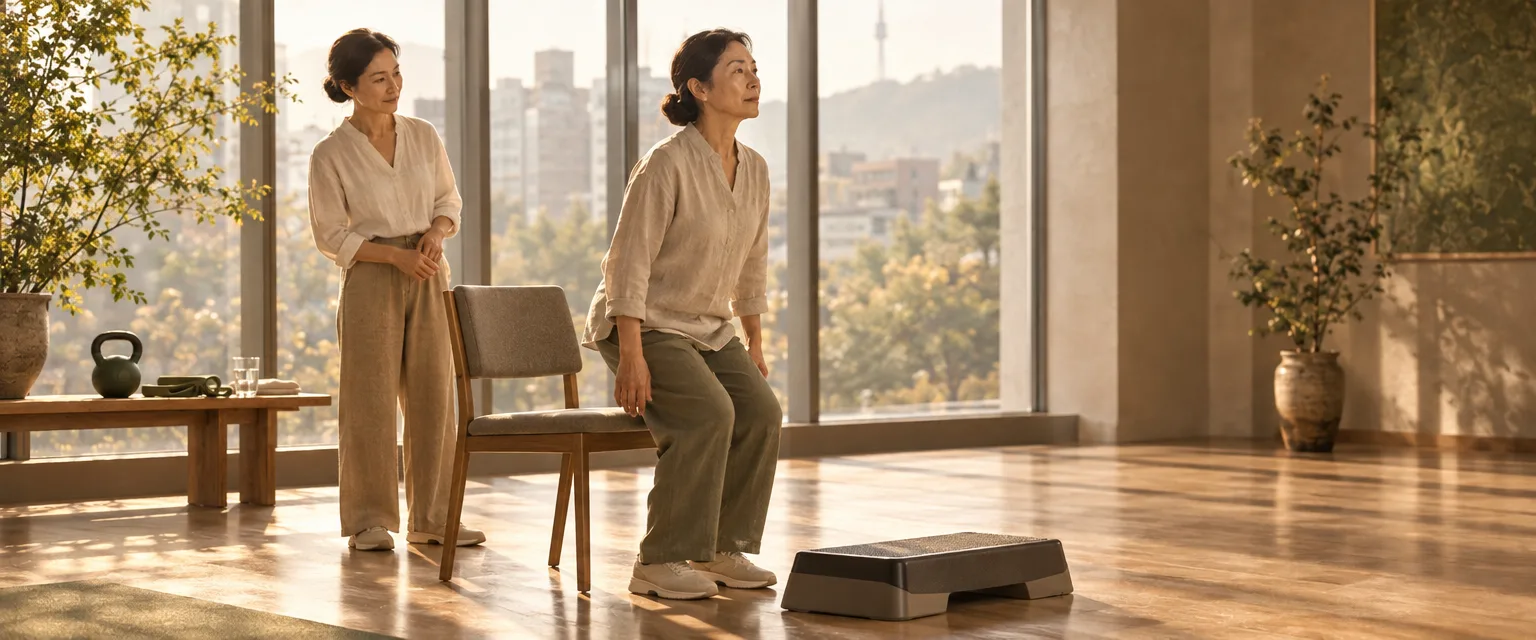
After 40, a woman's metabolism slows, insulin sensitivity declines, and the hormonal shifts of perimenopause and menopause create meaningful risks to cardiovascular and metabolic health. Muscle mass begins to decrease at a rate of roughly 1 percent per year if nothing is done to counter it. Bone density follows. The muscles of the hips, thighs, and lower back, which are most responsible for stability, balance, and the ability to navigate stairs and uneven terrain, quietly weaken.
Regular, moderate-intensity walking addresses many of these changes directly. Research consistently shows that it is associated with improved insulin sensitivity and blood sugar control, lower blood pressure, better vascular function, and more manageable waist circumference, without the physiological stress of high-intensity exercise. For women in perimenopause, evidence indicates a meaningful role in mood regulation and sleep quality, two things that affect everything else.
Walking is foundational, but it is not the whole picture. Current evidence supports combining regular walking with resistance training to most effectively preserve muscle mass, bone density, and balance after menopause. These are complementary practices, not competing ones. A woman who walks consistently and adds targeted strength work will have measurably better outcomes than one who does either alone. The Seoul walking protocol is designed as the movement foundation. Future articles in this series address what belongs on top of it.
Perhaps most important for the long view: research suggests that consistent walking is associated with the preservation of leg strength and hip stability, the physical qualities that most directly determine independence in later life. Whether you can climb the stairs of a hotel in Seoul at 72, carry luggage through an airport, or spend a full day on your feet without pain, these things are not accidents. They are, in large part, the result of what you did with your body in your 40s and 50s.
Walking now is, in a very practical sense, an investment in your freedom later.
The Seoul Walking Protocol: Targets by Age
This is the core of the protocol. The targets below are grounded in research on walking and longevity, and structured to reflect what the body needs at different hormonal and physiological stages.
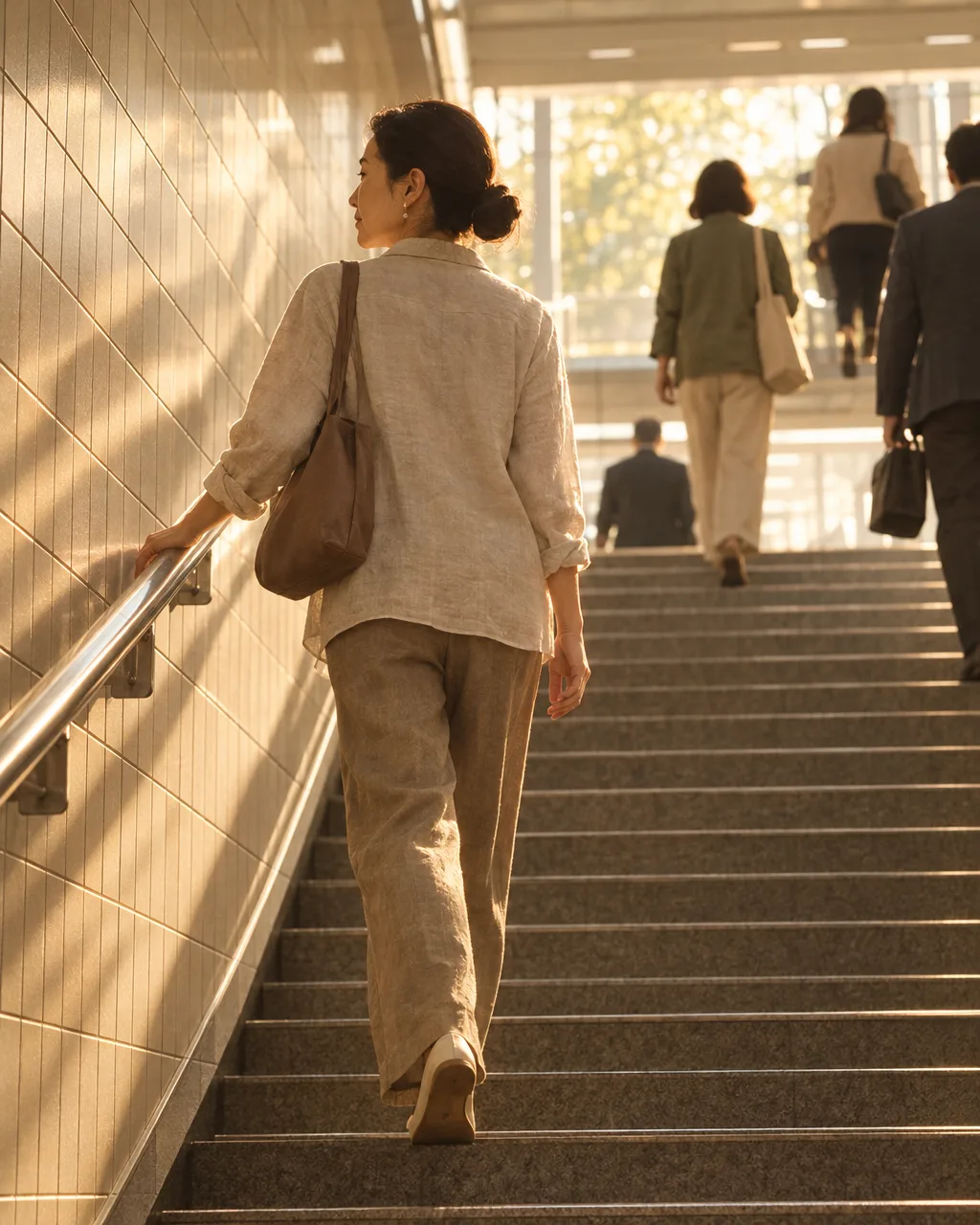
Women 35 to 44: Building the Foundation
At this stage, the goal is habit formation before the more significant metabolic shifts of perimenopause begin. The body is still relatively forgiving, which makes this an excellent window to establish a baseline.
Weekly target: 30 to 45 minutes of purposeful walking, at least five days per week.
Step target: 7,000 to 9,000 steps on most days.
"Purposeful" matters here. A leisurely stroll counts for something, but what you are building toward is a pace that slightly elevates your heart rate: upright posture, steady rhythm, forward momentum. Not breathless, but not entirely comfortable either.
No incline requirement at this stage, though adding gentle hills or stairs where available is never a bad idea. The priority is consistency.
Women 45 to 60: The Longevity Window
This is where the protocol becomes more specific. These are the years when the metabolic, cardiovascular, and musculoskeletal changes of aging are most actively at work, which also means they are the years when consistent walking returns the highest dividends.
Weekly structure: - Five days of 30 to 45 minutes of walking at a purposeful pace - One incline or stair day: 30 to 60 minutes incorporating hills, park trails, or building stairs (adjusted for joint comfort) - Post-meal walks of 10 to 15 minutes, three to five times per week where possible
Step target: 8,000 to 10,000 steps on most days.
The incline day deserves particular attention. Uphill walking and stair climbing activate the glutes, quadriceps, and hip stabilizers far more than flat walking does. These are precisely the muscles most vulnerable to age-related decline and most responsible for preventing the falls and frailty that compromise independence in later life. Korean women who walk mountain trails on weekends are not doing it for the scenery alone. The terrain is doing something that flat pavement cannot.
Post-meal walking has its own specific value. Research suggests that a short walk within 30 to 60 minutes of eating is associated with meaningfully lower post-meal blood sugar spikes, which matters increasingly after 45. Ten minutes is enough. It does not need to be vigorous.
Summary Table
| Age Band | Daily Walking Target | Weekly Add-On | Step Goal |
|---|---|---|---|
| 35 to 44 | 30 to 45 min, 5+ days | Gentle inclines welcome | 7,000 to 9,000 |
| 45 to 60 | 30 to 45 min, 5+ days | 1 incline or stair day, plus post-meal walks | 8,000 to 10,000 |
{/* IMAGE PLACEHOLDER — Section: Park trail or outdoor staircase with dappled light, natural setting, no athletic gear visible */}
Designing Your Own Seoul-Style Routes
Seoul's walking culture works because the infrastructure makes movement unavoidable. Your job is to create that infrastructure in your own environment. These three route frameworks are designed to work in any setting.
Route 1: The Neighborhood Loop
This is your daily anchor route. It should begin and end at your front door, take 30 to 40 minutes, and become as automatic as a commute.
Start by mapping a loop of roughly 1.5 to 2 miles, using streets or paths you feel comfortable on at various times of day. Include at least one hill or flight of outdoor stairs if your neighborhood allows it. The goal is a route you could walk without thinking, which is exactly what you want: a habit that requires no decision-making to begin.
A few practical notes. Minimize long pauses. Phone calls are fine; stopping to scroll is not. Keep the pace steady. Wear shoes with enough support to do this five days a week without discomfort. This is not the moment to sacrifice function for style, though many excellent walking shoes now offer both.
Checklist: - Route mapped and tested in advance - Comfortable, supportive footwear - Keys, phone, and a light layer ready at the door - Well-lit streets identified for early morning or evening walks
Route 2: The Indoor Circuit
For women in suburban environments, or anywhere weather makes outdoor walking unreliable, a mall or large indoor space can serve as a legitimate training ground.
This requires a specific mindset shift: you are not shopping. You are walking. Enter with a time block of at least 30 minutes, plan to cover multiple floors, and use the stairs rather than escalators wherever possible. Keep stops to a minimum, one or two at most, and keep your pace brisk throughout.
Large indoor spaces are underrated for this purpose. The floors are even, the temperature is controlled, and distance is easy to track by time rather than steps. Some women find it easier to sustain pace in an environment with mild ambient stimulation. Others find it distracting. It is worth trying before dismissing.
Checklist: - 30-minute minimum time block scheduled in advance - Stairs over escalators - No more than one or two brief stops - Treat it as a session, not an outing
Route 3: The Weekly Retreat Walk
Korean mountain culture is real and worth understanding. Bukhansan, the national park inside Seoul's city limits, draws hundreds of thousands of visitors every weekend. The women who walk those trails are not extreme athletes; they are ordinary women of all ages doing something that Korean culture has always understood to be restorative. The terrain, the trees, and the quiet are part of the benefit.
Once a week, build a longer walk into a park, trail, or greenbelt near you. Aim for 45 to 60 minutes. Include natural inclines or gentle elevation changes where possible. Unlike the neighborhood loop, which is about efficiency and habit, this walk is about restoration.
Consider adding a simple ritual: a brief intention before you begin (even a single thought, such as "this hour is for clearing my head"), and a cup of tea or warm water afterward in quiet. This is the Korean sensibility at work, movement woven into a life that includes rest, not opposed to it.
This walk, once a week, becomes your Seoul retreat. It does not matter that you are in Missouri or Minnesota. The practice translates.
{/* IMAGE PLACEHOLDER — Section: Elegant flat-lay of a small notebook and cup of barley tea or warm water. Suggests the tracking and ritual dimension of the practice */}
Simple Tracking: Steps, Minutes, and What Actually Motivates You
Tracking works when it is simple and personally meaningful. It fails when it becomes another source of guilt or complexity.
Choose One Primary Metric
If you are numbers-oriented, track steps using a phone or watch. Aim for the target in your age band. If you prefer simplicity, track minutes walked per day in a notebook or a phone note. Thirty minutes walked is a 30-minute day. That is it.
Do not track both simultaneously until the habit is fully established. One clear metric, consistently recorded, is more effective than a spreadsheet you abandon by Week Three.
The Four-Week Walking Log
Set up a simple weekly log with these columns: date, route type, minutes, steps (if you track them), and a brief energy or mood note. At the end of each week, note the number of days you walked, your longest session, and whether you included any incline or stair work.
This log becomes useful after about six weeks, when patterns emerge. Most women discover that their energy and sleep noticeably improve in weeks where they walked four or more days, and that skipping three consecutive days makes re-entry significantly harder. The log makes these patterns visible rather than vague.
Elle's Pick: Leuchtturm1917 Hardcover Notebook. If you are a pen and paper person, a good notebook makes the log something you actually want to open. The Leuchtturm1917 has numbered pages and a table of contents, so your four weeks stay neat and easy to look back on.
Shop the Leuchtturm1917 on Amazon
Download the Seoul Style Edit Walking Protocol Log — your free 8-week printable tracker →
Building a Reward System
Korean cities have experimented with apps that reward residents with points for daily step counts, redeemable for small benefits. The principle is sound: external reinforcement helps bridge the gap between beginning a habit and internalizing it.
Build your own version. Tie rewards to streaks rather than single sessions.
- 15 walking days completed in a month: a facial, a spa afternoon, or a luxurious bath evening at home.
- Four consecutive weeks hitting your weekly target: new walking shoes, a wellness experience, or something equally worthwhile.
The rewards should reinforce the life you are building, not contradict it. Food rewards for exercise are a particularly poor fit for the Seoul Style Edit reader, who understands that the goal is long-term metabolic health, not earned indulgence.
The Four-Week Seoul Walking Plan
This plan is progressive and designed to accommodate women at different starting points. If you are already walking regularly, begin at Week 2. If you have not walked consistently in some time, begin at Week 1 without skipping ahead.
Week 1: Establish the Habit
Goal: Walk four days this week.
Daily target: 20 to 30 minutes for women who are currently sedentary; 30 to 40 minutes for those who are moderately active.
Focus: Experiment with your neighborhood loop and, if useful, the indoor circuit. Do not worry about pace or step counts this week. The only goal is to walk four times without negotiating with yourself.
Reflection prompt: At the end of the week, note any changes in your sleep, energy levels, or stress. These early signals are worth recording.
Week 2: Reach Consistency
Goal: Walk five days this week.
Daily target: 30 to 40 minutes.
Additions: Introduce your weekly retreat walk (45 to 60 minutes in a park or trail setting). Add one or two post-meal walks of 10 to 15 minutes if your schedule allows.
Reflection prompt: Which route felt most sustainable? What time of day suited you best?
Week 3: Add Inclines and Stairs
Goal: Maintain five walking days.
Additions: At least one session this week should deliberately incorporate hills, stairs, or any natural incline. This can be part of your retreat walk or a dedicated neighborhood session. Continue post-meal walks on as many days as possible.
Focus: Notice any change in how your legs feel by the end of the week, particularly in the glutes and thighs. Mild fatigue in those areas is a sign the protocol is working correctly.
Week 4: Find Your Personal Formula
Goal: Repeat the Week 3 pattern.
Focus: This week is about refinement rather than progression. Assess which routes you will actually maintain past Week 4. Adjust duration slightly up or down based on how your joints and energy are responding. The target is a protocol you can sustain indefinitely, not one you can endure for a month.
Reflection prompt: What did four weeks of consistent walking do to your sense of daily rhythm? Many women report that movement becomes something they miss on rest days, rather than something they avoid. That shift is the point.
Four-Week Summary Table
| Week | Days | Duration | Key Addition |
|---|---|---|---|
| 1 | 4 | 20 to 40 min | Establish any consistent route |
| 2 | 5 | 30 to 40 min | Retreat walk and post-meal walks |
| 3 | 5 | 30 to 45 min | Incline or stair session added |
| 4 | 5 | 30 to 45 min | Personal formula refinement |
How Walking Amplifies Your Larger Longevity Investments
Why This Is the Infrastructure, Not the Bonus
Korean women who maintain robust health and visible vitality into their 60s and 70s are not simply using better products. They are living in bodies with better circulation, more stable metabolic function, and lower systemic inflammation. Walking is one of the consistent contributors to all three.
Better circulation supports more efficient delivery of nutrients and oxygen to the skin, which amplifies the results of any skincare investment, from retinol to the PDRN therapies increasingly practiced in Korean dermatology clinics. More stable metabolic function leads to cleaner lab markers, which matters particularly for women doing the kind of executive health screening common among Korea's most health-literate population. Regular movement is also associated with reduced low-grade chronic inflammation, the kind that quietly accelerates cellular aging and undermines recovery from aesthetic procedures.
Walking is the baseline condition under which everything else performs better. Supplements, skincare protocols, diagnostic screenings, and dietary interventions all function more effectively in a body that moves consistently. This is not a peripheral benefit of the Seoul walking habit. It is the reason Korean preventative medicine has always treated daily movement as inseparable from long-term health.
What Comes Next in the Daily Movement Series
After four weeks, your walking routine should feel like infrastructure rather than effort. At that point, two natural progressions present themselves.
The first is a footwear assessment. Women who begin walking consistently almost always discover that their shoes were a limiting factor, particularly in terms of joint comfort and energy at the end of a longer session. Seoul Style Edit will cover this in a dedicated guide.
The second is the next layer of the Daily Movement protocol: strength work designed specifically to prevent frailty. Walking builds your cardiovascular foundation and protects your metabolic health. Targeted resistance training for the lower body and core builds the structural integrity that determines whether you remain fully physically independent into your 70s and beyond. The anti-frailty article, next in this series, addresses exactly that, with the same evidence-based, practical approach.
Beyond strength, the Daily Movement series will also explore mobility and flexibility practices drawn from Korean physical culture, the science of incidental movement and how to engineer more of it into any daily environment, stair climbing as a standalone protocol, and the social dimension of movement that Korean communities have preserved and that Western fitness culture has largely abandoned.
This article is the foundation. What follows builds on it.
If you are just beginning with the Daily Movement pillar, Why Korean Women Are Slimmer and Healthier Without Ever Setting Foot in a Gym offers important context on incidental movement that complements this protocol directly. For the broader philosophy connecting movement to home environment and daily rhythm, The Korean Wellness Home and Nunchi: The Ancient Korean Social Skill That Reduces Stress are natural companions.
{/* IMAGE PLACEHOLDER — Closing: Quiet, contemplative morning scene. Empty bench in a park or a view down a residential street in calm morning light */}
Elle's Perspective
There is something clarifying about the Korean relationship with movement. It is not complicated. It does not require subscription services, athletic identities, or elaborate motivation systems. It requires only the decision to build walking into the structure of your day, consistently, before you need to.
The women I think about when I write about this protocol are not athletes. They are women in their 60s and 70s who travel, who carry their own bags, who explore cities on foot, who do not need to think about whether their bodies will cooperate. That is not luck. That is the accumulated result of decades of ordinary, unremarkable walking.
You have an opportunity to build that foundation now. The protocol above is not sophisticated. It is not supposed to be. The point is the consistency, and the years.
Frequently Asked Questions
How many steps should a woman over 50 walk per day for longevity benefits? Research suggests that 7,000 to 10,000 steps per day is associated with meaningful cardiovascular and metabolic benefits. The Seoul walking protocol targets 8,000 to 10,000 steps for women aged 45 to 60, with the addition of one incline or stair session per week.
Is walking enough exercise for women in perimenopause? Walking is a strong foundation, particularly for cardiovascular health, blood sugar regulation, and mood support. Current evidence supports combining regular walking with resistance training for the most effective preservation of muscle mass, bone density, and balance after menopause. The Seoul walking protocol is designed as the first layer, not the only one.
What is the best time of day to walk for metabolic health? Morning walking supports habit formation and cortisol regulation. Post-meal walking (within 30 to 60 minutes of eating) has specific blood sugar benefits and can be done in shorter sessions of 10 to 15 minutes. Both are valuable; consistency matters more than timing.
Does walking count as resistance exercise? Flat walking does not provide significant resistance training. However, incline walking, stair climbing, and hill work activate the glutes, quadriceps, and hip stabilizers at meaningful levels. The Seoul protocol incorporates these specifically because of their role in preventing frailty.
How long does it take to feel the benefits of consistent daily walking? Many women report improved sleep and energy within the first two weeks of consistent walking. Measurable metabolic improvements, including better blood sugar regulation and lower blood pressure, are typically associated with six to twelve weeks of consistent practice.
What if I have joint pain that makes long walks uncomfortable? Shorter, more frequent sessions distribute the benefit and the impact load across the day. Three 10-minute walks can be as effective as one 30-minute session. Flat surfaces and well-cushioned footwear make a significant difference. Women with existing joint concerns should consult a physician before adding incline sessions.
Disclosure: Seoul Style Edit may recommend products that support the practices discussed in our articles. We only feature items that genuinely align with our focus on longevity, wellness, and quality.
Filed under 움직임Daily Movement